 English
 Español
 Français
 中文
中文The resurgence of tarot in contemporary culture has brought with it a paradox: never before has the art been so visible, yet rarely has it been so obscured by spectacle. What was once the domain of quiet practitioners operating in dimly lit parlors or passed down through lineages of careful instruction has now exploded across digital platforms, where aesthetic curation often trumps actual competence. For those seeking an authentic tarot reading—whether for guidance, psychological reflection, or spiritual exploration—the challenge lies not in finding a reader, but in recognizing one worth consulting.
The contemporary seeker faces a dizzying array of options: social media personalities with tens of thousands of followers, established practitioners with decades of experience, algorithm-optimized online tarot reading services, and everything between. Some readers possess genuine intuitive skill and years of study; others have perfected the art of ambiguous statements and emotional manipulation. The difference is not always immediately apparent, particularly to those in vulnerable emotional states—which describes a considerable portion of people seeking divinatory counsel.
This is not an exercise in skepticism for its own sake, nor a denial of tarot's interpretive power. Rather, it is an acknowledgment that in any field where desperation meets mystique, exploitation becomes possible. Understanding how to choose a good tarot reader is less about finding someone who can predict lottery numbers or name your future spouse, and more about recognizing the markers of psychological insight, emotional maturity, and interpretive competence that characterize serious practitioners.
The Nature of Tarot as Interpretive Art
Before one can evaluate a tarot reader, one must first understand what tarot actually is—and more importantly, what it is not. Tarot functions as a symbolic language, a collection of archetypal images that interact with the unconscious mind to surface patterns, themes, and potential trajectories. A professional tarot reader is not a fortune-telling machine dispensing concrete facts about an immutable future. They are interpreters of symbol, observers of psychological pattern, and—when skilled—facilitators of insight that the querent may already possess but has not yet articulated.
This distinction matters because it immediately eliminates a certain category of fraudulent claim. Any reader promising "100% accuracy" or guaranteeing specific outcomes with absolute certainty is either delusional or dishonest. The interpretive nature of tarot means that its value lies in perspective, not prophecy. A competent reader understands this and communicates it clearly. They frame their work as exploration rather than decree, offering possibilities and patterns rather than fixed certainties.
The best readers combine several elements: a thorough knowledge of traditional card meanings, an intuitive capacity to perceive connections and themes, psychological astuteness regarding human behavior, and the emotional intelligence to communicate observations without causing unnecessary distress or dependency. These qualities rarely manifest as theatrical dramatics. More often, they appear as calm authority, attentive listening, and the ability to ask clarifying questions that deepen rather than derail the reading.
Emotional Vulnerability and the Seeker's Dilemma
Most people do not seek tarot readings when life is stable and uncomplicated. They come during transitions, heartbreaks, career crises, or moments of existential confusion. This emotional vulnerability is both what makes readings potentially valuable and what makes seekers susceptible to manipulation. A person desperate for answers about a failing relationship or uncertain professional future may grasp at any interpretation that offers hope or clarity, even when that interpretation is vague, generic, or deliberately engineered to create dependency.
Understanding one's own psychological state when seeking a reading is part of the discernment process. Are you looking for perspective, or are you looking for someone to tell you exactly what you want to hear? Are you seeking insight to inform your decisions, or are you hoping to outsource those decisions entirely? The answers to these questions shape not only which reader you choose, but whether you are in a position to evaluate their competence objectively.
Good tarot readers recognize this vulnerability and respond with integrity. They do not exploit fear, amplify panic, or create narratives of doom that only they can resolve. They understand that their role is to illuminate, not to entrap. This ethical foundation is as important as interpretive skill—perhaps more so, given the potential for psychological harm when someone in crisis is told they are cursed, hexed, or under spiritual attack that requires expensive remediation.
Red Flags in the Spiritual Marketplace
The spiritual community, particularly in its online incarnations, harbors a predictable catalog of warning signs. Learning to recognize these tarot reading red flags is essential for anyone navigating the contemporary divination landscape.
Fear-Based Narratives: Readers who frequently discuss curses, evil eye, spiritual attachments, or unnamed enemies working against you are almost always engaged in manipulation. This tactic preys on paranoia and creates a problem that conveniently only they can solve—usually for escalating fees. Legitimate practitioners may occasionally identify energetic or psychological blockages, but they do not center their practice around manufactured spiritual emergencies.
Claims of Absolute Accuracy: As discussed, anyone advertising themselves as "100% accurate" or guaranteeing specific predictions is either inexperienced or dishonest. Accuracy in tarot is not a numerical metric; it is a qualitative assessment of whether the reading resonated, provided useful perspective, or reflected genuine intuitive perception. Serious readers understand the limits of their craft.
Grandiose Promises: Readers who guarantee that your ex will return, that you will meet your soulmate by a specific date, or that financial abundance is imminent if you simply follow their guidance are selling fantasy, not insight. These promises appeal to desperation and bypass the nuanced reality that tarot reveals possibilities, not certainties, and that human behavior is rarely so predictable.
Dependency Creation: A competent reader empowers clients to make their own decisions. A manipulative one creates ongoing dependency, encouraging frequent readings for even minor decisions or fostering a sense that the client cannot function without regular spiritual guidance. This is not mentorship; it is control.
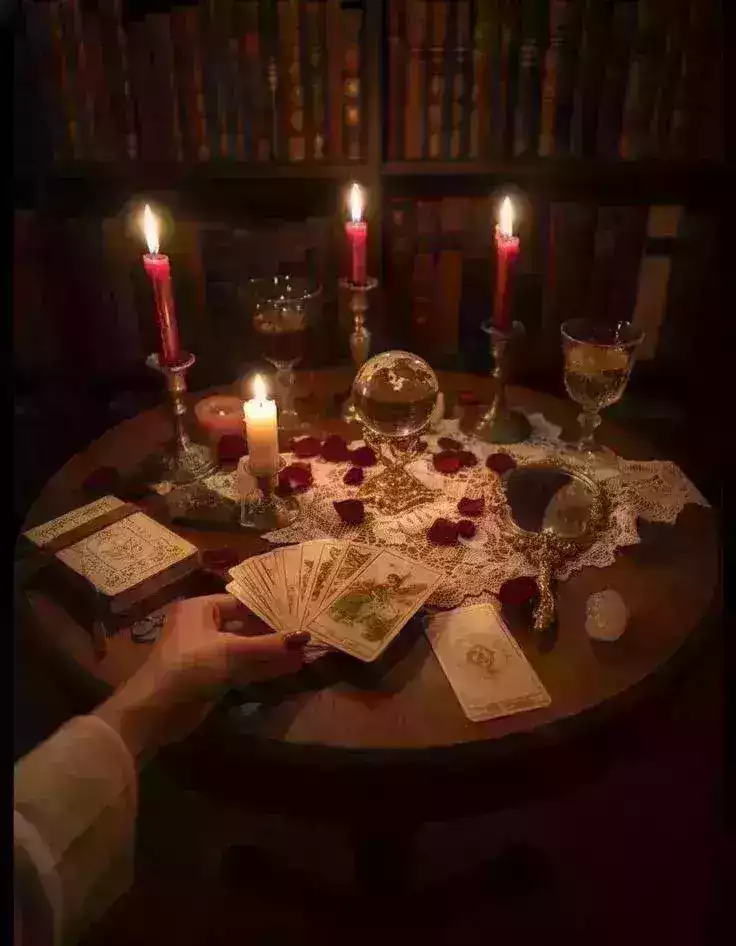
Performative Aesthetics Over Substance: The rise of Instagram mysticism and TikTok spirituality has produced a generation of readers whose primary skill is visual curation. Elaborate altars, perfect lighting, and carefully curated wardrobes do not equal spiritual depth or interpretive competence. While aesthetic presentation is not inherently problematic, it becomes a red flag when it is the primary or only credential a reader offers. Substance and style can coexist, but when style dominates, skepticism is warranted.
Generic Cold Reading Techniques: Many online tarot readings consist of statements so broad they could apply to virtually anyone: "You've been through a difficult time recently." "Someone from your past may reappear." "You have untapped potential." These are not insights; they are statistical likelihoods dressed in mystical language. A skilled accurate tarot reading contains specific enough observations to feel personally relevant, yet avoids the trap of impossible specificity that invites fabrication.

The Social Media Illusion
Online tarot culture has democratized access to readings while simultaneously creating an environment where performance often eclipses competence. The algorithms of social media reward frequency, aesthetic appeal, and emotional engagement—not necessarily depth, accuracy, or ethical practice. A reader with a viral following may be genuinely skilled, or they may simply understand how to craft content that triggers shares and saves.
This is not to dismiss all online tarot readers or psychic reading online services. Many competent practitioners have adapted to digital platforms out of necessity and reach clients they could never have served in a purely local practice. The issue is that visibility does not correlate reliably with skill. The most talented intuitive tarot reader you encounter may have three hundred followers and a modest website, while someone with minimal training but strong branding instincts commands tens of thousands.
When evaluating an online presence, look beyond follower counts and engagement metrics. Read through their content over time. Does it demonstrate consistency, emotional maturity, and coherent philosophy? Or does it shift with trends, capitalize on fear and crisis, or rely heavily on performative drama? The latter suggests someone more interested in audience growth than in serious practice.
Intuition Versus Manipulation
One of the subtler challenges in discerning a good tarot reader lies in distinguishing genuine intuition from skilled manipulation. Both can produce statements that feel personally resonant. Both can create moments of recognition or emotional response. The difference lies in intent, consistency, and outcome.
Genuine intuition tends to manifest as specific yet unexpected observations—details the reader could not have reasonably guessed, patterns that connect in non-obvious ways, or insights that clarify rather than confuse. Manipulative cold reading relies on educated guesses, leading questions, careful observation of the client's verbal and non-verbal responses, and statements ambiguous enough to be retro-fitted to almost any situation.
A professional tarot reader working intuitively will often say things that do not immediately make sense but prove relevant upon reflection. They are less concerned with being liked or validated in the moment and more focused on accuracy and utility. A manipulator, by contrast, watches carefully for your reactions and adjusts their narrative in real time to maximize your emotional investment and belief.
Another indicator: genuine intuitive readers are comfortable with uncertainty. They will acknowledge when a card's meaning is unclear, when they need more context, or when a particular question falls outside their interpretive range. Manipulators rarely admit limitation; doing so undermines the illusion of omniscience they work to maintain.
Due Diligence: Practical Evaluation
Beyond recognizing red flags, actively evaluating a reader before committing time and money is essential. Several practical steps can help.
Examine Tarot Reader Reviews and Testimonials: Look for patterns across multiple sources. Are the reviews detailed and specific, or vague and generic? Do they describe genuine insight, or do they simply praise the reader's kindness or aesthetic? Be wary of platforms where reviews seem curated or uniformly glowing without substance. Authentic testimonials often include both praise and minor criticisms, reflecting real human experience rather than marketing copy.
Assess Consistency Over Time: If the reader has a blog, YouTube channel, or long-standing social media presence, review their older content. Has their philosophy remained coherent, or does it shift dramatically with trends? Consistency suggests depth of practice and conviction. Constant reinvention may indicate someone chasing visibility rather than cultivating skill.
Evaluate Emotional Tone: How does the reader's content make you feel? Does it leave you thoughtful, curious, or empowered? Or does it provoke anxiety, dependency, or a sense that you are in constant spiritual danger? A good reader's work should clarify and ground, not destabilize.
Observe How They Handle Boundaries: Professional readers maintain clear boundaries around session length, pricing, scope of questions, and follow-up. They do not pressure clients into additional services, make themselves available at all hours, or blur the line between reader and personal savior. Healthy boundaries are a marker of emotional maturity and ethical practice.
Consider Their Training and Background: While formal training is not the only path to competence, readers who have studied seriously—whether through mentorship, formal programs, or years of disciplined self-study—tend to possess greater depth. Be cautious of those who claim to have been "born gifted" but demonstrate no knowledge of traditional meanings, spreads, or the historical context of tarot.
Empowerment, Not Abdication
Perhaps the most important criterion for choosing a good tarot reader is this: do they empower you to make your own decisions, or do they encourage you to defer your agency to them? A truly skilled reader functions as a mirror and a guide, reflecting back patterns you may not have consciously recognized and offering perspective that helps you think more clearly. They do not tell you what to do. They do not claim to have answers that you fundamentally lack. They do not position themselves as the sole source of clarity in your life.
This distinction is critical because it touches on the deeper purpose of divination. Tarot, at its best, is a tool for self-knowledge and decision-making support. It is not a replacement for critical thinking, personal responsibility, or the difficult work of navigating uncertainty. Readers who foster dependency undermine this purpose, creating clients who cannot function without regular consultations and who outsource increasingly mundane decisions to the cards.
Healthy engagement with tarot involves periodic consultations for perspective during significant transitions, not daily or weekly readings for every minor choice. If you find yourself unable to make decisions without a reading, or if a reader encourages this level of reliance, the relationship has become dysfunctional. A competent reader recognizes this dynamic and actively discourages it.
The Psychology of Projection and Confirmation Bias
An honest discussion of how to choose a tarot reader must also address the seeker's own psychological processes. Humans are pattern-seeking creatures, prone to confirmation bias and projection. We tend to remember the hits and forget the misses, to interpret ambiguous statements in ways that confirm our existing beliefs, and to see meaning even in randomness when we are motivated to do so.
This does not invalidate tarot's utility, but it does mean that part of discernment involves self-awareness. Are you attracted to a particular reader because they consistently tell you what you want to hear? Do you dismiss readers who offer challenging or unwelcome perspectives? Do you interpret every vague statement as profound simply because you are desperate for guidance?
Vulnerable individuals—those in emotional crisis, grief, or transition—are particularly susceptible to readers who provide comforting narratives. "He will come back." "You are destined for great things." "Your struggles are almost over." These statements feel good, and in feeling good, they become believable, regardless of their basis in reality. A manipulative reader understands this and exploits it. An ethical reader recognizes it and offers honesty, even when honesty is less immediately gratifying.
The Quiet Competence of Serious Practitioners
Ironically, the most skilled tarot readers are often not the most visible. They do not court viral fame or construct elaborate online personas. They maintain steady practices built on word-of-mouth reputation, repeat clients, and years of consistent work. Their social media presence, if they have one, is modest and unpolished. They are more interested in the work itself than in being seen doing the work.
This creates a challenge for seekers accustomed to equating visibility with credibility. The reader with the beautifully curated Instagram feed and the one with a simple website and a waiting list built over decades may both be competent—or neither may be. But flash and substance do not always align, and sometimes the most profound insights come from the least theatrical sources.
When choosing how to choose a tarot reader, consider looking beyond the obvious. Ask for recommendations from people you trust. Seek out readers who have been practicing quietly for years rather than those who have recently exploded into visibility. Value depth of knowledge and emotional intelligence over aesthetic polish. The best readers are often those who do not need to prove anything, whose reputations speak for themselves, and whose work leaves clients feeling clearer, calmer, and more capable—not dependent, confused, or destabilized.
Conclusion: Clarity Over Confusion
A truly skilled tarot reader brings clarity, perspective, and insight. They illuminate patterns you may have missed, offer alternative viewpoints on situations you have been too close to see objectively, and help you access your own intuition and decision-making capacity. They do not create dependency, manufacture fear, or promise miracles. They understand the limits and possibilities of their craft, communicate them honestly, and conduct their practice with integrity.
In a landscape crowded with performative spirituality, fear-mongering manipulators, and algorithmic personalities, finding such a reader requires discernment, patience, and a willingness to look beyond surface presentation. It also requires self-awareness: an honest assessment of your own motivations, vulnerabilities, and capacity for critical thinking. The partnership between reader and seeker is most effective when both parties bring maturity, honesty, and a shared commitment to genuine insight over comforting illusion.
Tarot, approached with seriousness and respect, can be a valuable tool for reflection and guidance. But its value depends entirely on the skill and ethics of the person wielding it. Choose carefully, trust your instincts, and remember that the most profound readings often come not from those who promise certainty, but from those who help you navigate uncertainty with greater wisdom and clarity.


Comments
No comments yet. Be the first to share your thoughts!
Leave a Comment
Your email address won't be published. Comments are reviewed before being posted.