
 English
 Español
 Français
 中文
中文The dissolution of bonds between individuals has always occupied a liminal space in magical practice—morally ambiguous, technically precise, and psychologically charged. Break up spells represent one of the most requested yet least understood categories of operative magic, straddling the boundary between intervention and interference, between liberation and violation. They emerge not from malice alone but from the recognition that certain entanglements corrode the spirit, that some unions perpetuate suffering, and that separation can be an act of mercy as much as cruelty.
To approach this subject requires discarding contemporary sentimentality. The magical practitioner does not operate within the therapeutic framework of modern psychology, nor does she defer to social conventions about the sanctity of romantic bonds. Her concern is with the movement of forces, the architecture of attachment, and the often-invisible chains that bind one soul to another long past the point of vitality. Break up spells function as surgical instruments in this context—tools for severing what has become pathological.
Historical Precedents and Cultural Foundations
The practice of magically dissolving romantic or social bonds stretches back through centuries of folk tradition, appearing across disparate cultures with striking consistency. Ancient Greek defixiones—curse tablets inscribed with binding formulas—frequently invoked chthonic deities to separate lovers, disrupt marriages, or sever the affections between rivals. These weren't the work of spurned adolescents but structured ritual acts, often commissioned by individuals of means who understood magic as technology rather than fantasy.
In medieval European grimoires, separation rituals appear alongside love spells and protective charms, treated with the same procedural rigor. The distinction between "white" and "black" magic—a largely Victorian invention—obscures the pragmatic worldview of earlier practitioners. A spell to break apart an abusive marriage was not considered inherently evil, nor was intervention in another's affairs automatically virtuous. The ethical calculus centered on intent, consequence, and the practitioner's relationship to the unseen powers invoked.
Hoodoo tradition preserves particularly detailed methodologies for separation work, including the use of specific botanical agents—black pepper to create discord, sulfur to repel, vinegar to sour affection. These were not arbitrary associations but accumulated knowledge, tested across generations and refined through repeated application. The practitioner understood herself as working with natural antipathies, leveraging existing tensions rather than creating them from nothing.
The Mechanics of Attachment and Dissolution
Before one can intelligently approach the work of separation, one must understand what constitutes a bond in magical terms. Relationships create energetic structures—patterns of attention, expectation, emotional habit, and psychic entanglement that persist even when the conscious mind has moved on. These structures have weight, momentum, and a kind of autonomous existence. They resist change not out of malice but through simple inertia.
A break up spell targets these structures directly. It does not typically work by altering someone's feelings through brute force—such efforts tend to produce temporary results and energetic backlash. Instead, effective separation magic introduces discord into the system, amplifies existing fractures, and removes the subtle supports that keep a dying relationship animated. Think of it as withdrawing scaffolding rather than demolishing a building—the collapse follows naturally once artificial support is removed.
The spell becomes a catalyst for processes already latent within the relationship. If genuine compatibility and mutual regard exist, separation work will either fail entirely or produce only temporary disruption. This is why experienced practitioners conduct diagnostic work before undertaking such operations—assessing whether the bond is genuinely toxic or merely experiencing natural turbulence. The ethics lie not in the technique itself but in the accuracy of this assessment.
Varieties of Separation Work
Not all break up spells function identically, nor do they serve the same purposes. The tradition distinguishes between several categories, each with its own technical requirements and moral implications.
There is the work of dissolution—gentle, gradual separation that allows both parties to drift apart naturally, with minimal psychological trauma. This approach might employ cooling herbs, waning moon timing, and rituals of unbinding that emphasize release rather than rupture. The practitioner seeks to diminish obsession, reduce emotional charge, and create space for alternative attachments to form organically.
More aggressive is the work of discord—introducing conflict, amplifying irritations, and making cohabitation psychologically intolerable. This relies on agents of agitation: red pepper, wasp nests, iron filings driven between poppets representing the couple. The goal is not hatred but incompatibility made manifest, a sudden clarity that what once seemed tolerable has become impossible.
Rarest and most ethically fraught is the work of rupture—immediate, traumatic severance designed to break even powerful attachments. This might involve cemetery dirt, personal concerns destroyed in black candle flame, and invocations to spirits of endings. Such work carries significant risk of psychic recoil and should only be attempted when lesser methods have failed and genuine harm is being perpetuated.
Components and Correspondences
The material vocabulary of separation magic draws on both symbolic resonance and practical observation. Black candles represent the absorption of light, the ending of illumination. Vinegar sours what was sweet. Sulfur repels and creates boundaries. Each component contributes not just symbolic value but actual energetic qualities that the practitioner weaves into her working.
Personal concerns—hair, nail clippings, photographs, handwriting samples—serve as direct links to the target. The principle of contagion, articulated by Frazer but understood intuitively by folk practitioners long before, holds that things once in contact remain connected. By manipulating the concern, one affects the person. This is not metaphor but operative principle, verified through practice if not through laboratory conditions.
Timing amplifies efficacy. Waning moons favor diminishment and removal. Saturdays carry the heavy, separating influence of that planet's nature. The hours of Mars bring conflict and assertion. A skilled practitioner layers these correspondences, creating alignment across multiple dimensions—temporal, planetary, elemental—to maximize the spell's momentum.
The Question of Ethics and Consequence
Every discussion of break up spells eventually arrives at the moral dimension, and here the discourse often becomes confused by imported frameworks—Wiccan threefold laws, New Age karma, or Christian notions of sin. The traditional practitioner operates from a different ethical foundation, one rooted in responsibility rather than prohibition.
The question is not whether one has the right to intervene in another's relationship—clearly one has the capacity, and capacity implies permission in the amoral universe of magical technique. The relevant questions are: What are the likely consequences? Can I accept responsibility for those consequences? Am I acting from clarity or from neurotic compulsion? Is this intervention genuinely necessary, or am I indulging in control for its own sake?
There is also the practical matter of energetic recoil. Magic operates through relationship—the practitioner connects herself to her target in order to affect them. This connection runs both ways. If the separation causes acute suffering, some portion of that suffering will flow back along the link. If the breakup precipitates violence or self-harm, the practitioner bears witness to that outcome, if not direct culpability. This is not cosmic punishment but simple mechanics—you cannot touch something without being touched in return.
Contemporary Applications and Psychological Dimensions
Modern practitioners inherit these techniques but operate in a vastly different social landscape. The dissolution of marriage no longer carries the economic and social consequences it once did. Romantic relationships are more fluid, less embedded in kinship networks, easier to exit through mundane means. This raises the question: when is magical intervention actually necessary?
The answer often involves situations where psychological enmeshment has created a bond resistant to ordinary dissolution—relationships involving narcissistic manipulation, trauma bonding, or obsessive attachment. In such cases, the individuals involved may consciously desire separation while remaining energetically entangled, unable to sustain no contact despite clear intention. Here, the spell functions as psychological support, reinforcing will that already exists but lacks sufficient force.
There is also the uncomfortable truth that some practitioners are hired to perform break up spells not from altruistic motives but from simple romantic rivalry—someone wants another's partner and is willing to pay for magical assistance. Traditional practitioners rarely refused such work, viewing it as no different from any competitive endeavor. The relationship either has sufficient resilience to withstand interference, or it doesn't. If it collapses under pressure, perhaps it was already structurally unsound.
Ritual Structure and Practical Execution
The actual performance of separation work follows patterns refined through practice. The practitioner establishes a working space, often at a crossroads or cemetery to invoke spirits of transition and endings. She brings representations of the couple—photographs, written names, personal items—and subjects these to processes of separation and destruction.
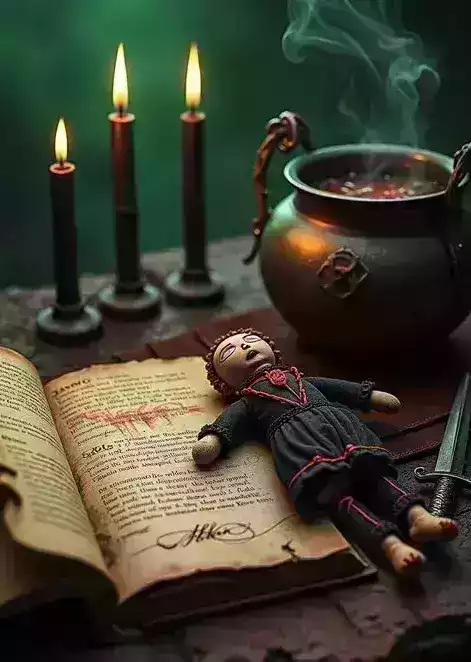
One classic method involves placing two figure candles or poppets together, then gradually moving them apart over successive nights, burning candles between them, speaking words of discord and dissolution. The physical separation mimes and reinforces the energetic work being done on subtler planes. Each night the distance increases until the representations are completely severed, often buried separately at crossroads or disposed of in running water.
More intensive workings might involve the creation of a "break up jar"—personal concerns of both parties mixed with separating agents, vinegar, sulfur, black pepper, pins or needles to introduce pain and irritation. The jar is shaken daily while speaking the intention, then either buried or disposed of when the separation manifests. The physical agitation corresponds to emotional and relational disruption.
Throughout, the practitioner maintains focus not on hatred but on incompatibility, not on punishment but on separation itself. The emotional tone matters—hysteria and obsession contaminate the work, introducing chaotic elements that undermine precision. Effective separation magic requires a certain coldness, a technical distance that allows the practitioner to manipulate forces without being swept away by them.
The Aftermath and Integration
When the spell succeeds—and success is never guaranteed—the separation often appears to manifest through "natural" circumstances. One party meets someone new, a job opportunity requires relocation, minor conflicts escalate into irreconcilable differences. The magic operates through probability and psychology, amplifying tendencies already present rather than violating physical law.
For the practitioner, there comes the work of integration—processing whatever psychic residue the spell has generated, severing her own connection to the situation, and accepting the consequences of her intervention. Closure rituals serve this function, formally ending the magical working and returning her attention to ordinary consciousness. Without this step, the practitioner risks remaining energetically entangled with situations that no longer concern her.
There is also the matter of what comes after separation. A spell that successfully breaks apart a relationship does not automatically heal the individuals involved or prepare them for healthier connections. Sometimes it merely frees them to repeat the same patterns with new partners. The practitioner must resist the illusion that her intervention has "solved" anything beyond the immediate problem of entanglement. The deeper work of psychological transformation remains the responsibility of those involved.
Break up spells, then, occupy that difficult territory where personal will, ethical ambiguity, and operative technique converge. They are neither the dark villainy that popular culture suggests nor the simple problem-solving that desperate clients imagine. They are tools—precise, powerful, and dangerous in proportion to their efficacy. The question is never whether such tools should exist, but whether the practitioner possesses the clarity, skill, and emotional maturity to wield them responsibly. That question admits no universal answer, only the private reckoning each practitioner must make with her own conscience and capacity.
Meta Description: Break up spells examined through historical precedent, technical execution, and ethical dimension—separation magic as operative technique within folk tradition and contemporary practice.
SEO Tags: break up spells, separation magic, breakup rituals, relationship dissolution spells, separation work, folk magic practices, break up spell ethics, magical separation techniques, dissolve relationship spells, separation ritual history


Comments
No comments yet. Be the first to share your thoughts!
Leave a Comment
Your email address won't be published. Comments are reviewed before being posted.