
 English
 Español
 Français
 中文
中文The history of rural European magic remains, in essence, a chronicle of desire rendered tangible. Where ecclesiastical authority weakened at the forest's edge and canonical law dissolved into mud-rutted village lanes, women and men bent the invisible world toward their most immediate needs: survival, prosperity, and above all, the securing of affection. Love magic occupied a peculiar threshold in the moral geography of folk practice—neither entirely maleficent nor wholly benign, condemned by the Church yet tacitly tolerated by communities who understood that the human heart observes no catechism.
What distinguished rural love magic from its urban or courtly counterparts was not merely the crudeness of materials—nettle root instead of prepared tinctures, pig's blood rather than expensive inks—but the unmediated proximity to life's fundamental processes. Agricultural communities lived within cyclical rhythms that governed both harvest and human fertility. The magic they practiced reflected this intimacy with generation and decay, with the forces that made seeds swell and livestock breed.
The Herbal Architecture of Attraction
Plant lore formed the skeletal structure upon which most love operations were constructed. Particular species acquired reputations across vast geographical distances, their properties discussed in whispers between market women and recorded, occasionally, by literate observers with ethnographic or pharmaceutical interests. Vervain, that modest roadside perennial, appeared in recipes from Galicia to the Carpathians, valued for its supposed capacity to "soften hearts" and render the obstinate amenable. The plant's purple flower spikes were harvested at specific lunar phases—preferably when the moon waxed toward fullness—and either worn against the skin, steeped into beverages, or burned as fumigant during amorous encounters.
Mandrake root, with its vaguely anthropomorphic form and documented toxicity, occupied a more dangerous register. Its procurement was itself a magical act, hedged with prohibitions and elaborate harvesting rituals designed to protect the gatherer from the plant's legendary scream. When employed in love workings, mandrake functioned less as persuasion than as compulsion—a substance believed to override volition rather than gently influence it. The distinction mattered, at least in theory, though village practice often blurred such philosophical niceties.
Yarrow, coltsfoot, and certain species of orchid with their testicular tubers all found places in the rural practitioner's pharmacopeia. The latter, known across various linguistic traditions as "satyrion" or "dogstones," were considered particularly potent for male virility and female receptivity. Their preparation involved drying, grinding, and incorporation into food—a method that speaks to the fundamentally domestic nature of much folk magic, operating through the medium of shared meals and household intimacy.
Blood, Bodily Fluids, and the Economics of Essence
If plants provided the framework, human substances supplied the particularity. Love magic in rural contexts frequently demanded incorporation of the practitioner's own bodily materials—blood, saliva, hair, nail clippings, and menstrual discharge. This requirement reflected an operative theory wherein essence could be transferred, where something of one's fundamental nature might be introduced into another's physical system and thereby establish sympathy or dependence.
Menstrual blood occupied an especially complex position within this symbolic economy. Simultaneously polluting and powerful, it represented both the capacity for generation and its monthly failure. Various traditions prescribed its addition to food or drink destined for the beloved's consumption, a practice that carried significant risk of discovery and subsequent social catastrophe. The act transformed intimate bodily knowledge into magical leverage, weaponizing female reproductive biology in service of romantic aims.
Male practitioners employed comparable strategies, though with different substances. Semen, sweat, and blood drawn from the left hand appeared in documented formulas. The asymmetry of gendered magical practice reflected broader social arrangements: women more often worked magic to secure marriage or fidelity, men to obtain sexual access or rekindle waning desire. These patterns were not absolute, but they reveal how magical technique internalized and reproduced the power dynamics of rural patriarchy.
Ritual Temporality and Sacred Transgression
Timing constituted a critical variable in love magic's efficacy. Certain operations required execution during liminal periods—dawn, dusk, midnight—when the boundary between visible and invisible worlds supposedly thinned. Others demanded correlation with the agricultural calendar: planting season for initiating new attachments, harvest for bringing long-term efforts to fruition. The lunar cycle governed still others, with waxing moons for attraction and waning for banishment of rivals.
Christian feast days, particularly those associated with fertility and springtime renewal, provided both cover and enhanced potency for love workings. Saint John's Eve, with its bonfires and sanctioned license, offered opportunities for magical operations that might otherwise attract suspicion. The Church's appropriation of pre-Christian festivals created calendrical spaces where folk practice and orthodox devotion uncomfortably coexisted, where prayers to saints merged seamlessly with invocations of older, unnamed powers.
Crossroads, thresholds, and cemetery grounds supplied spatial coordinates for more transgressive operations. These locations shared a common characteristic: they marked boundaries between categorically distinct realms. Working magic in such places acknowledged that love itself occupied ambiguous territory—simultaneously creative and destructive, socially sanctioned in marriage yet anarchic in its individual manifestations. The practitioner who sought romantic intervention at a crossroads at midnight implicitly recognized the dangerous nature of what they attempted.
The Technology of Binding and Loosing
Sympathetic magic—the principle that like affects like and that connection persists despite separation—provided the theoretical foundation for much rural love craft. Objects belonging to the target became conduits through which influence could travel. A lock of hair, a piece of worn clothing, even footprint dirt gathered from where the beloved had walked: these items enabled magical action at a distance, transforming the practitioner's will into invisible threads that could pull another person toward them.
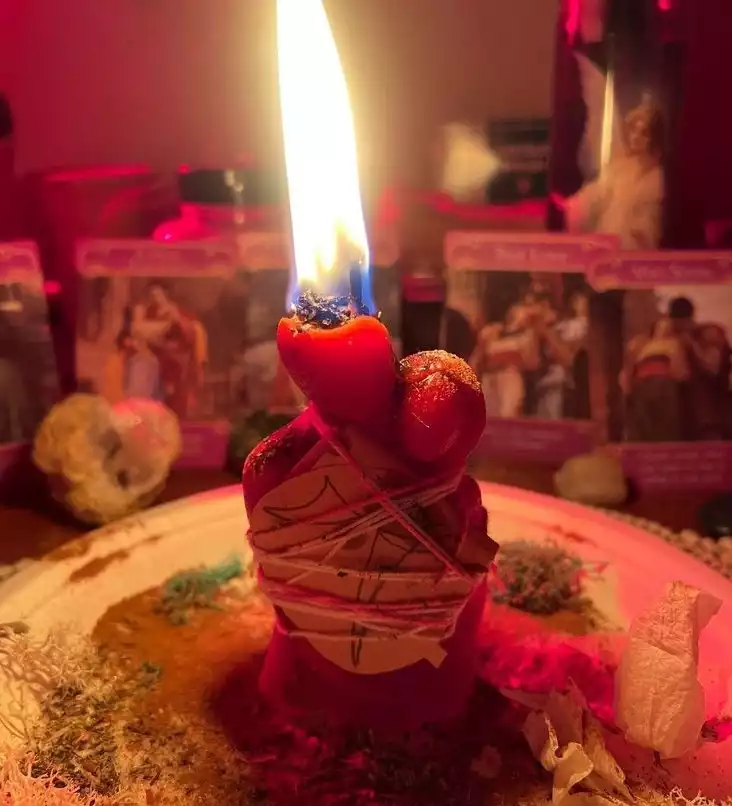
Binding rituals made this logic literal. Thread or cord, often red, might be knotted while speaking the target's name and the desired outcome. Each knot represented a constraint, a tightening of invisible bonds. These worked objects were then concealed—sewn into the beloved's mattress, buried beneath their doorstep, hidden in the roof thatch above where they slept. The concealment was essential; discovery would break the spell and potentially reverse its effects.
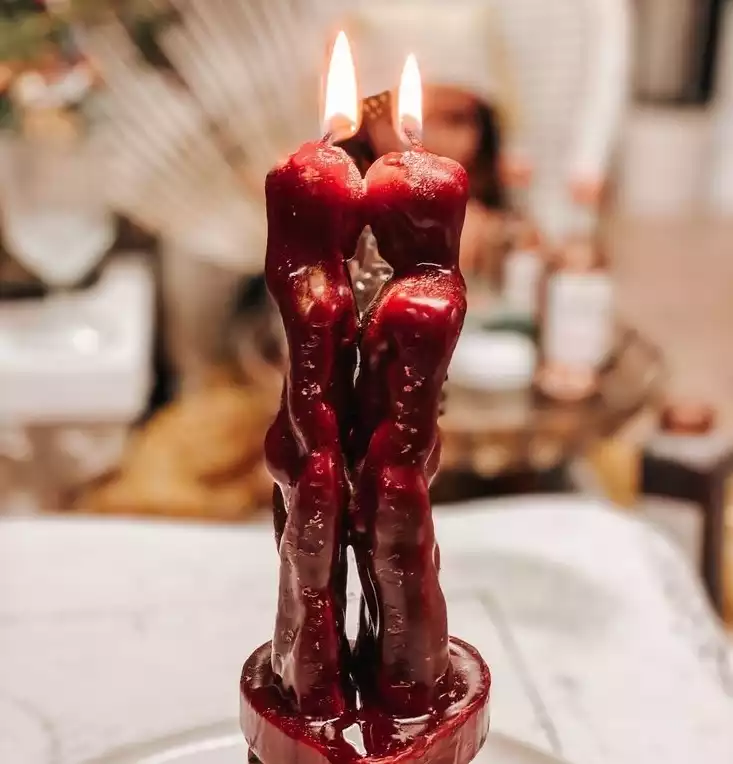
Poppets or crude dolls fashioned from cloth, wax, or clay served similar purposes. Unlike the malefic image magic of learned ceremonial traditions, folk poppets for love typically underwent gentle handling. They might be paired together, bound face-to-face, or pierced with pins in non-lethal locations to create sympathetic sensations of longing. The doll embodied the target, and whatever was done to it would theoretically manifest in the person's emotional experience. This practice reveals an almost mechanical understanding of magical causation, where physical manipulation translated directly into psychological effect.
The Cunning Specialist and Community Complicity
While many love magic operations could be undertaken privately, rural communities typically harbored individuals with reputations for particular expertise. These cunning folk, charmers, or "wise women" occupied socially marginal positions—necessary but suspect, consulted but never fully trusted. Their knowledge derived from apprenticeship, inherited grimoires, or claims of supernatural instruction through dreams or spirit contact.
A consultation with such a specialist followed predictable patterns. The client would present their situation, often with strategic omissions or distortions designed to make their case appear more sympathetic. The practitioner would diagnose whether magical interference from rivals had created the romantic obstacle, then prescribe a course of action: specific herbs to be gathered, rituals to be performed, perhaps objects to be obtained from the beloved. Payment might take the form of coin, goods, or future reciprocal service.
This transaction created mutual vulnerability. The client exposed their deepest longings and potentially admitted to socially destructive desires. The specialist risked accusation of witchcraft should the operation fail or produce unintended consequences. Yet the system persisted because it addressed needs that official religion and social structures left unmet: the woman whose husband strayed, the young man whose family lacked resources for a proper match, the widow seeking security through remarriage.

Moral Ambiguity and Theological Condemnation
The Church maintained consistent opposition to all forms of magical practice, including love magic. Theologians categorized such operations as either demonic collaboration or vain superstition, both categorically sinful. Canonical penalties ranged from penance to excommunication, while secular law might impose fines, public humiliation, or in extreme cases, prosecution for witchcraft. The actual enforcement of these prohibitions varied enormously depending on local conditions, clerical vigilance, and the social status of those involved.
What complicated straightforward condemnation was the ambiguous moral status of the acts themselves. If a married woman worked magic to reclaim her husband's affection from a mistress, was she not defending the sacrament of matrimony? If a young woman employed charms to attract a suitable husband, did this substantially differ from using cosmetics or engaging in strategic flirtation? Rural communities often made pragmatic distinctions that theological authorities could not accommodate.
The line between prayer and spell, between petitioning Saint Anne for a good marriage and burying spelled objects to compel a specific person's love, was perhaps thinner than the Church cared to admit. Both involved ritualized action intended to alter future outcomes through supernatural intervention. The critical distinction—at least in ecclesiastical theory—lay in the source of power invoked and the degree of coercion attempted. In practice, village religion frequently blended these categories beyond easy separation.
Psychological Dimensions and Belief's Material Effects
To dismiss rural love magic as mere superstition misses its genuine psychological and social functions. The act of performing a ritual, regardless of supernatural efficacy, provided the practitioner with a sense of agency in situations where their options were otherwise constrained. In societies where marriages were often economic arrangements and individual desire subordinated to family strategy, magic offered a channel for asserting personal will.
The placebo effect extended beyond the practitioner to the target. If someone believed they had been subjected to love magic, that belief itself could alter behavior. Hyperawareness of the supposed practitioner, anxiety about one's own shifting feelings, or resignation to the inevitable outcome might all contribute to the spell's apparent success. The magic worked, in part, because the cultural framework existed within which it could work.
Moreover, many operations involved practical psychology disguised as supernatural intervention. Advice to improve one's appearance, to frequent places where the beloved could be encountered, to demonstrate useful skills or desirable qualities—these recommendations might be framed as magical preparation but functioned as strategic courtship guidance. The ritual context provided cover for pragmatic instruction that might otherwise be dismissed or ignored.
Regional Variations and Cultural Persistence
Specific practices varied considerably across Europe's rural regions, shaped by local plant ecology, cultural contact, and linguistic traditions. Slavic areas preserved traditions involving particular saints and the adaptation of Orthodox liturgical elements into folk practice. Iberian communities showed traces of Moorish influence in their use of written charms and numerical symbolism. Germanic regions maintained connections to older runic and herbal traditions, sometimes encoded in folk verses and harvest customs.
Yet beneath this diversity, structural similarities persisted. The basic toolkit—plants, bodily substances, sympathetic objects, ritualized speech—appeared with remarkable consistency. This suggests not a single origin point but rather convergent development responding to universal human concerns. Where people experienced desire and its frustrations, they developed techniques to intervene, drawing on whatever conceptual and material resources their environment provided.
The practices did not vanish with modernity but adapted. Urban migration transformed village wise women into city fortune-tellers. Print culture disseminated previously local techniques through cheaply produced grimoires and folklore collections. In the twentieth century, revivalist movements would mine these traditions for material to construct new magical systems, though often with sanitized interpretations that ignored the desperation and social violence frequently underlying historical practice.
Contemporary Resonance and Historical Understanding
What remains valuable in examining rural European love magic is not the validation or dismissal of supernatural claims but the window it provides into lived experience at the margins of documentary history. These practices reveal how ordinary people navigated constraint, how they conceptualized causation and human relationship, how they created space for individual agency within rigid social structures.
The spells and rituals also expose uncomfortable truths about desire's ethics. Much historical love magic was coercive in intent—seeking to override another's will for the practitioner's benefit. The language of many surviving formulas speaks explicitly of binding, capturing, compelling. This should provoke contemporary reflection on where persuasion ends and manipulation begins, questions that remain relevant beyond any magical context.
Understanding these traditions requires holding multiple perspectives simultaneously: empathy for those whose circumstances drove them to magical intervention, critical awareness of the power dynamics encoded in gendered practices, and recognition that belief systems operate according to their own internal logic rather than conforming to external standards of rationality. The history of rural love magic is ultimately a history of hope and helplessness, of human ingenuity applied to the oldest and most intractable of problems.
The inheritance of these practices persists in fragmented forms—in wedding customs whose origins are forgotten, in gardening folklore about particular plants, in the vague sense that certain actions might influence romantic outcomes through means that rational discourse cannot quite articulate. The magic may have lost its explicit supernatural framework, but the underlying impulse remains: the stubborn human conviction that we should not be entirely helpless before the movements of our own hearts or those of others.

Comments
No comments yet. Be the first to share your thoughts!
Leave a Comment
Your email address won't be published. Comments are reviewed before being posted.