
 English
 Español
 Français
 中文
中文There exists a particular agony in the aftermath of severed intimacy. The mind circles obsessively through what was said, what might have been prevented, which moment marked the irreversible turn. In the hollow that follows departure, many seek not acceptance but reversal—a restoration of the bond that once defined their emotional landscape. This impulse is neither modern nor superficial. It echoes through centuries of folk practice, medieval grimoires, and the whispered consultations of cunning folk who understood that love, once ignited, leaves a residue that ritual can sometimes reignite.
To speak of love spells in the context of reconciliation is to enter a domain where psychology, symbolism, and intention converge. These workings are not about subjugation or the erasure of another's will, though centuries of misrepresentation have painted them as such. Rather, they function as ceremonial focusing mechanisms—structures through which the practitioner clarifies desire, confronts their own culpability, and creates symbolic space for reconnection. The spell becomes a threshold where internal transformation meets external petition.
The Historical Architecture of Reconciliation Magic
Long before contemporary self-help rhetoric framed breakups as opportunities for growth, human beings turned to ritual when faced with romantic rupture. Egyptian love papyri contain incantations designed to draw back the departed lover, invoking deities of desire and binding. Medieval European spellbooks preserved techniques involving knotted cords, inscribed apples, and carefully timed planetary alignments. In Hoodoo tradition, reconciliation work forms an entire category unto itself, distinct from simple attraction magic because it must address existing wounds, accumulated resentments, and the inertia of separation.
What these diverse traditions share is recognition that reconciliation requires more than longing. It demands acknowledgment of what fractured, willingness to shift the conditions that led to dissolution, and a symbolic offering to the forces—whether psychological, spiritual, or cosmic—that govern human connection. The spell is not a shortcut around emotional labor but a formalization of it, rendered in wax and word and timed breath.
Before the Casting: The Diagnostic Phase
The first barrier to effective reconciliation magic is the practitioner's own delusion. Not every severed relationship merits restoration. Some endings represent necessary conclusions to patterns that were harmful, stagnant, or fundamentally incompatible. The ethical foundation of this work begins with honest self-inquiry: Is the desire for return rooted in genuine compatibility and mutual flourishing, or in ego, fear of abandonment, or the intolerable discomfort of being alone?
Consider what catalyzed the separation. Was there betrayal? Neglect? A slow erosion of respect? Patterns of communication that calcified into mutual incomprehension? The spell cannot function as cosmetic surgery on a relationship whose structural problems remain unaddressed. It can, however, create energetic openings for dialogue, soften hardened positions, and remind both parties of what originally drew them together. But these openings will collapse if the underlying issues persist unchanged.
Assess also whether the other person has clearly, repeatedly stated their wish to move forward separately. There exists a meaningful distinction between someone who left in confusion or hurt but retains ambivalence, and someone who has deliberately, definitively closed the door. Magic that respects autonomy works with the former, seeking to clear obstacles to reconnection. Magic that ignores the latter crosses into coercion, and such workings tend to fail or generate consequences more painful than the original loss.
Preparing the Practitioner: Internal Reconfiguration
Reconciliation spells demand that you become someone to whom your former lover might reasonably wish to return. This is not about performative self-improvement or manipulation, but genuine reckoning with your contribution to the relationship's deterioration. If you were possessive, the spell work must include elements that address your capacity for trust. If you were emotionally unavailable, the ritual must incorporate vulnerability and opening. The symbolic components of the spell should mirror the internal shifts you commit to embodying.
This phase often involves shadow work—that Jungian excavation of the disowned aspects of self that sabotage intimacy. Journaling, meditation on the relationship's arc, even consultation with a trusted advisor can surface patterns invisible in the immediate pain of loss. The spell becomes more potent when cast by someone who has genuinely confronted their own failings, because the energetic signature of that honesty permeates the working.
There is also the matter of energetic hygiene. Desperation, neediness, and obsessive rumination create a static that interferes with effective spellwork. Before casting, establish practices that restore your center: grounding exercises, cord-cutting rituals to release toxic emotional entanglement, cleansing baths with salt and hyssop. You seek to approach the work from a place of clarity and strength, not frantic grasping.
The Symbolic Language of Reconciliation
Every effective spell operates through correspondences—materials and actions that embody the desired outcome. In reconciliation work, certain elements recur across traditions because they encode the necessary symbolic logic. Honey, for instance, appears frequently: it sweetens, it preserves, it draws. A spell might involve writing both names on paper, folding them together, and sealing them in a jar of honey, often accompanied by herbs like rose for love rekindled, lavender for peace, or cinnamon for passion's return.
Knot magic offers another structure. Take two cords of complementary colors—perhaps red and pink, or colors personally significant to the relationship. As you braid or knot them together, speak aloud your intention: not "make them come back" but "may the obstacles between us dissolve, may we find our way back to understanding." The knotting creates a physical analogue to the reunion you seek, and the cord can be kept as a talisman or burned to release the intention.
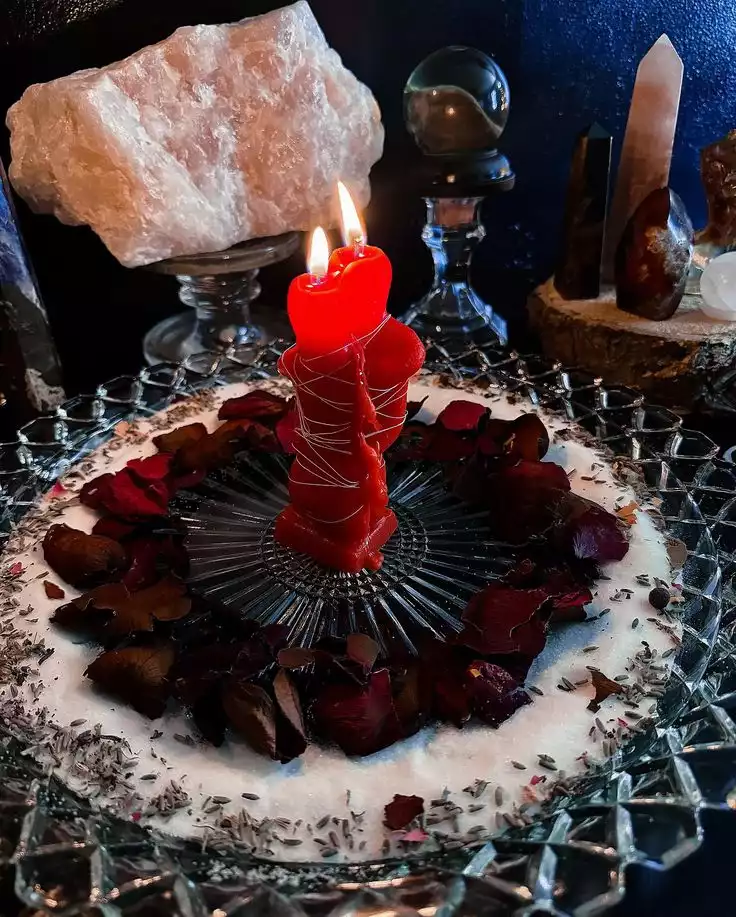
Candle work provides a versatile framework. Two candles—one representing you, one your former lover—are placed at a distance and moved incrementally closer over several days or weeks, while you maintain focused intention and speak words of reconciliation. The gradual approach mirrors the organic process of mending, avoiding the energetic violence of demanding immediate results. When the candles finally touch, they are allowed to burn together until consumed.

Timing and Planetary Considerations
Though one can cast in urgency, reconciliation work benefits from astrological awareness. Venus, governing love and harmony, offers favorable conditions when well-aspected. The waxing moon supports growth and drawing toward; work begun in this phase carries the momentum of increase. Friday, Venus's day, aligns naturally with romantic petitions. Some practitioners also consider the moon's transit through Libra or Taurus for relationship magic, or wait for favorable aspects between Venus and personal natal placements.
This is not rigid dogma but strategic enhancement. The psychological effect of choosing an auspicious time should not be underestimated—it signals to your unconscious that the work is serious, considered, and aligned with larger patterns. It also builds patience into the process, preventing the impulsive, scattered casting that often characterizes heartbreak magic.
The Working Itself: A Ritual Framework
Create space that is clean, private, and free from interruption. This is not theater but ceremony, and it requires your full presence. Begin with purification—smoke cleansing with rosemary or frankincense, asperging with salt water, whatever aligns with your practice. Cast a circle or otherwise mark sacred time, distinguishing this working from mundane activity.
State your intention clearly, aloud. Avoid vague pleading. Instead: "I call for reconciliation between myself and [name], that the misunderstandings between us may clear, that we may see each other with fresh eyes, that the love we shared may find space to breathe again." Speak with conviction but without desperation. You are not begging the universe; you are stating a desire and opening a channel for its manifestation.
Incorporate your chosen symbolic components. Light candles. Anoint them with oils blended for love and peace—rose, ylang-ylang, sandalwood. Write a letter to your former partner, expressing not blame but understanding, acknowledging your own missteps, and articulating the vision of what the relationship could become if given another chance. This letter may never be sent; its primary audience is the ritual space itself, the witnessing forces you have invoked.
If working with a honey jar, place photographs or written names inside along with herbs and personal concerns—hair, a small piece of worn clothing, anything that carries intimate association. Seal the jar and speak your intention over it daily, sometimes gently shaking it to keep the energy active, sometimes lighting a candle atop it to feed the work with fire.
Close the ritual with gratitude. Thank the powers you have called upon—deity, ancestor, elemental force, or simply the deep intelligence of the cosmos. Release the circle. Ground yourself with food, touch the earth, return to ordinary awareness. The spell is now in motion.
The Aftermath: Patience and Mundane Action
Magic operates at the boundary between will and world, but it rarely bypasses ordinary causation. After the spell, monitor your intuition for prompts toward action. Perhaps you feel moved to reach out with a carefully considered message. Perhaps you attend an event where you know they will be, not to manipulate but to make yourself available for organic reconnection. The spell clears energetic blockages; you must still walk through the doors it opens.
Simultaneously, maintain the internal work. Continue practices that center you, that reinforce the personal growth you committed to. Live as though the reconciliation is already unfolding, which means treating yourself and your time with respect, not putting your life on indefinite hold. This paradox—holding intention while releasing attachment—is the practitioner's constant negotiation.
Some reconciliations occur swiftly, a sudden message or encounter that feels uncannily timed. Others unfold gradually, through softening glances, tentative conversations, the slow rebuilding of trust. Some do not manifest at all, and this too carries information. When a spell fails despite skillful casting, it often indicates that the reconciliation, however desired, is not aligned with the deeper currents of both individuals' paths. In such cases, the work shifts: not reunion but release, not return but transformation of the wound into wisdom.
Ethical Boundaries and the Question of Will
The accusation most often leveled against love magic is that it violates free will. This concern deserves serious consideration. There exists a meaningful difference between spells designed to override another's agency—binding them, compelling obedience, erasing their judgment—and spells that seek to remove obstacles, open communication, and remind someone of existing feelings. The former is coercive and ultimately unstable; the latter works with, rather than against, the natural dynamics of human connection.
Reconciliation spells grounded in ethical practice include an implicit or explicit clause: "If this reunion serves the highest good of both parties, let it unfold. If not, grant me the clarity to release." This is not weakness but maturity, recognition that your perspective, however sincere, may be incomplete. Love magic that respects autonomy plants seeds; it does not chain the other person to your vision of how things should be.
There is also the matter of your own wellbeing. Pouring energy into reconciliation work while neglecting self-care, tolerating mistreatment, or clinging to someone fundamentally incompatible is a misuse of the practice. The spell should empower you, not diminish you. If the working begins to feel obsessive, draining, or disconnected from your genuine flourishing, it may be time to redirect the energy toward healing rather than reunion.
When the Spell Succeeds: Integration and Vigilance
If reconciliation occurs, the real work begins. The spell has created conditions for reconnection, but sustaining the relationship requires consistent, conscious effort. The patterns that led to separation will reassert themselves if unaddressed. This means honest communication about what went wrong, mutual accountability, and willingness to seek support—whether through counseling, continued personal practice, or other structures that foster relational health.
Some practitioners perform periodic maintenance rituals: monthly candle lighting to renew commitment, shared baths with bonding herbs, anniversary ceremonies that acknowledge both the original connection and the rupture survived. These practices keep the relationship in conscious awareness, preventing the drift that comes from taking presence for granted.
There is something profoundly alchemical about a love that survives dissolution and reconstitutes itself. It is no longer innocent or untested. It has passed through fire and emerged tempered, aware of its own fragility and hard-won resilience. Such relationships, when they thrive, carry a depth that untested bonds cannot access. The spell that helped restore them becomes part of the shared mythology, a testament to the power of intentional transformation.
Meta Description: Reconciliation spells offer not coercion but symbolic alignment—a ritual pathway to restore fractured love through historical practice, psychological depth, and ethical intention.
SEO Tags: reconciliation spells, get ex back with magic, love spell for reunion, ethical love magic, breakup reversal ritual, reconciliation ritual work, honey jar spell, candle magic for love, restore relationship with spellwork, love magic ethics


Comments (6)
Leave a Comment
Your email address won't be published. Comments are reviewed before being posted.