
 English
 Español
 Français
 中文
中文There exists a pervasive belief, nurtured in popular imagination and nourished by theatrical portrayals, that spells function like light switches—easily turned on, just as easily turned off. This misconception collapses under even modest scrutiny. Magical operations vary immensely in their structural complexity, energetic architecture, intended duration, and philosophical purpose. The simple question of whether a black magic spell can be reversed demands a far more nuanced answer than a binary yes or no.
The reality is that some black magic spells can indeed be reversed. Others can be neutralized, absorbed, or redirected. Still others lose coherence over time, their internal momentum dissipating like smoke in wind. What determines the outcome is rarely the victim's will alone, but rather a constellation of factors including the practitioner's skill, the spirits invoked, the nature of the working itself, and the metaphysical terrain upon which the operation was built. The central question is not simply whether reversal is possible, but what actually happens once a curse has been released into the world.
What Does It Mean to Reverse a Black Magic Spell?
Language matters in occult discourse. The word "reversal" is often employed carelessly, collapsing distinct processes into a single concept. In truth, there are several ways a black magic spell can be addressed, and each carries different implications.
Removing a spell involves dismantling its structure and dispersing its energetic components. This is akin to demolishing a building—brick by brick, the operation is undone until nothing remains. Removal requires precise knowledge of how the spell was constructed, or at least an understanding of the spiritual mechanics at play.
Neutralizing a spell does not dismantle it, but rather cancels its effects by introducing an opposing force. Think of it as pouring water on fire. The original magical current may still exist, but it is rendered inert, unable to fulfill its intended purpose. Neutralization is often faster than removal, though it may require ongoing maintenance.
Reversing a spell, in the strictest sense, means redirecting its energy back toward its source. This is sometimes called a "return to sender" working. The curse is not destroyed; it is turned around. This approach carries ethical and practical complexities, as it effectively weaponizes the original operation against the one who cast it.
Finally, some spells are designed to expire naturally. Like a fire that burns out when it consumes its fuel, certain workings have built-in termination points. They may be tethered to a specific timeframe, a particular outcome, or the emotional energy of the caster. When that fuel is exhausted, the spell simply ceases.
These distinctions are often confused, even among practitioners. A client may request "reversal" when what they truly need is cleansing. A practitioner may claim to "remove" a curse when they have merely suppressed its symptoms. Precision in language reflects precision in understanding, and both are necessary for effective intervention.
Can Every Black Magic Spell Be Reversed?
No. Not every magical operation is susceptible to reversal, and some resist even the most skilled attempts at dismantling. The outcome depends on multiple factors, and expecting universal success is both naive and dangerous.
The skill of the original practitioner is paramount. A curse woven by someone with decades of experience, deep relationships with spirits, and intimate knowledge of occult architecture will be far more resilient than a hastily improvised hex cobbled together from online instructions. The former may incorporate layers of protection, spiritual pacts, and redundant triggers that complicate any attempt at interference.
The strength and scope of the ritual also matter. A simple candle spell carries less inertia than a multi-day operation involving blood, bone, and the invocation of chthonic entities. The latter may have roots so deep that severing them risks collateral spiritual damage.
If spirits were invoked, the situation becomes exponentially more complex. Spirits are not passive tools; they are autonomous beings with their own agendas. A curse empowered by a spirit cannot be reversed without addressing that relationship. The spirit may need to be appeased, negotiated with, or forcibly dismissed—and each option carries its own risks.
Time elapsed since casting influences the operation's entrenchment. A fresh curse may still be pliable, its threads not yet fully woven into the target's life. An old curse, however, may have integrated itself into the victim's patterns, relationships, and circumstances, making it indistinguishable from organic misfortune.
Lastly, the cooperation or resistance of the target plays a role. Someone who unconsciously clings to victim narratives, who derives identity from their suffering, or who refuses to participate in cleansing work will undermine even the most potent countermeasures. Magic operates within psychological and spiritual frameworks, and those frameworks can either support or sabotage the work.

Why Some Curses Naturally Lose Power
Not all curses require active intervention. Some wither on their own, their animating force dissipating as the conditions that birthed them change. This is especially true of workings fueled by intense emotion rather than structured ritual.
Obsession, rage, jealousy—these are potent accelerants for certain forms of black magic. A curse born from fresh betrayal carries the white-hot intensity of its creator's fury. It punches through defenses, clings to its target, and manifests rapidly. But emotions are volatile. They peak, plateau, and eventually cool. When the practitioner moves on—finds a new romantic partner, redirects their ambition, or simply grows bored—the curse may lose its power source.
This is why some experienced practitioners advocate patience over immediate counteraction. Intervening too early may draw unnecessary attention or provoke escalation. Waiting allows the curse to exhaust itself, collapsing under its own weight. This approach requires discernment, however. Not every curse is fueled by transient emotion, and waiting on a structurally sound operation is folly.
Additionally, curses that rely on the target's fear or belief can lose efficacy when those psychological conditions shift. A person who becomes aware of the curse but refuses to grant it emotional authority may starve it of the feedback it requires. This is not mere positive thinking—it is a strategic withdrawal of consent from the operation's metaphysical framework.
The Difference Between Reversal and Protection
Reversing a curse and protecting against future attacks are distinct goals, though they are often pursued in tandem. Reversal addresses an existing problem; protection anticipates future ones. Confusing the two leads to incomplete solutions.
Cleansing removes residual energy from a person, space, or object. It is the spiritual equivalent of washing away grime. Cleansing is foundational, but it does not prevent new accumulation. A house can be cleansed of negative energy today and reinfested tomorrow if no protective measures are in place.
Protection rituals create barriers, both passive and active. They may involve anointing doorways with oil, burying talismans at property corners, or establishing relationships with guardian spirits. Protection does not undo what has already been done, but it fortifies against repetition.
Wards are energetic boundaries programmed with specific instructions—repel hostility, alert the practitioner to intrusion, reflect attacks back to their source. Wards require maintenance and must be periodically recharged or rebuilt, but they offer a level of autonomy that passive protection lacks.
Spiritual boundaries are internal rather than external. They involve cultivating discernment, recognizing manipulation, and refusing to participate in dynamics that weaken one's energetic sovereignty. This is often the most difficult form of protection, as it demands psychological and spiritual maturity.
Even after a successful reversal, protection remains necessary. The individual or entity who cursed you once may do so again. Dismantling one operation does not eliminate the hostility that birthed it. Protection is ongoing; reversal is episodic.
Methods Traditionally Used to Reverse Black Magic
Across cultures and traditions, various methods have been developed to address black magic. None are universally applicable, and all require adaptation to the specific circumstances.
Ritual dismantling involves reconstructing the original operation in order to deconstruct it. This may require divination to identify the spell's components, timing, and intent. Once understood, the practitioner systematically reverses each step—unraveling knots, extinguishing candles in reverse order, or ritually destroying the materials used. This approach is meticulous and demands both skill and patience.
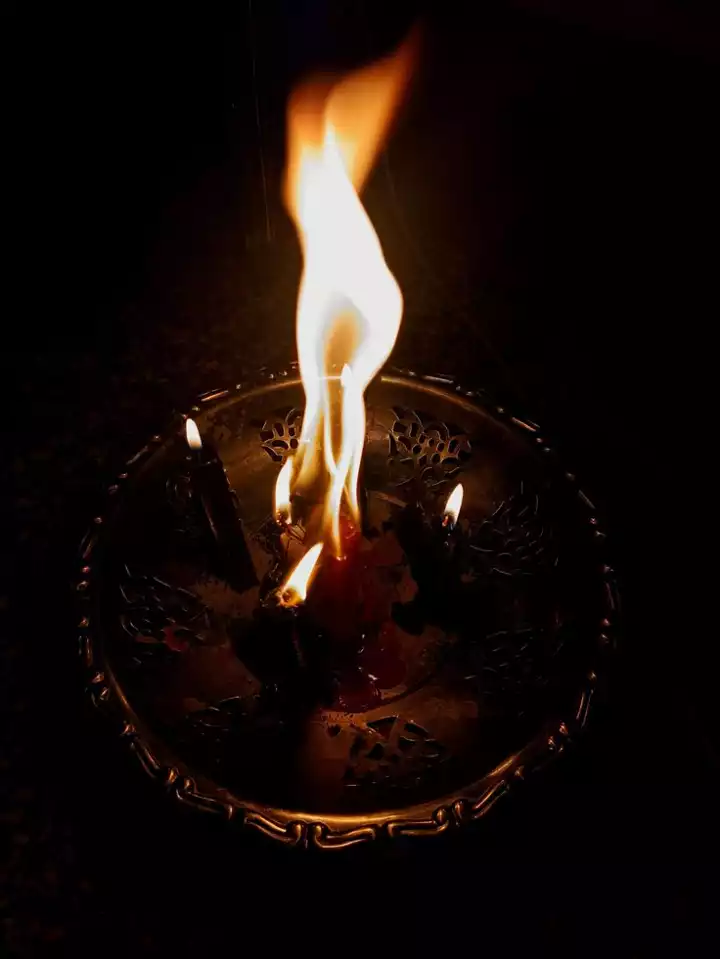
Spiritual cleansing uses purifying agents—water, smoke, sound, light—to dislodge and expel malignant energy. Baths prepared with specific herbs, salts, and prayers are common. Fumigation with copal, sage, or sulfur may be employed. The goal is not to understand the curse, but to overpower it with concentrated purification.
Uncrossing work, a staple of Hoodoo and conjure traditions, aims to remove crossed conditions—situations where spiritual blockages, hexes, or curses have entangled a person's luck and fortune. Uncrossing rituals often involve candles dressed with specific oils, prayers, and the burning of herbs like hyssop or rue. The work is both practical and spiritual, addressing symptoms while dismantling root causes.
Counter-spells are operations designed to neutralize or reverse the original working. These may mirror the structure of the curse, using sympathetic magic to cancel its effects. A binding may be countered with a loosening spell. A hex targeting health may be met with a healing ritual that addresses the spiritual root of the ailment.
Appeasing or dismissing spirits is necessary when the curse was empowered by non-human entities. Offerings, apologies, or formal dismissals may be required. In some cases, a more powerful spirit is petitioned to intervene on the target's behalf, negotiating or enforcing the release. This is delicate work, as spirits do not appreciate being treated as disposable tools.
Returning energy to its source—the classic reversal—redirects the curse back toward the one who cast it. This is often achieved through mirror work, specific prayers, or rituals that invoke the principle of karmic return. While emotionally satisfying, this method carries risks. If the original practitioner is skilled, they may have anticipated this response and built in defenses. Additionally, returning a curse may provoke escalation rather than resolution.
Different traditions emphasize different methods. African diasporic religions may lean heavily on spiritual alliances and offerings. European ceremonial magic might favor ritual precision and invocation of angelic forces. Indigenous practices often integrate ancestor work and land-based relationships. None is inherently superior; efficacy depends on the practitioner's training, the spirits they work with, and the nature of the curse itself.
Signs a Black Magic Spell Is Losing Its Influence
Recognizing when a curse is weakening allows the practitioner or target to assess progress and adjust strategy. The signs are often subtle, manifesting first in internal shifts before becoming externally visible.
One of the earliest indicators is the resolution of persistent obstacles. Situations that seemed inexplicably stuck begin to move. Job applications previously ignored receive responses. Legal matters that dragged on for months suddenly progress. Opportunities that were mysteriously closed reappear. These shifts suggest that the energetic blockages imposed by the curse are dissolving.
Improved mood and motivation are common psychological markers. Depression, lethargy, and hopelessness—symptoms frequently associated with curses—begin to lift. The target may find themselves capable of thinking clearly, making plans, and feeling optimistic about the future. This is not merely wishful thinking; it reflects a genuine restoration of energetic vitality.
Restoration of relationships is another sign. Curses often target social bonds, sowing discord, misunderstanding, and isolation. As the curse weakens, communication improves. Misunderstandings resolve more easily. Trust begins to rebuild. This does not mean all relationships will be salvaged, but the unnatural tension that characterized them diminishes.
Better sleep and fewer nightmares indicate that the spiritual pressure exerted by the curse is easing. Nightmares, insomnia, and sleep disturbances are hallmark symptoms of spiritual attack. Their cessation suggests that the target's psychic space is no longer being invaded.
A reduction in recurring negative patterns is particularly telling. Curses often lock individuals into loops—repetitive failures, cyclical crises, self-sabotaging behavior. When these patterns break, it suggests that the curse's programming is no longer operative.
Finally, the renewal of opportunities signals a broader shift in fortune. Doors that were closed begin to open. Resources become available. Allies appear. This does not happen overnight, but the trajectory shifts from downward to upward, from contraction to expansion.
When Reversing a Curse Is Not the Best Solution
Not every misfortune is the result of black magic, and not every magical attack warrants reversal. Discernment is essential. Misdiagnosis leads to wasted effort, unnecessary expenditure, and, in some cases, greater harm.
There are situations where a protective strategy is more effective than reversal. If the threat is ongoing and likely to be repeated, dismantling one curse while leaving oneself vulnerable to the next is short-sighted. In such cases, establishing robust defenses and spiritual alliances may provide more sustainable security.
Additionally, not every setback is evidence of black magic. Depression, financial hardship, relationship conflicts—these can all have mundane causes. Attributing every problem to a curse is a form of magical thinking that disempowers the individual. Before pursuing reversal, a thorough spiritual assessment is necessary. Divination, consultation with experienced practitioners, and honest self-examination can clarify whether black magic is genuinely at play or whether the issue lies elsewhere.
There is also the question of whether intervention is wise. In some traditions, particularly those influenced by martial or strategic philosophies, allowing an enemy to expend their energy on ineffective attacks is preferable to engaging directly. A weak curse that fails to achieve its goal may reveal the caster's incompetence and discourage future attempts. Intervening too aggressively may signal vulnerability or provoke a more skilled adversary to take interest.
Finally, some curses serve as initiatory experiences. This is a controversial perspective, but it is one held by certain practitioners who view spiritual attacks as catalysts for growth. Confronting and overcoming a curse can forge resilience, deepen one's understanding of occult mechanics, and clarify one's spiritual alliances. Not every curse should be welcomed, but neither should every curse be feared. Context and individual capacity determine the appropriate response.
Frequently Asked Questions
How long does it take to reverse black magic?
There is no universal timeline. Simple workings may be dismantled in a single ritual session. Complex, spirit-backed operations may require weeks or months of sustained effort. Factors influencing duration include the curse's age, the skill of the original practitioner, the spirits involved, and the target's cooperation. Impatience is a liability in this work. Rushing can result in incomplete removal, which may leave residual effects or provoke retaliation.
Can a curse reverse itself?
In a sense, yes. Curses fueled by emotion rather than ritual structure may lose power when the caster's attention shifts. Additionally, poorly constructed curses may backfire, affecting the caster instead of the target. This is not reversal in the intentional sense, but it is a form of automatic correction. Some practitioners build safeguards into their workings to prevent this, but not all do.
Can a practitioner undo their own spell?
Usually, yes. The practitioner who cast the spell has intimate knowledge of its structure and can dismantle it with relative ease. However, if spirits were invoked, those spirits may have their own investment in the operation's success and may resist cancellation. Additionally, some practitioners believe that once a curse is released, it takes on a life of its own and cannot be fully recalled, only redirected or neutralized.
What is the difference between cleansing and reversal?
Cleansing removes residual negative energy from a person, space, or object. It is a purification process. Reversal redirects the curse back to its source. Cleansing addresses symptoms and aftereffects; reversal confronts the curse itself. Both may be necessary in a comprehensive response to black magic, but they serve different functions.
Can black magic come back after it has been removed?
Yes, if the original caster remains hostile and capable. Removing a curse does not neutralize the person who cast it. Protection, warding, and boundary work are essential to prevent recurrence. Additionally, some curses are designed with redundancy—multiple layers or triggers that activate sequentially. Removing the first layer may provide temporary relief, but deeper components may still be operative. Thorough assessment and ongoing vigilance are necessary.
Conclusion
Magical workings are rarely as simple as pressing a button. The question of whether a black magic spell can be reversed does not yield a single answer, because spells themselves are not monolithic. Some can be dismantled with precision and care. Others can be neutralized through protective measures or spiritual alliances. Still others lose momentum on their own, their internal coherence dissolving as the conditions that sustained them change.
Reversal depends on the nature of the original operation, the skill of both the caster and the one addressing the curse, and the metaphysical terrain upon which the working was built. It requires discernment, patience, and often the assistance of experienced practitioners or spirits. It is not a guaranteed outcome, and it is not always the best strategy.
What matters most is understanding the mechanics of the spell—its structure, its fuel, its intended trajectory. Fear and panic distort perception and weaken defenses. Knowledge, by contrast, provides leverage. A curse understood is a curse that can be addressed, whether through removal, neutralization, reversal, or simply the strategic decision to outlast it. Magic is not theater. It is a craft, and like all crafts, it rewards those who approach it with both respect and rigor.


Comments
No comments yet. Be the first to share your thoughts!
Leave a Comment
Your email address won't be published. Comments are reviewed before being posted.