 English
 Español
 Français
 中文
中文The dead do not speak easily. Yet across centuries and civilizations, humanity has persisted in constructing elaborate systems to compel their voices—through invocation, through offering, through the careful arrangement of symbolic thresholds designed to permit passage between realms. Necromancy, the art of communicating with the deceased, occupies a peculiar territory in the history of esoteric practice: simultaneously reviled as transgression and revered as sacred knowledge. It exists not as a singular technique but as a constellation of methods unified by a common conviction—that death constitutes a transition rather than an annihilation, and that consciousness, in some form, persists beyond corporeal dissolution.
This belief has animated practices ranging from the Mesopotamian descent rituals to Spiritualist séances, from Homeric nekyia to contemporary channeling traditions. What distinguishes necromancy from adjacent divinatory arts is its insistence on direct communion rather than symbolic interpretation. The necromancer does not read signs; they summon presence. They do not interpret omens; they demand answers from those who have crossed the threshold and returned, however briefly, to testify.
The Architecture of Ancient召唤
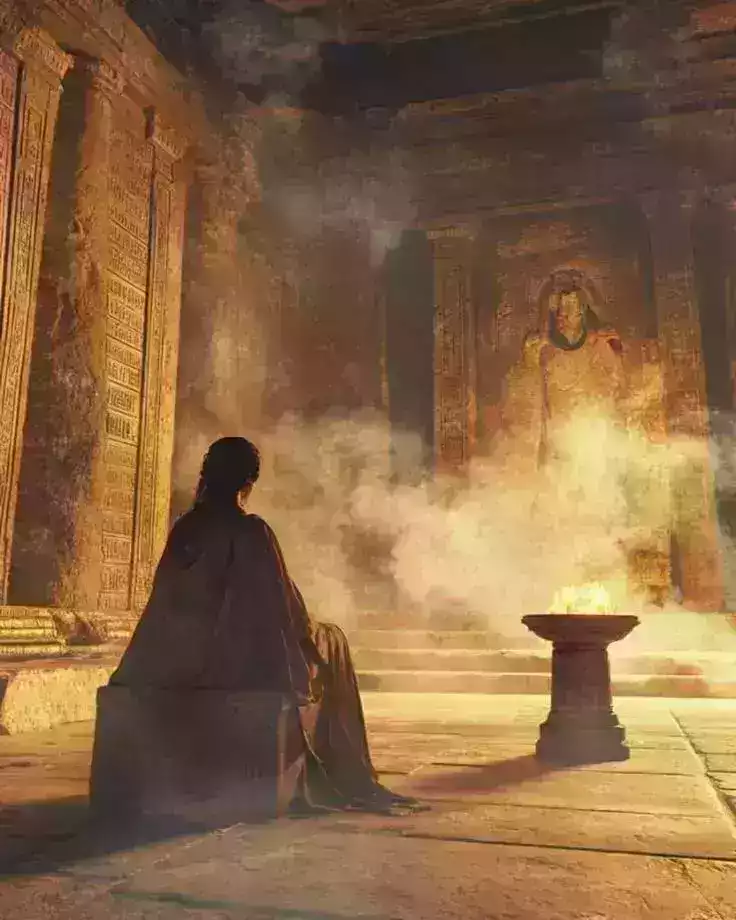
In the earliest textual evidence, necromantic practice appears already fully formed, suggesting traditions far older than written record. The Epic of Gilgamesh references communication with Enkidu's shade, summoned through earth-apertures believed to connect the living world with the subterranean realm of the dead. The Greek Nekyomanteion—oracle of the dead at Ephyra—functioned as an architectural apparatus designed specifically for such encounters, featuring labyrinthine passages, sensory deprivation chambers, and ritual preparation periods that transformed consultation into initiatory ordeal.
Homer's Odyssey preserves the procedural template: Odysseus travels to the world's edge, digs a trench, pours libations of honey, wine, and blood, and through these offerings creates a temporary aperture through which the shades might drink and, drinking, remember speech. The ritual precision matters. Blood vivifies the shadow-forms enough to grant them temporary articulation. Without it, they remain inarticulate, mere impressions of former identity.
This transactional framework—offering in exchange for knowledge—appears consistently across necromantic traditions. The dead require sustenance to manifest coherence. Whether that sustenance takes the form of blood, incense, prayer, or psychic energy varies culturally, but the underlying principle remains: communication demands reciprocity. The living must provide what the dead lack; the dead must yield what the living cannot otherwise access.
Medieval Condemnation and Underground Persistence
Christianity's ascendance reconfigured necromancy's cultural position dramatically. What had been, in classical contexts, a specialized but legitimate form of divination became explicitly demonic. The ecclesiastical interpretation held that any spirit contacted through necromantic ritual could not be the actual deceased—who resided either in Heaven's inaccessibility or Hell's confinement—but must necessarily be a demon masquerading in familiar form. This theological sleight transformed necromancy from communication with the dead into trafficking with infernal powers, subject to the severest condemnation.
Yet the practice persisted, driven underground into grimoire traditions that flourished despite prohibition. The Munich Manual of Demonic Magic, the various versions of the Key of Solomon, and the notorious Grimorium Verum all contain necromantic procedures, though often disguised within broader frameworks of ceremonial magic. These texts reveal practitioners navigating ecclesiastical danger through strategic ambiguity—framing invocations as compulsions rather than worship, emphasizing the magician's authority over the summoned entity, and incorporating Christian protective formulae as immunizing agents against accusations of heresy.
The rituals themselves grow more elaborate in this period, acquiring the protective circles, divine names, and hierarchical structures characteristic of high ceremonial magic. Necromancy becomes systematized, its spontaneous ancient forms calcified into complex procedural requirements. The medieval necromancer operates not at a liminal crossroads but within a carefully constructed ritual architecture designed to contain dangerous forces while permitting their interrogation.
The Spiritualist Reformation
The nineteenth century witnessed necromancy's unexpected rehabilitation through the Spiritualist movement, which reframed communication with the dead as empirical investigation rather than forbidden transgression. Beginning with the Fox sisters' rappings in 1848, Spiritualism proposed that the dead remained accessible through mediumistic trance states, that they retained personality and memory, and that their communications offered both consolation and evidence of consciousness's survival beyond bodily death.
This democratization transformed necromancy's social configuration entirely. No longer the exclusive province of trained magicians operating in ritual seclusion, contact with the deceased became possible in middle-class parlors through the intermediation of professional mediums. The séance replaced the necromantic circle, the medium's trance substituted for elaborate invocations, and spirit communication shifted from dangerous transgression to respectable, if controversial, inquiry.
Yet beneath this accessibility persisted older structures. The séance circle functions as protective boundary. The medium's trance state mirrors shamanic soul-journey. The requirement for darkness, the use of ritual objects, the insistence on group coherence and focused intention—all echo earlier necromantic technologies, domesticated but recognizable. Even the evidential phenomena—table-turning, automatic writing, materialization—follow patterns established in classical accounts of shade-summoning, where spirits required material substance to manifest perceptible presence.
Psychological Dimensions and the Architecture of Grief
Modern psychological interpretation approaches necromantic experience through frameworks of projection, dissociation, and externalized internal dialogue. From this perspective, the contacted "spirit" represents fragmented aspects of the practitioner's own psyche, unintegrated memories and emotions given autonomous voice through ritualized altered states. The necromantic encounter becomes therapeutic theater, permitting the living to complete unfinished relational business through controlled symbolic interaction.
This interpretation, while reductive from traditional perspectives, illuminates necromancy's persistent psychological function. Grief demands completion. Loss creates narrative rupture. The sudden absence of the deceased leaves conversations unfinished, questions unanswered, reconciliations unachieved. Necromantic practice, whether understood literally or symbolically, provides a structured methodology for addressing this incompletion—creating a ritual space where the living can speak to the dead and, crucially, hear response.
Whether that response originates from genuine post-mortem consciousness, from the practitioner's unconscious, or from some intermediate reality remains the tradition's central ontological question. Phenomenologically, however, the experience proves transformative regardless of source. The practitioner receives information, achieves closure, or gains perspective that shifts their relationship to loss. The dead, contacted, release their hold on the living—or perhaps the living release their hold on the dead.
Contemporary Practice and Ancestral Reclamation
Current necromantic practice manifests across surprisingly diverse contexts. Within reconstructionist Pagan traditions, ancestor veneration has gained prominence, emphasizing ongoing relationship with the dead as spiritual practice rather than transgressive exception. These approaches draw on Indigenous models where the boundary between living and dead remains permeable, where ancestors function as accessible guides and protectors, and where regular communication maintains reciprocal obligations across the threshold of death.
Chaos magic practitioners have adopted necromantic techniques as experimental methodology, approaching spirit contact with pragmatic agnosticism—testing what produces results rather than adhering to inherited dogmatic frameworks. This approach strips necromancy of its moral scaffolding, treating communication with the dead as neutral technology subject to ethical application rather than inherently transgressive act.
Simultaneously, therapeutic applications have emerged in grief counseling contexts, where facilitating symbolic dialogue with the deceased—through empty-chair techniques, letter-writing, or guided visualization—serves healing functions without making ontological claims about the dead's actual presence. The ritual structure proves psychologically effective independent of metaphysical interpretation.
The Persistent Question of Authenticity
Necromancy's fundamental challenge remains verification. How does one authenticate communication with the dead? The classical answer involved evidential specificity—information unknown to the practitioner, later confirmed. Spiritualism elevated this into experimental protocol, with researchers like William James and Frederic Myers attempting to establish empirical criteria for genuine mediumship. Yet the problem of alternative explanation persists: telepathy, unconscious inference, fraud, and statistical probability all complicate clear assessment.
Traditional practitioners often respond that demanding material proof misconceives the encounter's nature. Necromantic communication occurs in liminal states deliberately constructed to transcend ordinary consciousness. The dead speak in dreams, in visions, in symbolic languages that resist literal translation. To demand reproducible empirical evidence imposes inappropriate epistemological frameworks on experiences that operate according to different ontological principles.
This tension between evidential demand and experiential authenticity defines contemporary necromantic discourse. Scientific materialists dismiss all such contact as delusion or fraud. True believers accept communications uncritically. Thoughtful practitioners occupy the difficult middle ground—acknowledging the impossibility of certain proof while maintaining that genuine contact, however defined, can and does occur under appropriate ritual conditions.
Ethical Considerations and Necromantic Responsibility
The question of whether one should communicate with the dead differs fundamentally from whether one can. Traditional prohibitions stem not merely from theological positions but from ethical concerns about disturbing the dead's rest, binding spirits to earthly concerns, or opening channels that permit unwanted entities access to the living. These cautions deserve serious consideration even outside explicitly religious frameworks.
Responsible necromantic practice requires intention clarity. Summoning the dead from curiosity or desire for power differs ethically from seeking necessary closure or requesting ancestral guidance. The tradition's persistent emphasis on proper motivation reflects accumulated wisdom about practice's psychological and spiritual consequences. Those who approach the dead with respect, clear purpose, and appropriate protective measures report profoundly meaningful encounters. Those who approach carelessly risk psychological destabilization, obsessive attachment, or encounter with forces they cannot effectively manage.
The dead, in this understanding, retain agency. They are not mere repositories of information subject to compulsion but autonomous consciousnesses who may choose to respond—or refuse. Ethical necromancy acknowledges this autonomy, approaching the deceased as one would approach the living: with courtesy, clear communication of needs, and acceptance of potential refusal.
What emerges from examining necromancy across its historical development is not a single coherent practice but a persistent human impulse—the refusal to accept death as absolute severance, the insistence that relationship continues beyond physical dissolution, and the conviction that with proper technique, proper intention, and proper courage, the barrier between worlds becomes permeable. Whether understood as literal communication, psychological integration, or symbolic completion, necromancy addresses fundamental human needs: to maintain connection with those we have lost, to receive wisdom from those who have crossed the threshold we all must eventually face, and to affirm that consciousness, in whatever form, persists beyond the body's dissolution. The dead may not speak easily, but humanity has never ceased listening for their voices.
Comments
No comments yet. Be the first to share your thoughts!
Leave a Comment
Your email address won't be published. Comments are reviewed before being posted.