 English
 Español
 Français
 中文
中文Humanity has always walked the edge between reverence and terror when contemplating the boundary of death. Among the oldest and most feared expressions of this tension lies the practice of death spells—ritual acts intended to summon misfortune, collapse, illness, or mortality upon another. Nearly every civilization, from the deserts of ancient Egypt to the forests of medieval Europe, developed intricate belief systems surrounding curses, ritual destruction, and spiritually harmful magic. These were not merely superstitions relegated to folklore; they were embedded deeply within legal codes, religious warnings, and collective psychology.
The fascination with forbidden power is a thread woven through human history. Where law and morality failed to deliver justice, magic promised retribution. Where powerlessness reigned, sorcery offered control. The death spell, in all its variations, became an instrument of spiritual warfare—a way to reach across the invisible world and invoke forces that could unmake a life, a reputation, or a soul. What follows is an examination of these practices not as sensational curiosities, but as historical, anthropological, and occult phenomena worthy of serious inquiry.
What Are Death Spells?
In the most neutral academic sense, a death spell is a ritual act designed to bring about harm, ruin, or mortality through supernatural or spiritual means. Historically categorized under terms such as black magic, witchcraft, sorcery, necromancy, and baneful ritual systems, these practices occupied a shadowed corner of the occult landscape. They were distinguished from protective or healing magic by their destructive intent and their association with infernal, chthonic, or adversarial powers.
It is critical to understand that "death" in this context was not always interpreted literally. In many traditions, the language of death symbolized broader forms of collapse: the ruin of reputation, the decay of health, the dissolution of relationships, the loss of prosperity, or the spiritual isolation of the target. A curse might seek to strip someone of their social standing, render them infertile, drive them to madness, or bring about a slow decline rather than immediate physical demise. The symbolic and the literal were often entangled, making death spells as much psychological weapons as metaphysical ones.
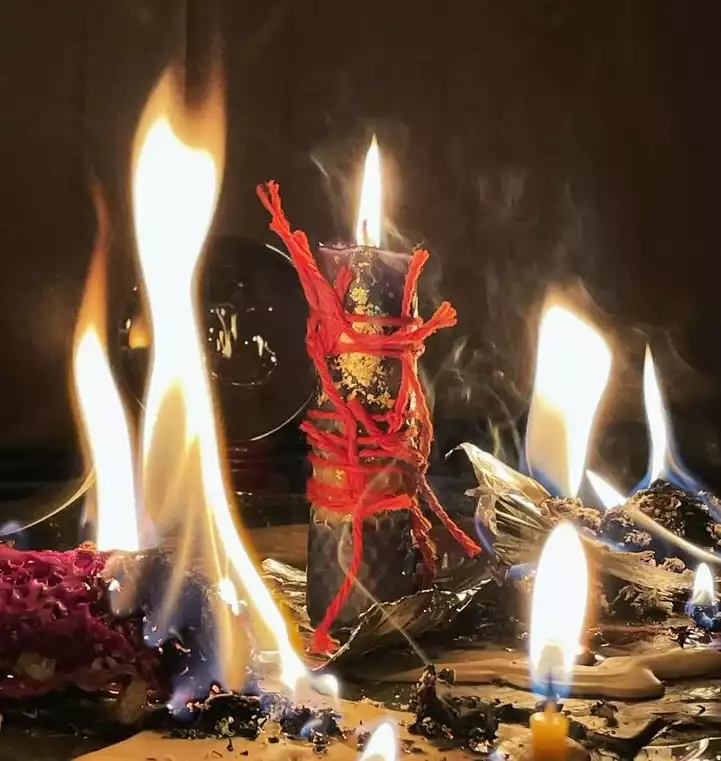
These rituals were typically conducted in secret, often at liminal times—midnight, the dark moon, crossroads, graveyards—and involved objects of contagion: hair, nails, blood, clothing, or effigies. The practitioner would invoke spirits, deities, or forces aligned with destruction, entropy, and vengeance. The act itself was a transgression, a crossing of boundaries both moral and spiritual, which only heightened its perceived efficacy and danger.
Ancient Civilizations and Death Curses
The historical record is rich with evidence of death magic across cultures, each interpreting the mechanisms and morality of such practices through their own cosmological lens.
Ancient Egypt
In ancient Egypt, magic was a recognized and essential force within both religion and daily life. The priests and magicians of Egypt wielded heka, a concept encompassing both divine power and practical sorcery. While much of Egyptian magic was protective or restorative, there existed a darker undercurrent. Cursing rituals, particularly those targeting tomb robbers or political enemies, were inscribed on papyri and carved into stone. The so-called "Execration Texts" involved the ritual destruction of clay figurines or pottery inscribed with the names of enemies, foreigners, or rebellious spirits. These objects were smashed, burned, or buried as acts of symbolic annihilation.
The Egyptians believed that speaking a name was to give it power, and thus to destroy a name ritually was to erase its bearer from existence. Death spells in this context were acts of cosmic order as much as personal vengeance—designed to neutralize chaos and protect the stability of Ma'at, the divine order.
Greece and Rome
The Greco-Roman world left behind thousands of curse tablets, known as defixiones in Latin and katadesmoi in Greek. These thin sheets of lead were inscribed with curses, folded, pierced with nails, and deposited in graves, wells, or chthonic sanctuaries. The language was direct and binding: "I curse [name] so that they may not speak, move, or succeed." Targets ranged from romantic rivals to courtroom opponents to competitors in the circus.
These tablets often invoked underworld deities—Hecate, Hermes Chthonios, Persephone—or anonymous "spirits of the dead" who were believed to carry out the curse. The act of depositing the tablet in a grave or near a corpse was significant: it placed the curse within the realm of death itself, leveraging the liminal power of the deceased as intermediaries or enforcers.
Roman law explicitly condemned malefic magic. The Twelve Tables, one of Rome's earliest legal codes, included provisions against those who enchanted crops or "sang incantations" to harm others. Despite this, cursing remained widespread, a testament to the pervasive belief in its efficacy.
African Diasporic Traditions
Across the African continent and throughout the diaspora, traditions of spiritual warfare evolved in complex and regionally distinct forms. In West African systems such as Vodun, Ifá, and various witchcraft traditions, the concept of harmful magic was deeply understood. Practitioners known as babalawos, bokors, or simply witches were believed capable of sending curses, illness, or death through spirit work, herbal poisons, or ritual manipulation.
In the Americas, where African spiritual systems merged with Indigenous and European influences, practices such as Hoodoo, Palo Mayombe, and certain branches of Vodou retained this understanding of destructive magic. Graveyard dirt, bones, crossroads, and the invocation of ancestral or underworld spirits remained central to these workings. The fear of being "cursed" or "hexed" was—and in some communities still is—a powerful social force.
Importantly, these traditions also developed robust systems of protection, reversal, and spiritual cleansing, suggesting that death magic was understood as part of a broader spiritual ecology rather than an isolated phenomenon.
Medieval Europe
Medieval Europe's relationship with death spells was entangled with the Church's condemnation of witchcraft and heresy. Grimoires such as the Sworn Book of Honorius, The Book of Abramelin, and later the Grimorium Verum contained rites for summoning spirits capable of causing harm, illness, or death. Though many of these texts claimed Judeo-Christian legitimacy, their contents were often heterodox, invoking demons, planetary spirits, or the restless dead.
Folk magic in rural Europe also retained death curse traditions. The "evil eye," wax or clay poppets, knotted cords, and spoken hexes were common methods. Accusations of witchcraft frequently centered on these practices, particularly when a person's illness or misfortune coincided with a known quarrel or enmity. Trials and executions during the witch hunts of the 15th to 17th centuries were fueled in part by communal terror of malefic sorcery.
Middle Eastern Traditions
In the Islamic world, the concept of sihr (sorcery) included both beneficial and harmful magic. Quranic verses and Hadith literature condemned black magic, yet belief in its reality was widespread. Talismans, amulets, and protective verses were employed to guard against curses, the evil eye, and harmful jinn. Conversely, practitioners of sihr were believed capable of binding, poisoning, or destroying their targets through ritual means, often invoking jinn or darker spiritual entities.
Jewish mystical traditions also acknowledged the existence of harmful magic. The Sefer Raziel HaMalach and other Kabbalistic texts included references to spirits of destruction and methods of spiritual attack, though these were typically framed within a larger cosmology of divine judgment and angelic hierarchy.
Death Spells in Demonology
The relationship between death magic and demonology is intricate and historically documented. Grimoires, those enigmatic manuals of ceremonial magic, frequently catalogued spirits associated with vengeance, ruin, pestilence, and death. These entities were not always "demons" in the Christian sense; many were planetary spirits, fallen angels, or liminal intelligences whose natures inclined them toward destruction.
The Lesser Key of Solomon, or Lemegeton, describes seventy-two spirits, several of whom were said to cause discord, illness, or downfall. Spirits such as Beleth, Andras, and Buer were invoked for purposes that ranged from healing to harm. The magician's intent, combined with the spirit's nature, determined the outcome. The grimoire tradition operated on a logic of hierarchy and contract: the practitioner sought to compel or negotiate with these entities, often using divine names, seals, and ritual authority.
In the Grand Grimoire and the Grimorium Verum, the invocation of Lucifuge Rofocale and other infernal ministers was framed as a dangerous but potentially rewarding endeavor. These texts did not shy away from describing rituals intended to destroy enemies, though they wrapped such acts in layers of symbolic complexity and spiritual consequence.
What emerges from these traditions is not a simplistic "evil magic" but a sophisticated worldview in which destruction, decay, and death were understood as natural forces that could be ritually accessed and directed. The magician who engaged with these forces walked a perilous line, risking spiritual contamination, retribution, or madness.
Why Humanity Feared Death Magic
The terror inspired by death spells was not irrational. It was rooted in several interlocking psychological and social realities.
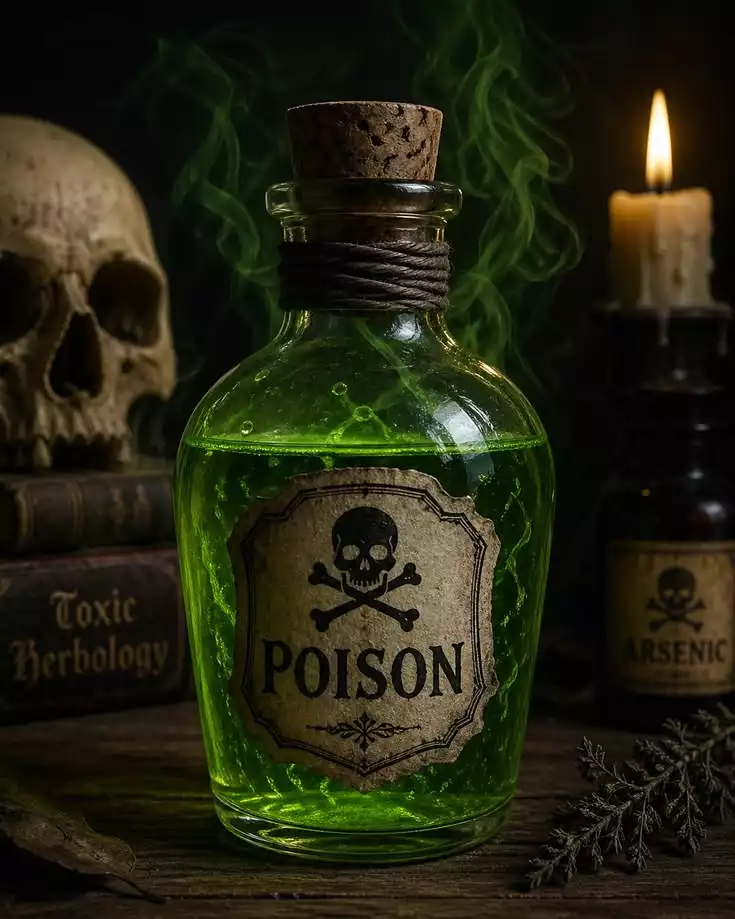
First, there was the question of powerlessness. Legal systems were often corrupt, slow, or inaccessible. When no earthly justice could be had, the promise of magical retribution offered solace—or threat. The mere belief that one could be cursed was enough to generate real psychological and physiological effects. Fear, paranoia, and psychosomatic illness could manifest as the "proof" of a curse's efficacy.
Second, death magic was a tool of revenge and social control. Accusations of witchcraft or cursing could be wielded to isolate, punish, or eliminate rivals, outsiders, or unpopular individuals. In many societies, the witch or sorcerer became a scapegoat for communal misfortune, disease, or crop failure. The existence of death spells, whether real or imagined, created a climate of suspicion and fear.
Third, rulers and religious authorities feared the subversive potential of magic. If a peasant could curse a king, or a witch could topple a bishop, the structures of power were vulnerable. Laws against sorcery were as much about maintaining hierarchy as about protecting the populace.
Finally, there was the existential dread of the unknown. Death itself was—and remains—the ultimate mystery. Magic that claimed to manipulate this boundary struck at the heart of human anxiety about mortality, divine judgment, and the afterlife.
Folklore vs Modern Internet Occultism
There exists a significant chasm between the historical practice of death magic and its contemporary portrayal on social media and occult forums. Ancient and traditional systems were typically secretive, initiatory, and culturally embedded. Knowledge was transmitted orally, through apprenticeship, or within closed communities. The practitioner was often a figure of ambiguous social status—feared, consulted, and ostracized in equal measure.
Modern internet occultism, by contrast, tends toward democratization and spectacle. Platforms encourage rapid sharing, aesthetic presentation, and performative identity. "Hexing" and "cursing" have become part of a broader online witch culture that blends genuine practice with activism, fantasy, and entertainment. The language is often theatrical, the imagery borrowed from fiction, and the ethical frameworks inconsistent.
This is not to dismiss modern practitioners—many are serious, studied, and engaged in legitimate spiritual work. But the shift from clandestine, culturally rooted tradition to public, individualistic expression has altered the nature of death magic. What was once a matter of survival, honor, or communal protection has, in some circles, become a tool for personal empowerment or political performance.
Modern Interpretations of Death Spells
In contemporary occult practice, death magic is often reinterpreted symbolically. Rather than seeking literal mortality, practitioners may frame such work as energetic destruction, severance, or the ending of cycles. A "death spell" might be understood as the ritualized collapse of a toxic relationship, the removal of an obstacle, or the spiritual decay of an oppressive structure.
Some modern magicians draw on Jungian psychology, viewing death spells as shadow work—ritualized confrontations with one's own destructive impulses, fears, or unresolved rage. The target becomes internalized, and the spell a psychological exorcism rather than an external attack.
Others maintain a more traditional approach, working within established grimoire or folk magic systems, and treating death magic as a legitimate if dangerous tool within a broader spiritual arsenal. For these practitioners, the language of death is not metaphorical but operative, requiring discipline, protection, and ethical discernment.
The diversity of interpretations reflects the fragmented, pluralistic nature of modern occultism. There is no singular orthodoxy, no central authority to dictate meaning or method. What remains constant is the symbolic and psychological power of death as a concept—an ending, a transformation, a crossing of thresholds.
Conclusion
Death spells occupy a liminal space in human consciousness, suspended between the desire for justice and the fear of transgression. They are relics of a worldview in which the invisible and the visible were not separate realms but interwoven realities, where words, objects, and intentions could reach across the veil and reshape fate. From the execration texts of Egypt to the lead curse tablets of Rome, from the graveyard rituals of Hoodoo to the infernal hierarchies of medieval grimoires, humanity has continuously returned to the idea that destruction, too, can be sacred—or at least wielded.
What these practices reveal is not merely a history of violence or malice, but a deeper engagement with mortality, power, and the boundaries of the self. The death spell is a mirror: it reflects our fears, our rage, our helplessness, and our refusal to accept powerlessness. It asks uncomfortable questions about agency, morality, and the limits of spiritual authority.
In the end, the fascination endures not because death magic offers easy answers, but because it confronts the oldest and most unanswerable of human mysteries: the nature of death itself, and the power we believe—or hope—we might hold over it.
Comments
No comments yet. Be the first to share your thoughts!
Leave a Comment
Your email address won't be published. Comments are reviewed before being posted.