
 English
 Español
 Français
 中文
中文The Primordial Substance
Blood occupies a singular position within the taxonomy of ritual materials. Unlike oils pressed from plants or minerals ground to powder, blood arrives already animated—warm, pulsing with the residual memory of circulation. It is not merely symbolic of life but constitutionally identical with it. Within numerous magical traditions spanning millennia, this red fluid has represented the ultimate currency: that which cannot be replaced, only expended. The alchemists spoke of the quinta essentia, the fifth element binding all things, and blood became its terrestrial echo.
The Roman augurs examined the entrails of sacrificial animals not merely for divination but to observe how blood pooled and clotted, interpreting the patterns as divine communication. In the temple complexes of Mesopotamia, blood irrigation—the ceremonial pouring of animal blood around sacred perimeters—served to establish boundaries between profane and consecrated space. These weren't primitive misunderstandings of biology but sophisticated symbolic frameworks wherein blood functioned as a medium of exchange between visible and invisible worlds.
Anthropological records reveal consistency across disparate cultures: blood seals, blood binds, blood opens. From the Aztec tlacatecólotl rituals to Norse blót ceremonies, the deliberate release of blood marked thresholds—moments when ordinary reality became permeable. This wasn't violence for its own sake but calculated transgression, a recognized technology of the sacred that modern sanitized spirituality often fails to comprehend.
Historical Cartography of Blood Rites
To trace the geography of blood ritual is to map humanity's relationship with mortality itself. In ancient Egypt, the goddess Sekhmet was offered beer dyed red to resemble blood, a substitution myth that reveals both the power and the danger embedded in the practice. The original offerings were not symbolic. Temple priests understood blood as containing heka—the animating magical force that powered creation. Its release was simultaneously destruction and generation.
Medieval grimoires approached blood with clinical precision. The Clavicula Salomonis specifies the ritual knife must draw the magician's own blood for certain invocations, particularly those binding entities of the chthonic realms. This wasn't metaphor. The text delineates exact quantities, timing relative to lunar phases, and the proper vessels for collection. Blood became calligraphic ink for sigils, adhesive for binding pacts, and libation for entities that would accept no other payment.
The witch trials of early modern Europe fixated obsessively on blood, though often projecting fears rather than documenting realities. Yet beneath the hysteria lay fragments of authentic practice. The accused sometimes confessed—under duress or not—to pricking fingers for marking, to menstrual blood preserved in bottles for curses, to the belief that blood carried one's essence and could be manipulated at distance. These testimonies, however corrupted by torture and expectation, gesture toward a subterranean tradition that survived Christianization.
In African diasporic traditions, blood retained its central position even as practices evolved through centuries of forced migration and syncretism. Vodou ceremonies recognize blood as the vehicle of lwa possession, the substance through which divine horsemen mount their chosen. Santería's matanzas—ritual slaughters—feed the orishas with the life force they require to intervene in material affairs. These aren't folkloric remnants but living technologies, practiced with intention and yielding observable results within their own epistemological frameworks.
The Covenant Architecture
Blood establishes contracts in ways words cannot. The persistence of "blood oaths" across cultures suggests a universal recognition of this principle. When two parties mingle blood, they create biological kinship where none existed—a literal sharing of cellular material that transcends social convention. In ritual contexts, this mechanism extends beyond the human dyad.
The pact tradition of European demonology centered on blood signatures. The logic was straightforward: a name written in blood carried more than identity—it conveyed essence, provided a material anchor the contracting entity could grasp. The magician offered a piece of themselves, irrevocable and tangible. Whether the entities invoked were psychological constructs, egregores, or autonomous intelligences becomes secondary to the phenomenological experience of commitment. Blood made the abstract visceral.
Indigenous Australian traditions speak of bloodletting during initiation rites, where the novice's blood feeds the land and establishes relationship with country. This isn't mere symbolism but ontological reconfiguration—the initiate becomes literally of the place through blood offering. The substance soaks into earth, and the person is transformed from visitor to kin. The ritual rewrites not just social status but metaphysical position.
Even in traditions that moved away from physical blood, the metaphor retained potency. The Christian Eucharist transforms wine into "the blood of Christ," maintaining the covenant structure while sanitizing the practice. Mystics like Teresa of Ávila described visions of drinking divine blood, experiences that retained all the transgressive power of earlier practices while relocating them to interior visionary space. The symbol persisted because the underlying logic remained compelling: blood bonds, blood transforms, blood transcends ordinary exchange.
Psychological Dimensions and the Shadow
Modern depth psychology offers frameworks for understanding blood ritual that don't require literal belief in spirits or demons. Jung's concept of the shadow—those aspects of psyche we repress or deny—maps surprisingly well onto ritual blood practice. The act of drawing blood, of confronting one's own corporeal fragility, forces encounter with mortality and limitation. It's a deliberate crossing of boundaries the ego maintains for comfort.
The transgressive nature of blood ritual serves as psychodrama, externalizing internal conflicts. When the practitioner cuts themselves—even minimally, as most contemporary practices involve—they enact agency over their own boundary violation. This is profoundly different from accidental injury. The ritual context transforms a taboo act into a controlled symbolic death and rebirth. The blood released represents the old self; the healing represents regeneration under new terms.
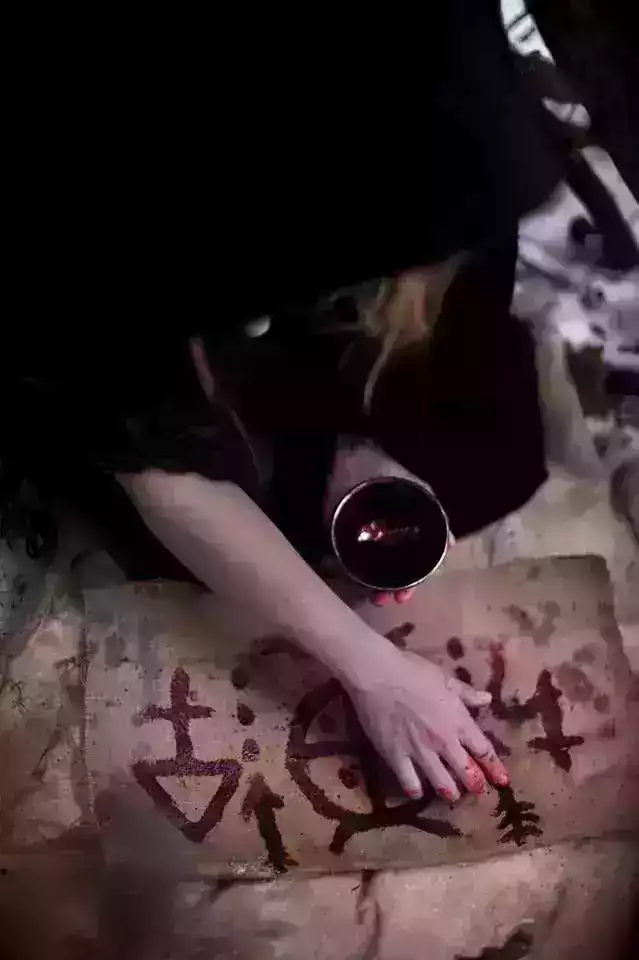
For practitioners working within initiatory frameworks, blood marks thresholds between grades or levels of practice. The first time one uses their own blood in ritual remains memorable not because of the physical sensation—usually minimal—but because of the psychological rubicon it represents. One has moved from theoretical engagement to embodied commitment. The squeamishness most feel initially reflects genuine recognition that something irreversible has occurred. Blood on the altar means you can't pretend this is academic anymore.
There's also the question of visceral authenticity. In an age of digital abstraction, blood ritual reasserts the body's relevance to spiritual experience. It cannot be outsourced or virtualized. Your blood, your body, your choice to transgress comfort for the sake of the work. This materiality serves as antidote to the dissociation modern life encourages. The practitioner who works with blood must remain present, must acknowledge they are flesh as well as spirit.
Symbolic Architectures and Color Theory
Red occupies unique psychophysical territory. It's the first color infants distinguish, the wavelength our eyes are most sensitized to detect. Evolutionary biology explains this: recognizing blood meant assessing injury and threat. But this biological salience gave red tremendous symbolic weight. In ritual contexts, blood's redness isn't incidental but essential to its function.
Alchemical traditions coded blood within their elaborate color symbolism. The rubedo or reddening represented the final stage of the Great Work—integration, completion, the union of opposites. Blood appeared at this culminating phase as both literal substance and symbolic representation of perfected matter. The alchemist who had survived the nigredo (blackening) and albedo (whitening) emerged at the rubedo transformed, and blood represented this transformation's physicality.
In Tantra, blood—particularly menstrual blood—functions within the worship of the Goddess in her fierce aspects. The panchamakara or five M's include mamsa (flesh) and by extension blood, substances consumed ritually to transgress purity taboos and access non-dual consciousness. The practitioner confronts disgust and transcends it, recognizing all phenomena as manifestations of divine consciousness. Blood becomes a teacher, revealing the arbitrary nature of categories like "pure" and "impure."
Color theory in folk magic traditions consistently associates red with passion, anger, protection, and life force. Red candles, red threads, red ochre—all invoke blood's associations without requiring the substance itself. Yet in practices deemed "darker" or more extreme, practitioners insist on the real thing, arguing that substitution dilutes efficacy. The debate itself reveals tensions between symbolic and materialist approaches within occult communities: is the sign sufficient, or must the referent itself be present?
The Ethics of Extraction
Contemporary practitioners face questions their ancestors often didn't: whose blood, obtained how, used under what conditions of consent? The romantic image of the lone magician in candlelit chamber obscures real ethical complexities. Historical practices frequently involved animal sacrifice, a reality most urban practitioners are utterly unprepared for. To kill a chicken, collect its blood, and continue with one's ritual requires either cultural familiarity with butchery or significant psychological preparation. Most contemporary occultists possess neither.
The turn toward using one's own blood exclusively represents both practical adaptation and ethical evolution. Self-bloodletting removes questions of consent—you choose, you bear the consequences. It also intensifies the personal investment. You cannot externalize the sacrifice onto another creature; your own life force enters the working. Some traditions argue this makes the magic more powerful, as intention and material perfectly align.
Yet even personal blood use raises questions. How much extraction is reasonable? What constitutes obsession versus dedication? When does ritual practice shade into self-harm? These aren't easy boundaries to police, especially in solitary practice without community oversight. The line between sacred ordeal and pathology can blur, particularly for practitioners with histories of self-injury. Responsible teaching emphasizes minimalism—a pinprick, a few drops, never quantities that risk health.
The romanticization of blood sacrifice in some occult literature can be dangerous, suggesting that more extreme practices yield proportionally greater results. This isn't borne out by traditional sources, which typically describe blood use as specific to certain workings, not a general amplifier. The medieval grimoires don't prescribe blood for everything—often a circle of salt or fumigation suffices. Blood appears in targeted contexts: bindings, pacts, the most serious invocations. Its value lay partly in its scarcity of use, the recognition that some tools should remain reserved for necessity rather than casual deployment.
Menstrual Blood and Feminine Mysteries
Menstrual blood occupies distinct territory within blood magic, carrying associations that differ markedly from blood obtained through injury. Historical attitudes ranged from profound taboo to sacred power, sometimes simultaneously. Pliny the Elder catalogued beliefs that menstrual blood could blunt iron, kill crops, and drive dogs mad—a litany of anxieties about uncontrolled feminine power. Yet other traditions recognized it as uniquely potent precisely because it flowed without violence, death without dying.
In hoodoo traditions of the American South, menstrual blood featured in powerful love and domination work. The practitioner would incorporate it into food, believing the target who consumed it would become bound. This operated on sympathetic principles: the blood that could create life could also create obsessive attachment. Contemporary practitioners often find these workings ethically problematic—they involve deception and violation of consent—yet they remain documented components of the tradition's history.
Feminist witchcraft movements of the late twentieth century reclaimed menstrual blood as sacred substance, rejecting patriarchal taboos. Practitioners developed rituals acknowledging menstruation as a cyclical reminder of connection to lunar and natural rhythms. Blood became offering to the Goddess, painted onto ritual tools, or released directly onto earth as gift. This represented not just reclamation but inversion of stigma—the "curse" reframed as blessing, the source of shame transformed into source of power.
The physiological reality that menstrual blood contains not just blood but uterine tissue, cellular material, and hormonal signatures made it conceptually different from other blood. It represented potential—the monthly releasing of what might have become life. Some practitioners argued this gave it unique magical properties, a liminal status between manifestation and dissolution. Others pointed out that such distinctions risked biological essentialism, excluding those who didn't menstruate from certain practices. The debates continue, revealing how contemporary values intersect with historical techniques.
Blood in Contemporary Chaos Magic and Left-Hand Path Work
Modern chaos magic approaches blood pragmatically, as one tool among many in the magician's kit. The question isn't whether blood is inherently special but whether using it produces desired results. Chaos practitioners might employ blood for particularly important sigilization or to charge servitors, but with emphasis on experimentation rather than tradition. If blood works for you, use it; if red paint yields equivalent results, why bother with biohazards?
This instrumental approach contrasts with Left-Hand Path traditions, which often retain more ceremonial frameworks. Satanic ritual, particularly in traditions following LaVey's The Satanic Bible, mostly eschews blood sacrifice, viewing it as superstitious and unnecessary. Yet Theistic Satanists and Demonolators sometimes work with blood offerings to specific entities, arguing that certain spirits explicitly request it. These practitioners report that relationships with such entities deepen when blood offerings occur, suggesting either the entities' reality or powerful psychodramatic mechanisms—or both.
The Temple of Set's Xeper philosophy emphasizes individual transformation and self-deification. Within this framework, blood might serve as a profound personal symbol of commitment to one's own evolution, but it's not prescribed practice. The emphasis falls on the practitioner's informed choice and the meaning they construct around the act. This reflects broader trends in contemporary occultism toward personalization and away from rigid prescriptive systems.
Urban primitive movements and body modification communities sometimes overlap with occult practice, creating spaces where bloodletting through piercing, cutting, or scarification becomes both aesthetic and ritual act. The endorphin release from controlled injury combines with symbolic intention, producing intense altered states. Practitioners describe these experiences as transformative, the pain serving as ordeal that burns away old patterns. The blood becomes visible proof of transformation, the scar tissue a permanent record of the working.
Medical Realities and Risk Management
Any discussion of blood in ritual must address practical safety. Blood is a biohazard, capable of transmitting pathogens. HIV, hepatitis, and numerous other infections travel through blood contact. Solo practitioners working with their own blood face minimal disease risk but must still observe basic hygiene: sterilized implements, proper disposal, appropriate wound care. Infection from contaminated ritual tools is genuinely possible and profoundly mundane.
Group rituals involving blood present magnified risks. Shared ritual knives are disease vectors. Practices involving blood mingling—once common in certain traditions—now carry unacceptable health risks. Responsible contemporary groups either prohibit blood use entirely or require rigorous protocols: individual sterile lancets, no sharing of implements, immediate cleanup with appropriate disinfectants, and informed consent processes that include health screening.
The quantity of blood matters practically as well as symbolically. A single drop obtained via finger prick poses negligible health risk to a healthy adult. Larger amounts require understanding of blood volume, clotting mechanisms, and when collection becomes dangerous. Historical practices sometimes involved significant bloodletting—therapeutic in intent but risky in practice. Contemporary practitioners should recognize that pre-modern magicians didn't possess modern understanding of infection, blood loss, or circulatory shock. Some historical practices killed their practitioners; admiration for tradition doesn't require replicating fatal errors.
Psychological aftercare matters too. For practitioners without previous experience of deliberate self-injury, the first ritual blood use can be destabilizing. Some report feeling energized and empowered; others experience unexpected emotional vulnerability or dissociation. Having integration plans—journaling, discussion with a mentor, grounding practices—helps process the experience constructively rather than letting it become traumatic or compulsive.
Substitutions and Symbolic Equivalencies
Not every practitioner chooses to work with physical blood, and most traditions recognize valid substitutes. Red wine appears frequently, particularly in traditions with Catholic roots where the Eucharistic association makes it theologically elegant. Dragon's blood resin, despite the name, comes from plants and serves as bloodless "blood" in incenses and inks. Red ochre, humanity's oldest pigment, appears in ritual contexts globally, used to paint bodies, stones, and cave walls in ceremonies whose purposes we can only guess.
The principle of symbolic substitution allows for practice that maintains the underlying logic without the biohazard. From a ceremonial magic perspective, the key is conviction—the magician must genuinely invest the substitute with appropriate meaning. A practitioner who squeamishly uses wine as blood substitute while secretly feeling it "doesn't count" will probably get lesser results than one who deliberately consecrates wine as perfect equivalent. Belief shapes magical reality, whether we interpret that psychologically or metaphysically.
Some practitioners create "artificial blood" specifically for ritual use, mixing ingredients that approximate blood's appearance and investing the creation with intention. The process of making the substitute becomes itself ritual, encoding purpose into substance. This approach appeals to those who appreciate the symbolic weight of blood but prefer to avoid actual biohazards or have ethical objections to bloodletting.
Yet substitution has limits. In traditions where material links matter—where the magical theory requires actual biological material to establish connection—symbolic equivalents may not suffice. A practitioner creating a poppet for healing might argue that including a drop of the target's blood creates a stronger link than any symbolic alternative. Whether this is objectively true or creates psychological conditions that make the work more effective becomes a matter of ongoing magical experimentation.
The Future of Blood in Esoteric Practice
Contemporary occultism finds itself negotiating between historical precedent and present values. The increasing emphasis on consent, safety, and psychological health sometimes conflicts with traditional practices that assumed different contexts. Blood magic becomes a test case: can we honor historical techniques while adapting them to contemporary ethical frameworks?
Some practitioners argue for complete preservation of traditional methods, contending that sanitization strips practices of transformative power. Others insist that evolution is necessary, that traditions either adapt or become museum pieces. The middle path might involve maintaining the option of blood work for serious practitioners who understand the risks while developing alternative approaches for those who choose them.
Digital culture presents interesting challenges. How does blood magic function in a world increasingly detached from physical reality? Perhaps its very materiality becomes more valuable, not less, as an antidote to abstraction. The practitioner who uses blood insists on embodiment, refuses the disembodied spirituality that skips over flesh on the way to transcendence. In this sense, blood magic becomes radically incarnational, a practice that says the body matters, that transformation occurs through, not despite, our animal nature.
The ongoing conversation about cultural appropriation also affects blood practices. Many techniques derive from specific cultural contexts—African traditional religions, indigenous American practices, European witchcraft traditions. Practitioners from outside these cultures must navigate the ethics of adoption versus appropriation, asking themselves whether their use honors or exploits. This question has no universal answer but requires ongoing honest self-examination.
Conclusion: The Red Thread Continues
Blood remains what it has always been: the most visceral expression of the life force, the substance that makes mortality tangible. In ritual contexts, its use forces confrontation with fundamental realities—that we are bodies, that we will die, that power has costs. Whether interpreted through theological, psychological, or magical frameworks, blood ritual operates at the intersection of symbol and substance, where meaning becomes material and material becomes meaning.
The practitioner who chooses to work with blood—their own or through engagement with historical traditions—takes on significant responsibility. This isn't casual magic or superficial aesthetic. It's practice that demands seriousness, preparation, and willingness to be changed by the work. The red thread that runs through millennia of human ritual practice continues into the present, carried by those who recognize that some symbols are too powerful to be mere metaphor, that sometimes the only adequate offering is the one that costs us something irreplaceable.
In the end, blood magic asks a question each practitioner must answer individually: what are you willing to sacrifice for transformation? The answer might be a single drop or nothing at all. Both responses can be valid, provided they emerge from genuine self-knowledge rather than either bravado or unexamined fear. The role of blood in dark ritual practice isn't settled by history or decreed by tradition—it's negotiated in each moment of decision, when the blade approaches skin and the practitioner chooses whether to draw the line.

Comments
No comments yet. Be the first to share your thoughts!
Leave a Comment
Your email address won't be published. Comments are reviewed before being posted.