 English
 Español
 Français
 中文
中文The tradition of ceremonial magick stands as one of the most architecturally complex and philosophically layered systems within Western esotericism. Unlike folk practices rooted in spontaneous intuition or natural correspondences, ceremonial magick operates through meticulously structured rituals, consecrated instruments, and elaborate symbolic vocabularies designed to invoke, command, or commune with non-physical intelligences. Its practitioners do not merely cast spells—they construct entire cosmological theaters wherein the magician becomes both director and principal actor in dramas that bridge the mundane and the transcendent.
To comprehend ceremonial magick is to recognize it not as superstition but as a coherent spiritual technology—one that emerged from centuries of theological speculation, Neoplatonic philosophy, Kabbalistic mysticism, and Hermetic alchemy. It represents humanity's persistent attempt to negotiate directly with the invisible architecture of reality, bypassing institutional mediation in favor of personal sovereignty over one's spiritual destiny.
The Medieval Foundation: Grimoires and Sacred Authority
Ceremonial magick's earliest codified forms appear in the medieval grimoires—texts such as the Key of Solomon, the Sworn Book of Honorius, and the Heptameron—which circulated in manuscript form throughout Europe between the twelfth and sixteenth centuries. These works presented themselves as repositories of ancient wisdom, often attributed to biblical figures like Solomon or patriarchs whose authority lent legitimacy to practices the Church officially condemned.
The grimoires function as operational manuals. They prescribe exact procedures for consecrating ritual spaces, fabricating talismans, invoking angelic hierarchies, and compelling demonic entities. The underlying cosmology presumes a universe densely populated with spiritual beings arranged in strict hierarchies—angels, demons, planetary spirits, elemental intelligences—each possessing distinct names, seals, and jurisdictions. The magician's task involves knowing these names, speaking them at astrologically auspicious moments, and performing gestures that align terrestrial actions with celestial patterns.
What distinguishes these operations from prayer is the element of command. While the devout supplicant begs for divine favor, the ceremonial magician claims authority—derived from sacred names, purification rituals, and correct ritual performance—to compel spiritual entities into service. This audacity required elaborate justifications. Practitioners argued they operated under divine license, wielding God's secret names as instruments of legitimate power. The magic circle became not merely protective barrier but juridical space—a court where the magician, properly prepared and authorized, could summon defendants and issue binding decrees.
Renaissance Synthesis: Agrippa and the Hermetic Framework
The Renaissance transformed ceremonial magick from clandestine practice into philosophical system. Heinrich Cornelius Agrippa's Three Books of Occult Philosophy, published in 1533, synthesized Neoplatonism, Kabbalah, and natural magic into a comprehensive worldview. Agrippa described a tripartite cosmos: the elemental world of matter, the celestial world of planetary and stellar influences, and the supercelestial world of pure intellect and divine emanations.
Magic, in Agrippa's framework, operates through correspondences linking these three realms. Each planetary sphere governs specific metals, plants, stones, colors, sounds, and divine names. The magician who masters these correspondences can construct ritual operations that resonate simultaneously across all three worlds, drawing celestial virtues into material forms or elevating consciousness toward divine union. This is sympathetic magic elevated to cosmological principle—the idea that properly aligned symbols can serve as bridges between ontological levels.
Agrippa also emphasized the magician's internal preparation. Technical proficiency meant nothing without moral purity, intellectual cultivation, and spiritual discipline. The magician must become a microcosm reflecting the macrocosm—harmonizing body, soul, and spirit to serve as conduit for higher powers. This internalization would prove crucial for ceremonial magick's later evolution, shifting emphasis from external results toward psychological transformation.
The Symbolic Arsenal: Tools, Vestments, and Sacred Geometry
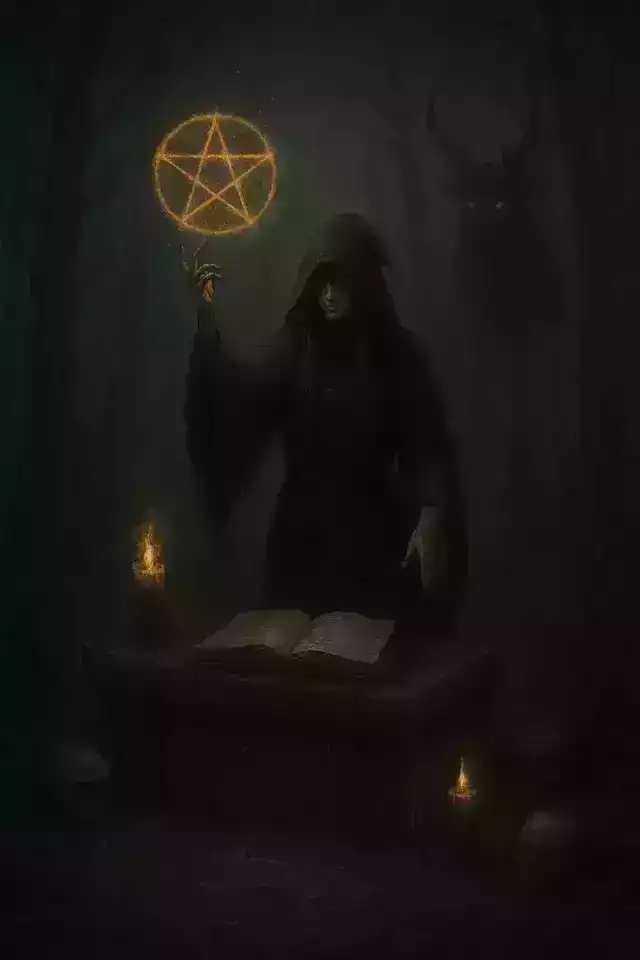
Ceremonial magick distinguishes itself through its material culture—a repertoire of consecrated instruments each bearing specific symbolic functions. The wand channels will and directs force. The sword or athame divides and commands. The cup receives and contains. The pentacle grounds and manifests. These tools correspond to the four elements, the four worlds of Kabbalah, and the four aspects of the magician's own psyche.
Construction of these instruments involves elaborate rituals. The wand must be cut from specific wood at particular lunar phases. The sword requires consecration with divine names inscribed on its blade. Each tool becomes not merely functional object but condensed symbol—a physical anchor for archetypal energies the magician intends to manipulate. The consecration process itself serves as extended meditation, imprinting the instrument with the operator's will and the hierarchical authority claimed from divine sources.
Ritual vestments similarly encode meaning. The magician's robe might bear planetary symbols, divine names in Hebrew or Enochian, or geometric patterns representing cosmological structures. These garments mark transitions—the practitioner sheds mundane identity and assumes ritual persona. The costume signals to both conscious and unconscious minds that ordinary rules no longer apply, that the wearer now operates in liminal space where material and spiritual interpenetrate.
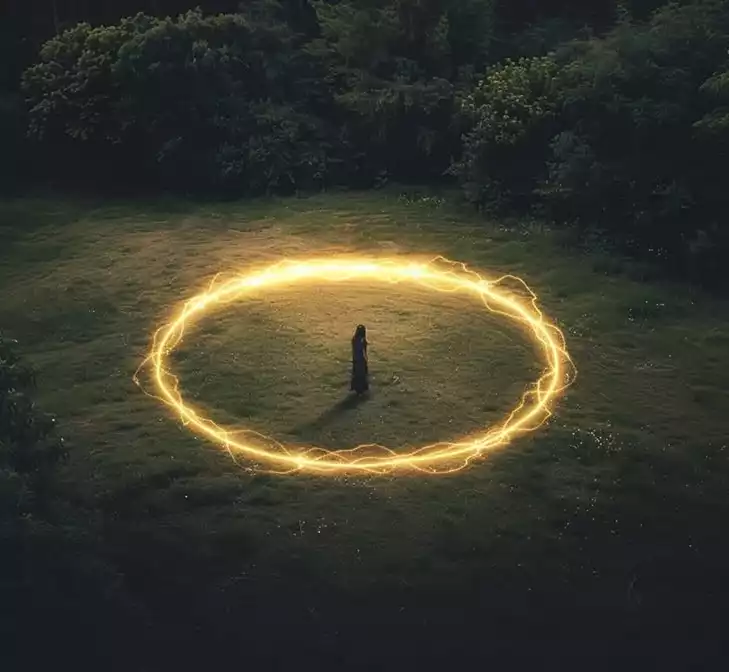
Sacred geometry governs ritual space construction. The magic circle, typically nine feet in diameter, inscribed with divine names and protective symbols, establishes sovereign territory. Within this boundary, the magician claims immunity from hostile forces and authority to summon entities. The triangle of manifestation, placed outside the circle, provides a spatial location where summoned spirits can appear without threatening the operator. These geometric configurations reflect Platonic ideals—the belief that certain forms possess inherent power, that shape itself can constrain or enable spiritual forces.
Invocation and Evocation: Dialogues with the Invisible
At ceremonial magick's operational heart lies the distinction between invocation and evocation. Invocation summons divinity into the magician—a process of temporary possession or identification with a god-form, planetary intelligence, or archetypal force. The practitioner becomes vessel, allowing higher consciousness to temporarily displace or merge with ordinary awareness. Invocation seeks union, transformation, illumination. It represents the mystical current within ceremonial practice, where the goal is not command but communion.
Evocation, conversely, summons entities into external manifestation—typically within the triangle of art while the magician remains protected inside the circle. These operations aim to gain information, secure assistance with material objectives, or bind spirits to specific tasks. The tone is often imperious. Grimoires provide lengthy conjurations threatening recalcitrant spirits with divine punishment, cosmic exile, or torment. The magician speaks as divine representative, not personal supplicant.
Modern practitioners often reinterpret these operations psychologically. Invoked deities become aspects of the Higher Self or transpersonal consciousness. Evoked demons represent repressed complexes or autonomous psychological functions requiring integration. This psychological model preserves ceremonial magick's operational structure while translating its ontology into terms compatible with contemporary secular worldviews. Whether the entities possess independent existence or emerge from the deep psyche remains a productive ambiguity—one that allows the practice to function regardless of metaphysical commitments.
The Golden Dawn and Modern Revival
Ceremonial magick experienced profound transformation in the late nineteenth century with the Hermetic Order of the Golden Dawn. Founded in 1888, the Golden Dawn synthesized grimoire tradition, Rosicrucianism, Freemasonry, and Theosophy into a graded initiatory system. Rather than isolated operations, magick became a structured curriculum for spiritual development.
The Golden Dawn systematized correspondences—creating elaborate tables linking Tarot, Kabbalah, astrology, geomancy, and Egyptian symbolism into unified framework. They developed new rituals, particularly the Lesser and Greater Rituals of the Pentagram and Hexagram, which became foundational practices in twentieth-century Western magick. These rituals emphasized energy manipulation and consciousness alteration over spirit evocation, reflecting the tradition's psychological turn.
Key figures like Aleister Crowley and Israel Regardie further popularized and democratized ceremonial magick. Crowley's Magick in Theory and Practice defined magick as "the Science and Art of causing Change to occur in conformity with Will"—a definition emphasizing personal agency and psychological transformation over supernatural intervention. Regardie's publication of Golden Dawn materials brought previously secret teachings into public domain, enabling solitary practitioners to engage traditions formerly requiring initiatory access.
Philosophical Underpinnings: Will, Consciousness, and Transformation
Beneath ceremonial magick's elaborate symbolism lies a coherent philosophy of consciousness. The tradition assumes that reality responds to focused will expressed through proper symbolic channels. The universe is not dead matter governed solely by mechanical laws but a living network of correspondences where mind and matter interpenetrate. Consciousness is not epiphenomenal but causal—capable of shaping probability, attracting circumstances, and manifesting intention when properly directed.
The elaborate rituals serve multiple functions. Externally, they supposedly activate correspondences and summon genuine spiritual forces. Internally, they bypass rational consciousness to reprogram deep psyche. The repetitive invocations, the sensory stimulation of incense and candlelight, the physical exhaustion of prolonged ritual—all induce altered states where suggestion penetrates more deeply than ordinary discourse allows. The magician programs themselves, using ritual as technology for deliberate self-transformation.
This dual model—simultaneously claiming objective efficacy and acknowledging psychological mechanism—characterizes contemporary ceremonial magick. Practitioners need not choose between literal and metaphorical interpretations. The rituals work regardless, producing measurable changes in consciousness, behavior, and often external circumstances. Whether gods and demons possess independent existence or emerge from collective unconscious matters less than their functional reality within ritual context.
Contemporary Practice and Cultural Resonance
Today's ceremonial magicians inherit centuries of accumulated symbolism while adapting practices to contemporary contexts. Some maintain strict adherence to Golden Dawn or Thelemic systems. Others eclectically combine traditions, incorporating chaos magick's experimental approach or neo-pagan elements. The Internet has democratized access while fragmenting authority—anyone can access grimoires once restricted to initiates, yet without lineage transmission, practice becomes self-directed exploration rather than traditional apprenticeship.
The tradition's cultural influence extends beyond practicing magicians. Ceremonial magick's aesthetic and conceptual vocabulary permeate popular culture—appearing in fiction, film, visual art, and music. Its emphasis on personal sovereignty, direct spiritual experience, and symbolic literacy resonates with contemporary spiritual seekers dissatisfied with institutional religion yet unwilling to embrace pure materialism. Ceremonial magick offers a third option: rigorous spiritual practice grounded in tradition yet emphasizing individual authority and experiential verification.
The practice also attracts those interested in consciousness exploration, viewing rituals as sophisticated technologies for inducing specific psychological states. From this perspective, ceremonial magick represents Western civilization's indigenous shamanism—a systematic approach to non-ordinary states of consciousness developed within Europe's own cultural context rather than imported from other traditions.
What endures across ceremonial magick's historical transformations is its essential character: the insistence that humans need not passively accept their circumstances or mediate spiritual experience through institutional gatekeepers. The tradition offers tools—symbolic, psychological, and potentially metaphysical—for taking active role in one's own transformation. It demands discipline, study, and courage, but promises in return the magician's ultimate prize: sovereignty over one's own consciousness and, perhaps, some measure of creative participation in reality's unfolding.
Comments
No comments yet. Be the first to share your thoughts!
Leave a Comment
Your email address won't be published. Comments are reviewed before being posted.