
 English
 Español
 Français
 中文
中文The history of love spells is not a frivolous chronicle of romantic whimsy, but rather a profound record of humanity's oldest negotiations with fate, desire, and the invisible architecture of attraction. From Mesopotamian clay tablets inscribed with incantations to bind a lover's heart, to the clandestine grimoires of medieval Europe, love magic occupies a curious intersection between the sacred and the profane, between mystical manipulation and psychological yearning. It is a practice that transcends culture, epoch, and theology—testament to the universal vulnerability inherent in the act of loving.
What distinguishes love spells from other forms of ritual magic is their directness, their unabashed petition to forces beyond rational control. Where protective charms seek to repel harm and divinatory rites aim to unveil hidden knowledge, love spells demand intervention in the most intimate sphere of human experience. They represent, in essence, a codified plea for agency in matters where agency often feels conspicuously absent. To understand their history is to trace humanity's relationship with longing itself.
The Ancient Roots of Binding and Desire
The earliest recorded love spells emerge from ancient Egypt and Mesopotamia, civilizations deeply versed in the mechanics of sympathetic magic. Egyptian papyri from the Ptolemaic period contain elaborate rituals invoking deities such as Hathor, goddess of love and beauty, and Bes, protector of households and intimate unions. These texts often prescribed offerings of honey, wine, and incense, materials symbolically aligned with sweetness, intoxication, and the ephemeral nature of scent—all metaphors for attraction's fleeting potency.
In Mesopotamia, love magic frequently employed the principle of sympathetic correspondence: a lock of hair, a fragment of clothing, or even the soil upon which the beloved had walked became conduits for ritual influence. The famous Sumerian goddess Inanna, whose descent into the underworld prefigures themes of death and rebirth in love, was invoked in numerous spells designed to awaken dormant passion or restore fading affection. These rites were not the domain of charlatans but were integrated into the broader cosmology of divine intercession that governed daily life.
Greek and Roman practitioners expanded this tradition considerably. The Greek Magical Papyri, a collection of Greco-Egyptian texts dating from the second century BCE to the fifth century CE, contain some of the most elaborate love spells ever documented. Many involve defixiones—curse tablets inscribed with names and petitions, then buried or submerged in water to activate their power. The language is often violent: spells speak of "binding" and "burning" the heart of the beloved, metaphors that reveal the inherent aggression latent in attempts to control another's will.
Medieval Christianity and the Dilemma of Erotic Magic
The advent of Christianity introduced profound ambivalence into the practice of love magic. While the Church condemned sorcery as diabolical, the laity continued to seek supernatural assistance in matters of the heart, creating a shadow tradition that operated beneath theological censure. Medieval grimoires such as the Picatrix and later texts like the Key of Solomon contained love spells veiled in Kabbalistic symbolism and astrological timing, blending Neoplatonic philosophy with folk practice.
Saints themselves became unlikely intermediaries. St. Anthony of Padua, for instance, was invoked not only for lost objects but also for lost loves. St. Raphael, archangel of healing, was petitioned in matters of marital harmony. These sanctioned devotions reveal how deeply the impulse toward love magic permeated even orthodox religious life, transmuted into prayer rather than spell, yet functionally identical in intent.
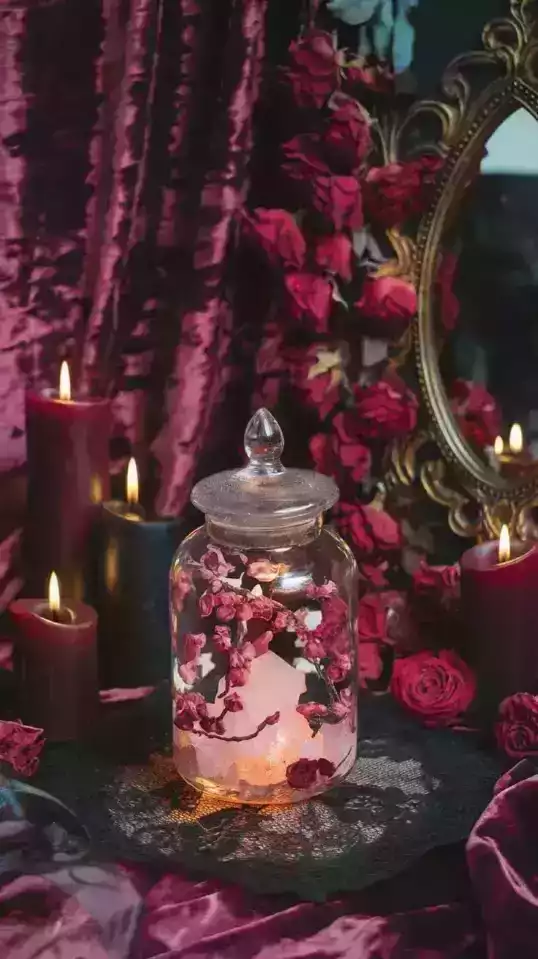
Women, often marginalized in formal religious hierarchies, became the primary custodians of love magic during this period. Herbalists, midwives, and village wise-women dispensed charms utilizing mandrake root, vervain, and rose petals—botanicals long associated with Venus and Aphrodite. The spell might be as simple as baking bread kneaded with menstrual blood or as complex as a seven-day candle vigil synchronized with lunar phases. These practices were dangerous; accusations of witchcraft frequently arose from rivals or spurned suitors, and the line between healer and heretic was perilously thin.
The Symbolism of Ingredients and Correspondences
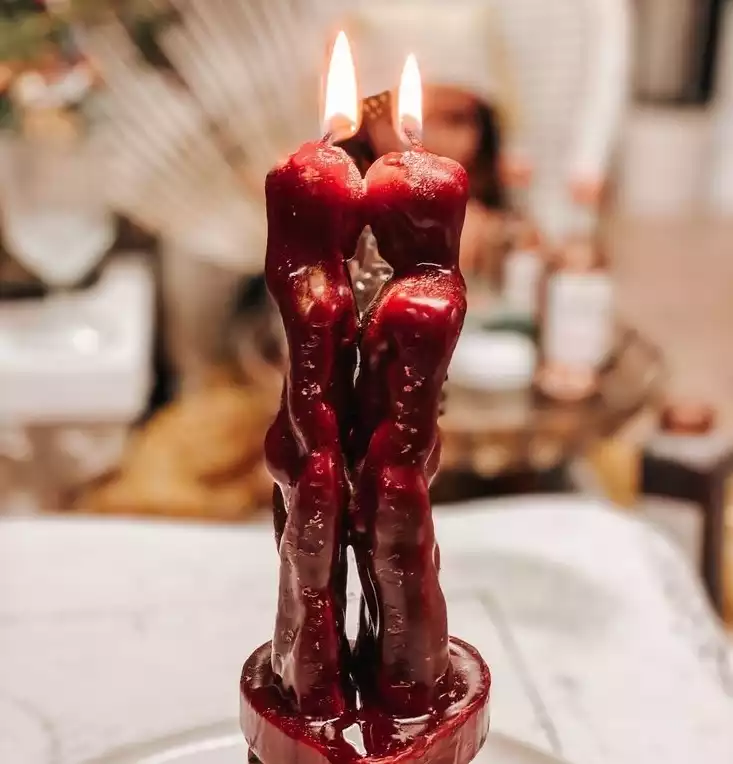
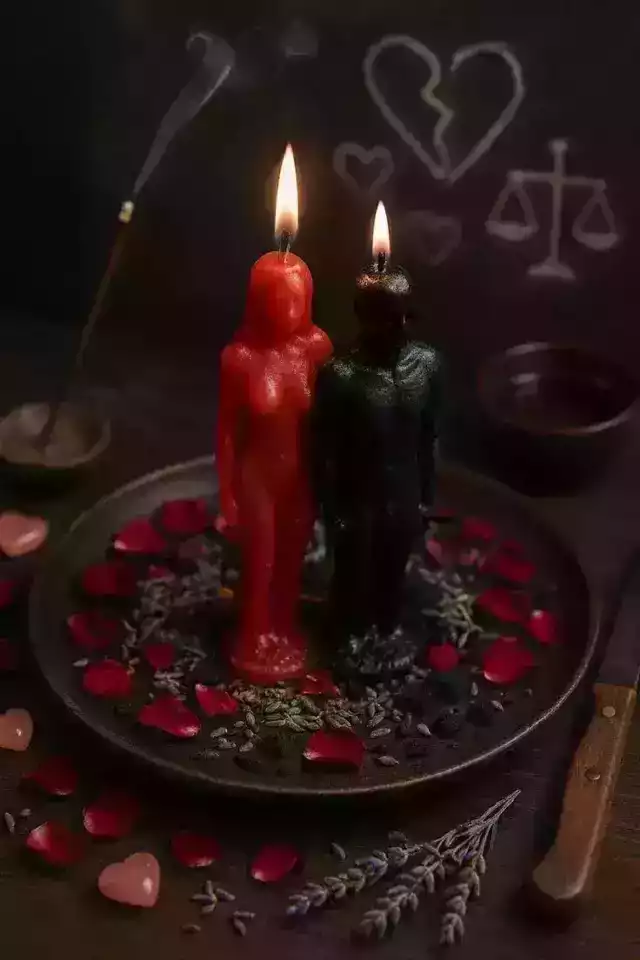
Central to the history of love spells is the doctrine of correspondences, the belief that material objects resonate with specific spiritual frequencies. Honey, as previously noted, symbolizes sweetness and persuasion. Red candles embody passion and Mars-ruled assertiveness. Rose quartz, though a relatively modern addition to the Western magical canon, aligns with the heart chakra in Hindu and Buddhist esoteric anatomy, reinforcing its association with emotional openness.
More provocative ingredients reveal the transgressive undercurrents of love magic. Bodily fluids—blood, saliva, sexual secretions—function as tangible extensions of the self, enabling sympathetic connection. In Vodou and Hoodoo traditions, which synthesize West African spiritual practices with European folk magic and indigenous American herbalism, such materials are employed without euphemism. A "honey jar spell," for instance, involves placing the target's name within a jar of honey, sometimes augmented with personal concerns, then ritually feeding the jar over weeks or months to "sweeten" the target's disposition.
The use of such materials underscores a critical ethical dimension that haunts love magic throughout history: the question of consent. Does the beloved retain agency, or does the spell constitute a form of psychic coercion? This tension has never been fully resolved and remains one of the most contentious aspects of contemporary magical ethics.
Renaissance Magic and the Aristocracy of Desire
The Renaissance witnessed a flourishing of ceremonial magic among intellectuals and aristocrats, individuals who viewed magical practice as a scholarly discipline akin to alchemy or astrology. Figures such as Marsilio Ficino and Heinrich Cornelius Agrippa wrote extensively on the metaphysics of attraction, framing love as a cosmic force mediated by planetary influences and angelic intelligences.
In this context, love spells became elaborate rituals involving precise astrological timing, invocations in Hebrew or Greek, and the construction of talismans engraved with sigils corresponding to Venus or the daemon Lucifer—whose name, meaning "light-bearer," retained pre-Christian associations with beauty and enlightenment. These practices were intellectualized, distanced from folk tradition, yet they shared the same fundamental objective: to compel or attract romantic attention.
The distinction between "high" ceremonial magic and "low" folk magic often reflected class rather than efficacy. A peasant woman whispering over a potion and a scholar invoking planetary spirits were engaged in structurally similar acts, differentiated primarily by literacy, resources, and social legitimacy.
Colonial Exchange and Syncretic Love Magic
The transatlantic slave trade and European colonialism precipitated profound exchanges of magical knowledge. African spiritual systems—particularly those from the Yoruba, Fon, and Kongo peoples—merged with European grimoire traditions and indigenous American practices, giving rise to syncretic religions such as Santería, Candomblé, and Louisiana Voodoo.
In these systems, love spells invoke orishas or lwa, divine intermediaries with distinct personalities and preferences. Oshun, the Yoruba goddess of rivers, love, and sensuality, became central to countless love workings. Offerings of honey, oranges, and champagne are presented to her, accompanied by songs and dances that honor her luminous, generous nature. Erzulie Freda in Haitian Vodou serves a similar function, embodying romantic idealism and aesthetic refinement.
These practices are not relics but living traditions, adapted and practiced today with unbroken continuity. They demonstrate love magic's capacity to evolve, absorb, and reconstitute itself across diasporic displacement and cultural transformation.
Psychological Dimensions and the Architecture of Belief
Modern psychology offers intriguing lenses through which to examine love spells. Carl Jung's concept of the anima and animus—the inner contrasexual archetypes—suggests that rituals directed toward another may function primarily as internal work, activating latent aspects of the magician's own psyche. The beloved becomes a projection screen for unintegrated desires, and the spell a mechanism for psychic integration.
Sigmund Freud, conversely, might interpret love magic as sublimated libido, an erotic impulse redirected into symbolic action when direct expression is thwarted by social prohibition or fear of rejection. The meticulous preparation of materials, the repetitive recitation of words, the prolonged focus on the object of desire—all might be understood as ritualized forms of longing, offering catharsis if not practical result.
Yet such reductions risk dismissing the lived experience of practitioners who report tangible outcomes. Placebo effects, confirmation bias, and coincidence undoubtedly account for some perceived successes, but the phenomenology of magic—the subjective experience of efficacy—remains a legitimate area of inquiry distinct from mechanistic causation.
Contemporary Practice and Ethical Reconsideration
The resurgence of interest in witchcraft and occultism in the twenty-first century has brought love magic into renewed focus, accompanied by vigorous ethical debate. Many contemporary practitioners distinguish between spells that attract love generally—opening the practitioner to romantic possibilities—and those targeting specific individuals, which raise concerns about autonomy and manipulation.
Some modern witches employ "ethical alternatives," such as glamour magic to enhance personal magnetism, or cord-cutting rituals to release attachment to unavailable partners. Others argue that all magic involves influencing outcomes and that squeamishness about love spells reflects internalized puritanism rather than genuine ethical rigor.
Social media has democratized access to magical knowledge, with platforms like TikTok and Instagram hosting vast communities sharing spell recipes, results, and theories. This visibility has both demystified and commodified love magic, transforming it into a form of spiritual self-help while sometimes stripping away the cultural and historical depth that gives these practices coherence.
The Enduring Enigma of Love's Sorcery
What persists across millennia of love magic is a recognition that desire operates according to laws opaque to reason. Love arrives unbidden, departs without explanation, and resists the architectures of logic and control that govern other domains of life. In this sense, love spells are less about supernatural coercion than about ritualized acknowledgment of powerlessness—a paradoxical assertion of will in the face of forces fundamentally resistant to will.
The history of love spells thus mirrors the history of human vulnerability. It is a chronicle written in rose petals and blood, honey and ash, whispered names and silent longings. Whether one views these practices as effective theurgy or elaborate self-deception is ultimately less significant than what they reveal about the human condition: that we are creatures who cannot help but petition the universe for love, by whatever means available, sacred or profane.
To study love magic is to confront the most intimate dimensions of power, agency, and desire. It is to recognize that the boundary between prayer and spell, between hope and manipulation, has always been more porous than orthodoxy admits. And it is to understand that as long as hearts ache and souls yearn, the history of love spells will continue to be written—in grimoires and chat rooms, altars and daydreams, across every medium through which longing seeks expression.
Comments
No comments yet. Be the first to share your thoughts!
Leave a Comment
Your email address won't be published. Comments are reviewed before being posted.