
 English
 Español
 Français
 中文
中文The Altar as Mirror: Where Desire Meets Discipline
Romantic harmony, in the context of Santería, is not a sentimental construct but a cosmological arrangement. It belongs to the same category of phenomena as agricultural abundance, health maintenance, and social order—domains governed by invisible forces that respond to visible gestures. The offering, or addimú, stands at the intersection of human longing and divine structure, transforming private yearning into ritual language. What distinguishes Santería's approach to romantic harmony from more transactional or manipulative folk practices is its insistence on reciprocity, balance, and the recognition that love is not extracted but cultivated through sustained relationship with spiritual forces.
The act of making an offering for romantic purposes is not an appeal to a distant god but an engagement with Orishas who themselves embody erotic complexity, jealousy, fidelity, and passion. Ochún dances in river currents with her brass mirrors; Changó strikes his double-edged axe while surrounded by lovers; Yemayá holds maternal authority that encompasses both nurturing and possessive intensity. Each of these deities carries within their mythology the contradictions inherent in human attachment. To petition them is to acknowledge that romantic harmony is never static—it is a dynamic negotiation between autonomy and surrender, sensuality and control.
Understanding the offerings requires first understanding what is being offered and to whom. In Santería cosmology, nothing is inert. Honey carries the essence of sweetness, but also the memory of bees laboring in ecstatic industry. Copper coins gleam with Ochún's river gold, but also with commerce and value exchange. Candles hold not just light but transformation through consumption. The practitioner who places five yellow candles before a river stone is not bribing a deity—they are building a symbolic vocabulary, aligning material reality with spiritual resonance until the two become indistinguishable.
Ochún: The Geometry of Sweetness
No discussion of romantic offerings in Santería can proceed without attending to Ochún, the Orisha most intimately connected with romantic love, sensuality, marriage, and the delicate architecture of attraction. Ochún governs fresh water, particularly rivers, and her domain includes fertility, beauty, and wealth. But to reduce her to a mere "love goddess" would be a profound misunderstanding. Ochún is strategic, sometimes vengeful, fiercely protective of her children, and capable of both generosity and withholding. Her mythology is filled with accounts of her seducing other Orishas to achieve ends both noble and self-serving, deploying femininity as a form of power rather than passivity.
The classic offering to Ochún for romantic harmony centers on honey, that amber substance that bridges nourishment and pleasure. A simple but potent ritual involves placing five tablespoons of honey in a ceramic bowl or gourd, adding the names of both parties written on parchment paper, and surrounding the vessel with five yellow candles arranged in a circle. The number five recurs throughout Ochún's ritual grammar—it corresponds to her sacred numerology, to the five fingers that caress, to the five senses through which desire manifests.
But honey operates on multiple registers simultaneously. It preserves—ancient jars of honey found in Egyptian tombs remain unspoiled millennia later. This preservation quality makes it symbolically appropriate for sustaining affection, for preventing decay in relationships, for maintaining sweetness through time's erosive passage. Honey also requires no refrigeration, suggesting a love that needs no external maintenance, that carries its integrity within itself. And honey attracts—bees, ants, flies—demonstrating magnetic pull, the way one body is drawn inexorably toward another.
More elaborate offerings to Ochún might include pumpkins, symbols of fertility and abundance, filled with honey, cinnamon sticks, five copper coins, small pieces of mirror to reflect beauty and truth, and yellow flowers—sunflowers, yellow roses, marigolds. The pumpkin serves as a womb-like container, a vessel for transformation. It is placed near flowing water or at the practitioner's home altar, allowed to remain for five days before being deposited respectfully in a river with gratitude and an acknowledgment that the petition has been heard, whether or not it will be granted according to human timing.
Ochún also receives offerings of champagne, white wine, oranges, and dishes prepared with river water. One traditional preparation involves cooking a whole pumpkin with honey, cinnamon, and orange peel, then sharing portions of this sacred meal with friends while keeping a portion for the Orisha. This communal dimension is significant—romantic harmony in Santería is not isolated from social harmony. Love exists within a matrix of relationships, family obligations, community expectations. A couple's affection must find its place within this larger ecology, must be sustainable within the broader network of human connection.
Eleggua: Opening the Paths to Connection
Before any romantic offering achieves its purpose, the roads must be open. This is the domain of Eleggua, the trickster child who guards crossroads, doorways, and all transitions. In Santería cosmology, Eleggua receives offerings before any other Orisha because without his permission and assistance, no petition reaches its destination. He is simultaneously the youngest and oldest, most playful and most dangerous, embodying the paradox that beginnings contain both innocence and vast power.
For romantic purposes, offerings to Eleggua often involve candies, toys, smoked fish, rum, cigars, and coconut. The petition is simple but essential: that he remove obstacles preventing romantic connection, that he open doors that have been closed, that he clear confusion and create opportunities for encounter. A common practice involves placing three small candies wrapped in red and black fabric at a crossroads on a Monday morning, whispering the intention, and walking away without looking back. The crossroads represents choice, possibility, the moment where one path diverges into multiple futures.
Eleggua's role in romantic offerings is often overlooked by those seeking shortcuts to love magic, but experienced practitioners understand that without his cooperation, even the most elaborate petition to other Orishas may fail to manifest. He governs communication—both its clarity and its chaos. In contemporary terms, one might say he rules over text messages received and not received, phone calls that connect or drop, chance meetings that feel fated. He is the patron of serendipity, but also of missed connections, depending on his favor.
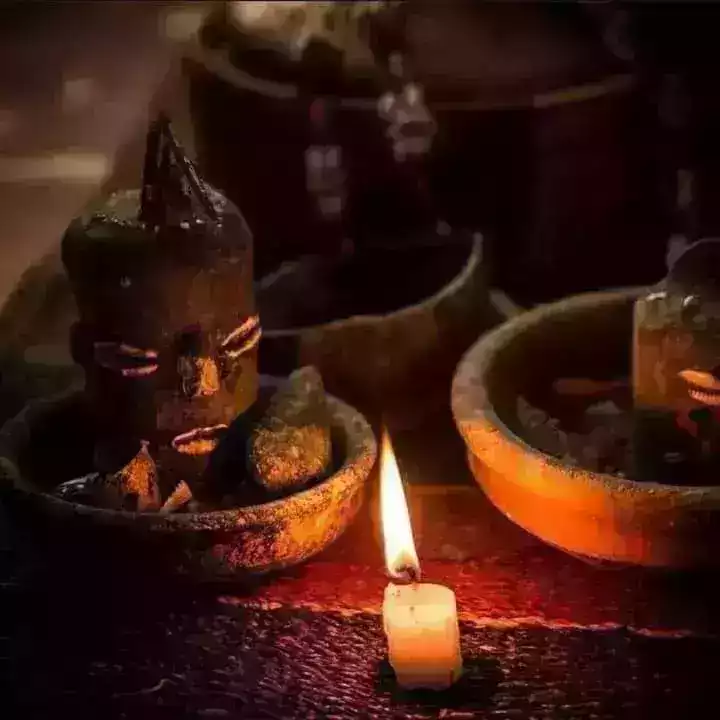
An offering specifically designed to invoke Eleggua's assistance in romantic matters might include a small clay figure or stone consecrated as his representation, anointed with palm oil, surrounded by twenty-one pieces of different candies, three smoked herrings, and a small glass of rum with three drops of honey. The number three corresponds to his nature as child, his tripartite role as opener, closer, and trickster. The practitioner lights a red and black candle, explains the romantic situation with clarity and honesty—Eleggua despises deception—and asks that pathways open, that confusion clear, that the right words find their moment.
Yemayá: The Maternal Matrix of Emotional Security
Where Ochún governs the seduction, the spark, the sweetness of new attraction, Yemayá presides over the deeper waters of emotional security, maternal devotion, and the kind of love that nourishes rather than merely excites. Yemayá is the ocean, vast and encompassing, both gentle in her tidal lullabies and devastating in her storms. She is the mother of all Orishas, and her energy in romantic contexts relates to building foundation, creating safety, fostering the conditions where vulnerable attachment becomes possible.
Offerings to Yemayá for romantic harmony often center on themes of protection and emotional depth. Her colors are blue and white, her numbers seven and its multiples, her domain the salt water that covers most of Earth's surface. A traditional offering might involve seven white roses placed in a blue vase filled with seawater, seven white candles arranged in a semicircle, and a plate of molasses, watermelon, and coconut sweets. These offerings are typically placed on a Saturday, Yemayá's sacred day, accompanied by prayers acknowledging her as mother, protector, and source of emotional abundance.
Yemayá's involvement in romantic offerings becomes particularly important when the relationship requires healing from past wounds, when trust has been broken and must be rebuilt, when one or both parties carry trauma that prevents full emotional availability. Her maternal energy does not force or seduce—it creates conditions for organic growth. Just as ocean water is buoyant, holding swimmers afloat without effort, Yemayá's presence in relationship dynamics offers support that doesn't demand reciprocal support in return, allowing each person to find their equilibrium.
More elaborate offerings might include taking a ritual bath with seven types of flowers and seawater, then collecting the used bath water in a container with a written petition, seven silver coins, and pearls or mother-of-pearl fragments. This container is taken to the ocean at dawn and poured into the waves with reverence, symbolically releasing the petition into Yemayá's care. The ocean, in this ritual logic, carries messages across vast distances, connects distant shores, and holds memory in its salt—much as enduring love must have memory, must bridge distances, must possess both surface and unfathomable depth.
Yemayá also receives offerings of duck, black-eyed peas, fried plantains prepared with molasses, and fabric in her sacred colors. A particularly potent offering for couples seeking to deepen their bond involves cooking a large pot of black-eyed peas with coconut milk, serving portions to seven different people, and leaving a portion for Yemayá at the edge of water. The act of feeding others enacts the nurturing quality being petitioned, aligning action with intention in the sympathetic magic that undergirds much of Santería practice.
Changó: Passion's Paradox
If Ochún embodies seduction and Yemayá emotional security, Changó represents raw passion, virility, magnetic attraction, and the dangerous electricity that can animate or destroy relationships. Changó is the warrior king, master of thunder and lightning, dancer and drummer, lover of many women, and symbol of masculine power in its most exuberant form. His mythology is saturated with romantic conquests, jealous conflicts, and the complications that arise when charisma meets commitment.
Offerings to Changó for romantic purposes are less about harmony in the gentle sense and more about intensification—increasing attraction, reigniting passion that has cooled, asserting one's desirability, or invoking the kind of magnetic pull that borders on obsession. His colors are red and white, his numbers six and multiples thereof, his sacred foods include apples, bananas, okra, and cornmeal. A classic offering involves six red apples arranged around a red and white candle, a small glass of rum, and a petition written on parchment and placed beneath the arrangement.
But working with Changó in romantic contexts requires caution and clarity of intention. His energy does not naturally incline toward stability or fidelity—he is the energy of conquest, of intensity, of the moment when two bodies collide with electrical force. Invoking Changó might bring the fire that was missing, but it also brings the risk that such fire will consume rather than warm. Experienced practitioners approach Changó with respect bordering on wariness, understanding that his gifts come with intensity that must be metabolized carefully.
An offering designed to invoke Changó's favor for a specific romantic petition might include a plate with six pieces of fried plantain, six okra cooked with palm oil, six pieces of apple, and six red and white candies, arranged with aesthetic attention because Changó appreciates beauty and presentation. A red and white candle burns beside the plate while the practitioner speaks directly, even boldly—Changó respects courage and disdains timidity. The petition might ask for increased attraction, for the courage to pursue desire, for the removal of competitors, for passion to be sustained beyond initial infatuation.
Changó also governs drumming, dance, and music, so offerings sometimes take the form of playing music dedicated to him, dancing with abandon, or supporting musicians. In the context of romantic relationships, this suggests that passion requires expression, that bodies must move together, that rhythm and synchronization matter. A couple might dance together as an offering to Changó, allowing their bodies to remember what words sometimes forget—that connection is physical, rhythmic, beyond language.
Oshún and Changó: The Archetypal Romance
In Santería mythology, the relationship between Ochún and Changó represents the archetypal passionate romance—their attraction is legendary, their conflicts equally so. Many patakines, the sacred stories that convey cosmological wisdom, detail their seductions, separations, reconciliations, and the children born of their union. When practitioners seek to invoke romantic harmony that includes both sweetness and passion, both emotional depth and erotic intensity, they may create offerings that honor both Orishas simultaneously, acknowledging their intertwined energies.
Such an offering might include a central arrangement with honey, apples, yellow and red candles, flowers in both Ochún's gold tones and Changó's crimson intensity, coins and palm oil, river water and rum. The symbolic vocabulary combines their domains, creating a ritual grammar that speaks to the complexity of mature romantic love—that it must be sweet but not saccharine, passionate but not destructive, emotionally secure but not stagnant. The offering becomes a map of what the relationship aspires to embody: multiplicity held in dynamic balance.
This dual offering is particularly appropriate for long-term relationships where initial passion has cooled but partners wish to rekindle intensity while maintaining the trust and history they've built. It acknowledges that enduring love requires multiple registers, that a relationship robust enough to withstand time must contain both the river's gentle current and the storm's electric strike, both honey's preservation and fire's transformation.
Obatalá: Clarity and Peace in Relationship
In contrast to the heated energies of Changó or the sensual magnetism of Ochún, Obatalá represents clarity, peace, patience, and the kind of love that emerges from respect and spiritual alignment rather than physical attraction or emotional intensity. Obatalá is the father Orisha, associated with creation, wisdom, justice, and purity. His colors are white and sometimes silver, his offerings simple and clean, his energy cool rather than hot.
When practitioners seek romantic harmony rooted in mental compatibility, mutual respect, peaceful coexistence, and spiritual partnership, they turn to Obatalá. His offerings typically include white candles, cocoa butter, white fabric, rice cooked in milk, white flowers, and clear water. The aesthetic is one of simplicity and purity—nothing heavy, nothing complicated, nothing that obscures or confuses.
An offering to Obatalá for romantic harmony might consist of eight white candles arranged in a circle, a white plate with rice cooked in coconut milk and sweetened with white sugar, white roses in a clear glass vase, and a piece of white cotton fabric upon which the petition is written in white ink or embroidered with white thread. The ritual is performed slowly, deliberately, with attention to cleanliness and order. Obatalá does not rush, does not tolerate chaos or impurity in either physical or moral terms.
This approach to romantic offerings differs fundamentally from the more dramatic or intense workings associated with other Orishas. Obatalá's intervention in romantic matters concerns itself with removing confusion, bringing clarity to intentions, revealing truth where deception has clouded perception, and establishing the conditions for respect to flourish. In relationships where communication has broken down, where misunderstanding has created distance, where assumptions have replaced actual knowledge of the other person, Obatalá's energy can clear the fog and allow partners to see each other accurately again.
Offerings to Obatalá are also appropriate when seeking patience—the kind required to allow a relationship to develop at its natural pace rather than forcing premature intimacy or commitment. In a culture obsessed with speed and intensity, Obatalá's measured approach offers an alternative: relationships as slow cultivation, affection as something that deepens over years rather than weeks, harmony as the result of sustained attention rather than dramatic gesture.
Oyá: Transformation and Clearing Dead Patterns
When romantic harmony requires the death of old patterns, the clearing of toxic dynamics, or the courage to end what no longer serves, practitioners turn to Oyá, the Orisha of winds, storms, cemeteries, and transformation. Oyá is the warrior woman, companion to the dead, guardian of thresholds between worlds, and the force that sweeps away what has outlived its purpose. Her energy in romantic contexts is fierce, uncompromising, and often uncomfortable—she brings necessary destruction that precedes new growth.
Offerings to Oyá for romantic purposes are less common than those to Ochún or Yemayá because they acknowledge a harder truth: sometimes harmony requires ending, sometimes love means releasing, sometimes the most compassionate act is to clear away dead relationship matter so new life can emerge. Oyá's colors are nine shades ranging from burgundy to dark purple to brown, her number is nine, and her offerings include eggplants, plums, red wine, and copper objects.
A ritual offering to Oyá might involve nine purple or maroon candles arranged in a circle, nine eggplant slices cooked with palm oil and placed on a dark plate, a glass of red wine, and a written petition explaining what needs to be released or transformed. The practitioner might ask for the courage to end a relationship that has become destructive, for the clearing of jealousy or possessiveness that poisons connection, for the death of old betrayals that continue to haunt present intimacy, or for the transformation of dynamic that has become stale into something vital again.
Oyá does not preserve or sweeten or intensify—she clears, transforms, ends. Working with her requires willingness to accept that what emerges may look nothing like what existed before, that her winds might strip away more than anticipated, that her intervention brings change that cannot be controlled or predicted. But for practitioners trapped in relationship patterns that repeat endlessly, that cause suffering without growth, that resist all gentler interventions, Oyá offers the radical surgery that sometimes proves the only path to genuine health.
An alternative offering to Oyá involves writing down all the toxic patterns, fears, betrayals, and dead elements of relationship on small pieces of paper, placing them in a clay pot with nine copper pennies, nine dried plums, and dark fabric, then burying this container at the base of a tree during a waning moon. The burial symbolizes both death and potential rebirth—what is composted into earth may eventually nourish new growth, but first it must decompose completely.
The Ibeyis: Playfulness and Joy in Partnership
Often overlooked in discussions of romantic offerings are the Ibeyis, the divine twins who represent childhood, playfulness, joy, and the capacity for delight. In relationships that have become too serious, too burdened by responsibility and negotiation, too depleted of spontaneity and laughter, offerings to the Ibeyis can restore lightness. They remind practitioners that love at its best includes play, that harmony does not require constant intensity or drama, that pleasure is sacred.
Offerings to the Ibeyis include candies, toys, fruits, sweet pastries, and anything associated with childhood joy. Their colors are red, white, and sometimes blue or green, their numbers five and multiples thereof. A simple offering might consist of five different types of candy arranged on a colorful plate, two small dolls or toy figures, five yellow and five green candles, and a petition asking for the return of joy, laughter, and playful connection in the relationship.
The Ibeyis' energy in romantic contexts addresses the way adult relationships can become drained of pleasure, where every interaction becomes freighted with meaning, where spontaneity gives way to scheduling, where play is replaced by performance. By invoking the twins, practitioners seek to recover the capacity to be silly together, to surprise each other, to find delight in simple shared experiences—a walk without destination, a meal without agenda, an afternoon without purpose beyond being together.
Another offering to the Ibeyis involves preparing two identical desserts—perhaps small cakes or fruit salads—and sharing one with children or giving it to a child, while offering the second to the Ibeyis at the altar. This gesture links human joy with divine blessing, acknowledging that what nourishes children spiritually can also nourish the childlike aspects of adult love that must be preserved if relationships are to remain vital.
The Architecture of Ritual: Beyond Transactional Magic
Understanding individual offerings to specific Orishas provides foundational knowledge, but mature practice in Santería recognizes that romantic harmony emerges from sustained relationship with the spiritual realm rather than isolated petitions. The practitioner who approaches offerings transactionally—"I give this, you give that"—misunderstands the cosmological structure. Offerings are not payments but communications, not bribes but relationship-building gestures, not manipulations but participations in reciprocal ecology.
This distinction matters profoundly. A practitioner who makes a single offering to Ochún for romantic harmony without any prior relationship with this Orisha, without regular attendance at her altar, without knowledge of her mythology or participation in her festivals, approaches with empty hands despite material offerings. The honey remains just honey, the candles just wax, because the symbolic vocabulary has not been established through ongoing engagement. In contrast, a practitioner who has maintained Ochún's altar for years, who has celebrated her feast day, who has studied her stories and embodied her values, brings an entirely different energetic reality to even the simplest offering.
This is why initiation into Santería involves years of learning, observation, and gradual deepening of relationship with Orishas. The initiated priesthood undergoes extensive training not because offerings are complicated in mechanical terms—most are quite simple—but because understanding the cosmological relationships, the mythological contexts, the ethical frameworks, and the subtle energetic realities requires time and transmission from those who already know. A priest of Ochún understands not just what to offer but when, why, how, and in what spirit, drawing on knowledge that cannot be fully conveyed through written instruction.
For practitioners outside formal initiation who nonetheless seek to work respectfully with these traditions, the path involves study, humility, consultation with initiated practitioners, and recognition of one's position as guest rather than inheritor of the tradition. Offerings can still be made, petitions can still be voiced, but always with acknowledgment that one stands at the threshold of a vast cosmology whose depths require lifelong engagement to truly navigate.
Timing and Lunar Correspondences
The temporal dimension of offerings adds another layer of complexity. While Santería does not follow the simplified lunar magic common in some contemporary spiritual practices, timing nonetheless matters. Each Orisha has associated days of the week: Eleggua on Monday, Obatalá on Thursday, Changó on Friday, Yemayá on Saturday, and Ochún on Saturday or sometimes Friday. Making offerings on these designated days aligns the petition with the day's energetic current, though this is preference rather than absolute requirement.
Lunar phases also carry significance, though less centrally than in European witchcraft traditions. The waxing moon corresponds to growth, increase, drawing toward—appropriate for offerings that seek to build attraction, increase passion, or strengthen connection. The full moon represents culmination and illumination—useful for bringing clarity to relationship questions or celebrating relationship milestones with offerings of gratitude. The waning moon governs release, decrease, banishing—appropriate for offerings to Oyá that seek to clear toxic patterns. The new moon marks new beginnings, making it suitable for offerings that initiate courtship or mark relationship transitions.
But timing should not become rigid dogma. A person experiencing crisis in their relationship may need to make offerings immediately regardless of lunar phase or weekday. The Orishas respond to genuine need, authentic emotion, and sincere petition more than to perfect timing. Ideal timing enhances but does not replace authentic intention.
Ethical Considerations: Love Magic and Free Will
The ethics of romantic offerings in Santería deserves careful attention, particularly given the tradition's power to effect change in subtle realms. The question of free will haunts all love magic, and Santería does not exempt itself from these concerns. Can offerings be used to manipulate another person's affections? Should they? What distinguishes appropriate petition from spiritual coercion?
Traditional Santería ethics holds that offerings should not violate another person's will, that attempting to force affection where none exists organically constitutes a form of violence, and that such workings often backfire in unexpected ways. The Orishas are not servants who obey commands—they are powerful, autonomous beings with their own sense of cosmic order and justice. A petition to make someone love you against their nature or genuine inclination may be ignored, or worse, may result in consequences the practitioner did not anticipate.
More appropriate petitions focus on the self and on creating conditions rather than controlling outcomes. Offerings that ask for increased personal magnetism, for obstacles to clear so natural connection can occur, for the courage to express affection authentically, for the wisdom to recognize compatible partnership, or for the ability to love well—these respect the autonomy of all parties while still engaging spiritual assistance.
Similarly, offerings that seek to heal a struggling relationship, to remove external interference, to strengthen commitment that both parties desire, or to facilitate communication align with ethical practice because they support mutual intention rather than imposing singular will. The distinction is sometimes subtle but always important: offerings should facilitate organic possibility rather than manufacture artificial outcomes.
There exist practitioners who claim to offer workings that will force a specific person to fall in love, who promise guaranteed romantic outcomes regardless of the other person's actual feelings or compatibility. These claims should be regarded with deep skepticism. Not only do they misrepresent how Santería actually functions, they also set up practitioners for disappointment and potentially harmful spiritual dynamics. Love that must be forced is not love, and the Orishas, who themselves know the complexity of desire and relationship, understand this truth intimately.
Divination: Consulting Before Offering
Before making significant offerings for romantic purposes, serious practitioners typically consult divination to understand the spiritual landscape of the situation. Santería employs several divination systems, most prominently the Diloggun (cowrie shell reading) and the Ifa oracle (practiced by Babalawos). These systems provide insight into which Orisha to approach, what offerings are appropriate, whether the desired outcome is aligned with one's destiny, and what obstacles or opportunities exist in the spiritual realm.
Divination might reveal, for example, that the romantic difficulty stems not from lack of attraction but from unresolved ancestral patterns, in which case offerings to ancestors (Egun) might be more appropriate than offerings to Orishas. Or it might reveal that the desired person is not part of one's destiny path, that pursuing this connection would lead to suffering despite temporary pleasure. Such information allows practitioners to adjust their petitions, redirect their energy, or accept limitations with greater wisdom.
The reading might also identify which specific aspect of an Orisha to approach. Ochún has multiple paths or avatars—Ochún Ibu Kole who is the vulture and represents dignity in poverty, Ochún Ibu Añá who is the drummer and represents joyful sexuality, Ochún Ibu Yumu who lives in the river's source and represents secret wisdom. Each path requires slightly different offerings and responds to different types of petition. Without divination's guidance, practitioners may offer to a generalized Ochún when a specific path would be more appropriate and effective.
For those without access to initiated diviners, simpler forms of yes/no divination exist, such as casting coconut pieces to receive basic guidance about whether a proposed offering is appropriate. While less detailed than full Diloggun or Ifa readings, this method allows for some spiritual feedback before proceeding with ritual work.
Preparation and Purification: The Body as Offering
The practitioner's state of being matters as much as the material offerings. Before making offerings, especially significant ones, practitioners typically undergo purification—ritual baths with herbs and flowers, abstinence from sexual activity for a prescribed period, fasting or dietary restrictions, and cultivation of calm, focused mental state. The body itself becomes part of the offering, presented to the Orishas in its cleansed and consecrated condition.
A traditional cleansing bath before making romantic offerings might include herbs and flowers associated with the specific Orisha being approached: for Ochún, yellow flowers, cinnamon, honey, chamomile, and river water; for Yemayá, white roses, coconut, melon, seaweed, and seawater; for Changó, red and white flowers, apples, banana leaves, and well water. These ingredients are steeped in water, sometimes with prayers or songs, then poured over the body from neck downward. The used water is collected and disposed of ritually, carrying away spiritual residue and obstacles.
Sexual abstinence before making offerings serves multiple purposes. It preserves and concentrates vital energy that will be channeled into the ritual work, it demonstrates respect and self-discipline to the Orishas, and it creates a energetic clarity that might otherwise be scattered through sexual activity. The period of abstinence varies—three days, seven days, or longer depending on the working's significance and the guidance of elders or divination.
Dietary restrictions might include avoiding meat, alcohol, heavy foods, or specific items that conflict with the Orisha being approached. Obatalá's children avoid salt, palm oil, and dark foods during periods of intensive work with him. Practitioners preparing to make offerings to Ochún might eat lightly, favor fruits and sweet foods, and avoid red meat. These restrictions are not arbitrary but designed to align the body's physical state with the spiritual energy being invoked.
Location and Altar Construction
Where offerings are placed carries significance. Each Orisha has preferred locations corresponding to their domain. Ochún receives offerings near rivers or at home altars with river stones and water. Yemayá's offerings go to the ocean or to altars featuring seashells and blue fabrics. Eleggua receives offerings at crossroads, doorways, or at the entrance to the home. Changó's offerings might be placed in high locations or near palm trees. These locations are not merely symbolic—they are understood as actual dwelling places or points of access to the Orishas.
For practitioners unable to access natural locations like rivers or oceans, home altars serve as concentrated sacred space. An altar to Ochún might feature a low table draped in yellow fabric, holding a tureen or soup terrine containing her sacred stones (otanes) if the person is initiated, or simply a beautiful gourd or ceramic bowl representing her. Around this central vessel, practitioners arrange offerings, candles, fresh flowers (replaced regularly), honey, perfume, mirrors, fans, brass objects, and images or statues representing her. The altar becomes a permanent point of connection, maintained through regular offerings and attention.
Altar maintenance itself constitutes ongoing offering. Fresh water replaced daily, flowers changed before they wilt, candles lit regularly, the surface kept clean and beautiful—these acts of care demonstrate sustained relationship rather than transactional petition. The practitioner who maintains beautiful altars to the Orishas has already established the relationship within which specific romantic petitions can be voiced and heard.
Prayers and Songs: The Verbal Dimension
Material offerings are typically accompanied by verbal prayers, songs, or spoken petitions. These verbal elements carry enormous importance, transforming silent gesture into full communication. Traditional songs to the Orishas, often in Yoruba or Yoruba-Spanish hybrid (Lucumí), carry specific vibrations and meanings accumulated over centuries of use. Even practitioners who don't speak Yoruba learn these songs phonetically, understanding that the sounds themselves carry power beyond literal meaning.
A prayer to Ochún for romantic harmony might acknowledge her as "Iyá mi Ochún," beloved mother Ochún, praising her beauty, wisdom, and generosity before making specific petition. The tone is respectful but also affectionate, recognizing the personal relationship being cultivated. The petition itself should be clear and specific without being demanding—explaining the situation, expressing genuine desire, acknowledging that the Orisha's wisdom exceeds the practitioner's understanding, and accepting whatever outcome serves the highest good.
Songs to Ochún often emphasize her sweetness, her gold, her river, her dance: "Yeyé mi Ochún, Yeyé Omoró, Yeyé mi Ochún, Yeyé Omoró"—My mother Ochún, mother of sweetness. These songs create emotional and energetic resonance, inviting the Orisha's presence and attention. Singing while arranging offerings, lighting candles, or performing ritual gestures integrates body, voice, and intention into unified prayer.
For those outside traditional transmission, respectful prayers in one's native language remain appropriate, though seeking out recorded traditional songs and learning them demonstrates commitment and respect for the tradition's integrity. The prayers should avoid New Age vagueness or commercial spiritual language, instead adopting the directness, respect, and emotional authenticity characteristic of Santería practice.
After the Offering: Disposal and Gratitude
Once offerings have served their ritual purpose—typically after a prescribed period such as five days, seven days, or nine days—they must be disposed of properly. This disposal is not discarding but completion of the ritual cycle, returning materials to nature and releasing the petition fully into the Orishas' care. Different offerings require different disposal methods based on which Orisha was addressed and what materials were used.
Offerings to Ochún are typically taken to a river and left at the water's edge or set floating on the current, accompanied by words of gratitude and acknowledgment that the petition has been received. The practitioner might leave five copper coins as additional tribute. Food offerings decompose naturally, returning to earth; candle remnants and other non-biodegradable items should be removed and disposed of responsibly—environmental care reflects spiritual care.
Offerings to Yemayá go to the ocean, waded into the water at dawn or dusk and released with reverence. The ocean's vastness serves as final reminder of the forces being engaged—powerful, encompassing, beyond human control. Offerings to Eleggua at crossroads are left and walked away from without looking back. Offerings to Changó might be placed at the base of palm trees or in high locations.
Some offerings, particularly those involving prepared foods, can be shared partially with community members or given to children before the remainder goes to the Orisha. This sharing distributes the blessing, involves others in the sacred work, and prevents wastefulness. The portion designated for the Orisha goes to the appropriate natural location, while the shared portions nourish human relationships that also require tending.
Gratitude is expressed regardless of whether the petition has manifested in expected ways. The Orishas respond according to their wisdom and timing, which may differ from human expectations. Expressing gratitude acknowledges the relationship as ongoing, recognizes that petitions have been heard even if outcomes remain unclear, and maintains the reciprocal flow essential to Santería cosmology. Some practitioners make additional offerings of thanks when petitions are granted—returning to Ochún's river with flowers and honey, offering Yemayá a beautiful piece of fabric or jewelry placed in the ocean, giving Eleggua his favorite sweets.
Living Offerings: Embodiment and Behavioral Change
Perhaps the most profound offering practitioners can make for romantic harmony is the transformation of their own patterns, the cultivation of qualities that attract and sustain healthy love. In Santería understanding, the Orishas respond most powerfully when humans embody the qualities being requested. One cannot successfully petition Ochún for grace and sweetness while behaving with bitterness and harshness. One cannot invoke Yemayá's nurturing depth while remaining emotionally unavailable. The external offerings must be matched by internal transformation.
This living offering might involve deliberate cultivation of generosity, patience, vulnerability, courage, or playfulness—whichever qualities the relationship requires. A practitioner asking Ochún to increase their attractiveness might begin a beauty routine as devotional practice, treating self-care as sacred act. Someone petitioning Changó for increased passion might take dance classes, learn drumming, or engage their body more fully in life. Those seeking Obatalá's clarity might establish meditation practice or commit to radical honesty in their communication.
These behavioral changes are not separate from ritual offerings but extensions of them. They demonstrate to the Orishas that the petition is serious, that the practitioner is willing to participate actively in the transformation being requested, that this is not passive wishing but active co-creation. The person who makes beautiful offerings to Ochún and then treats their own body carelessly sends conflicting messages. The one who petitions Yemayá for deeper emotional connection while refusing to be emotionally present contradicts their own prayer.
In this light, romantic harmony emerges not from magical manipulation but from genuine transformation—of self, of patterns, of capacity for connection. The offerings provide focus, channel intention, invoke spiritual assistance, but the practitioner must do the human work. This is the wisdom encoded in Santería's approach to love: that divine and human must work together, that offerings without embodiment remain incomplete, that true harmony requires not just petition but participation.
Case Examples: Offerings in Context
To illustrate how these principles operate in practice, consider several hypothetical scenarios that reflect common situations practitioners face, and how offerings might be appropriately structured in each case.
A woman in her thirties has been single for several years following a painful breakup. She has healed significantly but finds herself unable to attract new romantic connection, as though an invisible barrier prevents potential partners from seeing her clearly. After consulting divination, she learns that residual energy from the past relationship requires clearing before new love can enter. She makes offerings to Oyá, creating an altar with nine maroon candles, cooked eggplant, red wine, and a written list of everything she's releasing from the past relationship. After nine days, she takes this offering to a cemetery gate, leaving it respectfully with gratitude for Oyá's clearing work. Simultaneously, she begins offerings to Ochún—honey, yellow flowers, five gold candles—asking that once the old patterns are cleared, her natural magnetism and beauty become visible again to compatible partners. Over subsequent weeks, she notices subtle shifts: she feels lighter, more herself, more willing to make eye contact and engage in conversation. Within months, she meets someone who feels entirely different from past patterns, drawn to her authentic self rather than the defensive persona she had unconsciously projected.
A couple in their forties has been together for fifteen years. The relationship remains committed but has lost vitality—they function as roommates more than lovers, their communication reduced to logistics. Both feel the deadness but don't know how to revive connection. The man consults an initiated priest who performs divination, revealing that both Ochún and the Ibeyis want attention. The couple begins making joint offerings—creating an altar with yellow and multicolored candles, honey and candy, flowers and toys. They make a practice of bringing offerings together weekly, using this shared ritual as starting point for conversations about desire, play, and what they've lost. They make offerings to Changó as well—red apples, rum, palm oil—asking for passion's return. The ritual structure provides container for vulnerability they'd stopped expressing. The offerings don't magically restore passion, but they create framework within which the couple remembers how to play, how to express desire, how to prioritize pleasure and connection. Six months later, they report feeling like new lovers who happen to have fifteen years of shared history, rather than exhausted partners trudging through obligation.
A young man has fallen intensely in love with someone who does not reciprocate his feelings. He considers offerings to "make" this person love him but, after speaking with an elder in the tradition, learns that such workings violate ethical boundaries and likely wouldn't succeed anyway—the Orishas don't override genuine incompatibility. Instead, he makes offerings to Obatalá, asking for clarity about whether he should continue pursuing this person or release and redirect his affection. He also makes offerings to Eleggua, asking that if this connection is not for his highest good, pathways open to more suitable partnership. He creates Obatalá's altar with white candles, rice, cocoa butter, and white roses, praying for truth and peace of mind. After the prescribed period, he experiences a shift in perception—he's able to see more clearly the ways this person has indicated lack of interest, and he recognizes patterns from childhood that made him attracted to unavailable people. The clarity is painful but ultimately freeing. He makes offerings of gratitude to Obatalá and begins working with a therapist to address the underlying patterns, treating his psychological work as extension of spiritual practice.
An older woman whose spouse passed away several years earlier finds herself unexpectedly attracted to someone new but feels guilty, as though beginning new romantic connection betrays her deceased husband's memory. She brings this conflict to a divination session where she learns that offerings to her ancestors are needed, asking permission and blessing for new love. She creates an ancestor altar, placing her husband's photograph with white candles, water, coffee, white flowers, and a written prayer explaining her situation and asking for his blessing. After several weeks of tending this altar, she experiences a vivid dream in which her late husband appears and explicitly tells her he wants her to be happy, that her life must continue. She wakes with profound relief and gratitude. She then makes offerings to Yemayá, asking for emotional capacity to open her heart again without losing connection to her past. The offerings don't erase grief but help her hold both past love and future possibility without contradiction.
Contemporary Practice and Cultural Adaptation
Santería exists in complex relationship with modernity. Practitioners today navigate traditional forms inherited from centuries of Cuban preservation of Yoruba cosmology alongside contemporary contexts that include urban life, digital communication, diaspora dispersion, and cultural exchange. The question of how offerings adapt to contemporary circumstances without losing integrity matters greatly.
Some practitioners maintain that offerings must remain exactly as transmitted—that using synthetic fabrics instead of natural fibers, store-bought honey instead of raw honey, or candles with chemical additives instead of pure beeswax diminishes the offering's power. Others argue that Orishas understand material constraints, that sincere offerings made with available resources hold power regardless of absolute purity, that what matters most is intention and relationship rather than material perfection.
The tension between tradition and adaptation runs through contemporary practice. A practitioner living in a landlocked area without access to ocean or river must find alternative ways to honor Yemayá and Ochún. Some create large bodies of water at home—tubs or basins with seawater or river water transported from distant locations, treated as temporary sacred space. Others make pilgrimages periodically to natural water sources, accumulating petitions between trips. Still others work primarily with altar-based offerings, trusting that sincere practice within limitations is acceptable to Orishas who understand human constraints.
Digital culture introduces new questions. Can offerings be photographed and shared on social media, or does this violate their sacred privacy? Can practitioners consult about offerings through video calls with distant elders, or must such transmission occur in person? Can ritual knowledge be legitimately acquired through books and online resources, or does this shortcut essential embodied transmission? These questions lack universal answers—different lineages and practitioners hold different positions, and the tradition continues evolving as it has throughout its diaspora history.
What remains constant is the insistence on respect, relationship, and recognition that Santería is a living tradition with legitimate gatekeepers who have authority to guide practice. Practitioners outside Cuban or African diaspora communities who wish to work with these traditions bear particular responsibility to approach with humility, to seek proper guidance, to avoid appropriation disguised as appreciation, and to recognize that access to knowledge is not the same as earned initiation into priestly responsibilities.
Psychological and Spiritual Dimensions
Modern practitioners often ask whether offerings "really work" in objective terms, or whether their effectiveness is psychological—a distinction that would have puzzled traditional practitioners for whom psychology and spirituality are not separate domains. From one perspective, offerings work by focusing intention, providing ritual structure for processing emotion, creating symbolic actions that the psyche recognizes and responds to, and establishing regular practice that maintains relationship priorities.
From another perspective, offerings work because the Orishas are real forces—not metaphors, not archetypes, not psychological constructs, but actual spiritual beings with agency, personality, and power to affect material reality. These perspectives need not be mutually exclusive. An offering to Ochún might simultaneously operate psychologically—helping the practitioner embody sweetness and receptivity—and spiritually, invoking actual intervention by a being who exists beyond human psychology.
What matters practically is that offerings change things. Practitioners report shifts in perception, unexpected opportunities, relationship breakthroughs, and tangible improvements following properly constructed offerings. Skeptics might attribute these to coincidence, cognitive bias, or psychological changes that manifested external results. Practitioners experience them as evidence of spiritual relationship yielding concrete assistance. The proof emerges not from controlled studies but from lived experience across generations of practice.
The psychological dimension of offerings should not be dismissed even by those who understand them in primarily spiritual terms. The act of creating beauty for divine beings cultivates aesthetic sensitivity. The discipline of maintaining altars builds patience and consistency. The focus required to construct proper offerings trains attention. The humility of petitioning acknowledges limitation and interdependence. These qualities, cultivated through ritual practice, make practitioners more capable of sustaining healthy relationships regardless of spiritual intervention.
Integration: Romantic Harmony as Spiritual Practice
The ultimate teaching embedded in Santería's approach to romantic offerings is that love is not separate from spiritual life but integrated within it. Romantic harmony is not achieved through isolated magical acts but through comprehensive spiritual development—cultivation of character, regular devotional practice, ethical living, community participation, and sustained relationship with forces larger than individual ego.
The practitioner who approaches offerings for romantic harmony as part of broader spiritual life—who maintains regular altar practice, participates in ceremonies, studies mythology, develops relationship with elders and community, seeks divination for major decisions, and treats the Orishas as ongoing presences rather than emergency services—experiences offerings within an entirely different context than someone seeking a quick fix to romantic problems.
This comprehensive approach transforms romantic harmony from goal to be achieved into quality that emerges from spiritual alignment. When one lives in proper relationship with the Orishas, embodies their qualities, follows their guidance, and maintains ritual obligations, romantic life tends to reflect this alignment. Challenges still arise—the Orishas do not promise life without difficulty—but they are met with greater wisdom, resilience, and spiritual resources.
In this sense, the most powerful offering for romantic harmony may be one's entire life lived in devotion, where daily actions reflect the qualities of the Orishas, where beauty, courage, nurture, passion, clarity, and transformation are not only petitioned but embodied. The altars maintained in one's home mirror the qualities cultivated in one's heart, and romantic relationships flourish not because of magical intervention but because the practitioner has become someone capable of genuine intimacy, sustained commitment, and the daily work that love requires.
This is the deep wisdom of Santería's approach to romantic offerings: they are invitations to transformation that encompasses far more than romance, that calls forth one's highest capacities for devotion, beauty, courage, and connection. The honey offered to Ochún sweetens not just romantic possibility but one's entire approach to life. The storms of Oyá clear not just relationship deadness but all patterns that prevent authentic being. The clarity of Obatalá illuminates not just romantic confusion but all areas where truth has been obscured.
In the end, romantic harmony is revealed as inseparable from spiritual harmony, from alignment with cosmic forces, from right relationship with self, others, ancestors, and the divine. The offerings are tools, teachers, and transformative practices that, engaged with sincerity over time, reshape practitioners into beings capable of the love they seek—a love that is sweet and passionate, nurturing and clear, playful and profound, sustained by forces visible and invisible, human and divine, mundane and sacred all at once.
Comments
No comments yet. Be the first to share your thoughts!
Leave a Comment
Your email address won't be published. Comments are reviewed before being posted.