 English
 Español
 Français
 中文
中文To speak of Vodou is to speak of survival. Not the survival of the body alone, but of memory, cosmology, and the intricate architecture of the soul. The origin of Vodou cannot be traced to a single moment or place; it is woven from threads carried across an ocean, hidden beneath forced conversion, and kept alive through whispered invocations in a landscape soaked with violence. What emerged in the colonial crucible of Saint-Domingue—modern-day Haiti—was not a diminished echo of African spirituality, but a living, adaptive system of divine communion that would fuel the world's only successful slave revolution.
Long before the word "Vodou" became a specter in Western imagination, long before Hollywood conjured zombies and curses from thin air, there existed on the shores of West Africa intricate religious traditions practiced by the Fon of Dahomey, the Ewe of Togo, and the Yoruba of Nigeria. These were not primitive superstitions but sophisticated theological systems organized around pantheons of deities, ancestral reverence, ritual precision, and the belief that the visible and invisible worlds were not separate, but entangled in constant conversation.
The Sacred Roots: West African Spirituality Before Diaspora
The Fon people of the Kingdom of Dahomey worshipped a complex system of spirits known as vodun—from which the term Vodou etymologically descends. These spirits mediated between humanity and the supreme creator deity Mawu-Lisa, who existed beyond direct human engagement. Vodun governed natural forces, ancestral lineages, and moral conduct. Among them were Legba, the trickster and guardian of thresholds; Erzulie, embodiment of love and beauty; Ogun, patron of iron and war; and Damballa, the serpent spirit of fertility and cosmic order.
The Yoruba maintained a parallel tradition centered on the orisha, intermediary spirits linked to elements, emotions, and domains of existence. Their cosmology emphasized balance, reciprocity, and initiation—priests and priestesses underwent rigorous training to channel these forces through divination, possession, and sacrifice. This was not worship in the Christian sense but relationship: offerings were given, songs were sung, and in return, the spirits descended into the bodies of devotees, lending their wisdom and power.
Ritual possession was a cornerstone. Drums, rhythmic in specific sacred cadences, invited the spirits to mount their "horses"—the worshippers—whose bodies became vessels for divine communication. The trance state was not pathology but pedagogy, a direct transmission of spiritual knowledge. Offerings of food, alcohol, and animal sacrifice were not barbaric rites but acts of reciprocity, feeding the spirits who fed the community in turn.
This was African spirituality: ecstatic, communal, pragmatic, and profoundly interconnected with daily life. It did not distinguish between the sacred and the mundane; every act could be an invocation, every crossroads a point of contact with the divine. This worldview would not die easily, even when its practitioners were stolen, chained, and shipped across the Atlantic.
The Middle Passage and the Preservation of the Sacred
Between the sixteenth and nineteenth centuries, the transatlantic slave trade ripped more than twelve million Africans from their homelands. Among the enslaved were priests, diviners, herbalists, and initiates—those who carried not just labor but cosmology in their bones. Stripped of language, kinship, and freedom, they were nonetheless unable to be stripped of memory.
In the suffocating holds of slave ships, amid death and dehumanization, the enslaved sang. They invoked their spirits. They held onto fragments of ritual language, sacred gestures, and the names of their gods. When they arrived in the Caribbean—particularly in the French colony of Saint-Domingue, which would become the wealthiest and most brutal slave society in history—they brought these fragments with them.
The plantation system was designed to annihilate culture. Enslaved Africans from different regions, speaking different languages, were deliberately mixed to prevent communication and rebellion. Yet within this enforced chaos, a creolization occurred—not a dilution but a synthesis. Fon, Ewe, Yoruba, and Kongo spiritual traditions encountered one another and began to fuse, creating a new religious vocabulary that was both African in essence and Haitian in expression.
This synthesis was not abstract. It occurred in clandestine gatherings deep in the mountains, in plantation huts after dark, in moments stolen from surveillance. The spirits crossed linguistic barriers; Legba remained Legba whether invoked in Fon or Creole. Ogun remained Ogun. The rituals adapted to available materials—a calabash replaced a sacred gourd, rum substituted palm wine, Catholic lithographs became protective icons.
Syncretism and Survival: Vodou Under Colonial Catholicism
The French colonial Code Noir mandated Catholic baptism for all enslaved Africans and forbade the practice of African religions under penalty of death. Yet Catholicism, with its saints, relics, and miraculous interventions, was not incompatible with African cosmology. It was porous. The enslaved did not abandon their spirits—they dressed them in Catholic garb.
Saint Peter, holder of the keys to heaven, became syncretized with Legba, opener of gates and guardian of crossroads. The Virgin Mary was conflated with Erzulie Freda, spirit of love and femininity. Saint James the Greater, depicted on horseback with a sword, merged with Ogun, warrior and ironworker. This was not deception but adaptation, a form of spiritual resistance that allowed African religious identity to survive beneath a veneer of European orthodoxy.
The term "syncretism" can feel sterile, academic. But what occurred in Saint-Domingue was nothing less than theological rebellion. By outwardly conforming, the enslaved preserved their inner cosmology intact. Catholic saints became masks the lwa wore to move freely in a hostile world. The act of kneeling before a saint's image could simultaneously be an invocation to a lwa. The Mass could be attended, and afterward, the real ceremony—drumming, dancing, possession—would take place in secret.
This dual consciousness was not hypocrisy but survival. The lwa themselves were understood to be adaptive, capable of assuming new forms as circumstances demanded. What mattered was not the name or the image but the relationship, the reciprocal bond between human and spirit. Vodou became, in this crucible, a religion of resistance—not through overt defiance but through stubborn, ingenious continuity.
The Bois Caïman Ceremony and the Haitian Revolution
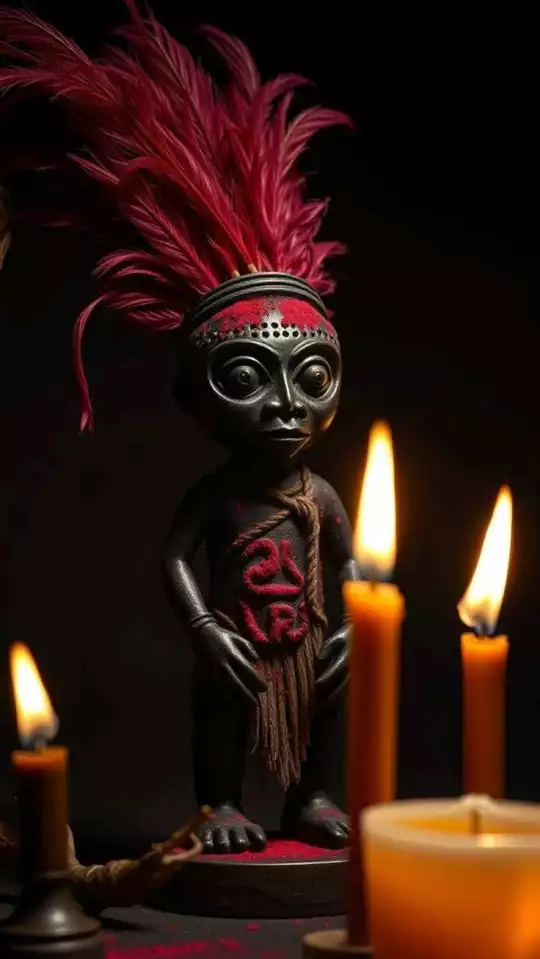
On the night of August 14, 1791, in a clearing at Bois Caïman in the northern mountains of Saint-Domingue, a secret assembly took place. Enslaved Africans from surrounding plantations gathered under the cover of storm and darkness. A priestess, sometimes named as Cécile Fatiman, presided over a ceremony invoking the lwa. A black pig was sacrificed, its blood shared among the participants, sealing an oath of rebellion.
Accounts vary—history has a way of blurring under the weight of myth and propaganda—but what is undeniable is that Vodou was not incidental to the Haitian Revolution. It was foundational. The ceremony at Bois Caïman is credited with igniting the insurrection that would, over the course of thirteen brutal years, dismantle the most profitable slave colony in the world and establish Haiti as the first Black republic.
Vodou provided both spiritual legitimation and organizational structure. The lwa were invoked for protection, guidance, and courage. Possession rituals allowed leaders like Dutty Boukman and later Jean-Jacques Dessalines to claim divine sanction. The communal nature of Vodou ceremonies—secretive, egalitarian, rooted in mutual trust—made them ideal spaces for planning revolt. To say that Vodou was the "soul" of the revolution is not metaphor; it was literally the medium through which collective will was forged and sustained.
Western historians have often minimized or dismissed this spiritual dimension, reducing the Haitian Revolution to economics and Enlightenment ideals. But the enslaved themselves understood their uprising in explicitly religious terms. They believed—and their victory seemed to confirm—that the lwa fought alongside them, that the ancestors guided their hands, that spiritual power was inseparable from political liberation.
The Structure of Haitian Vodou: Lwa, Ritual, and Cosmology
Haitian Vodou, as it crystallized in the post-revolutionary period, is not a monolithic faith but a family of related practices unified by core principles. At its heart is the veneration of the lwa—spirits who serve as intermediaries between humanity and Bondye, the distant, supreme creator. Bondye does not intervene directly in human affairs; the lwa do.
The lwa are organized into nations or nanchons, reflecting their diverse African origins. The Rada nation comprises cooler, benevolent spirits of Dahomean origin—Legba, Damballa, Ayizan. The Petwo nation includes hotter, more aggressive spirits born from the trauma of slavery and the rage of revolution—Ezili Dantor, Ogoun Feray. Each lwa has specific attributes, preferences, colors, foods, songs, and ritual gestures. Devotees cultivate personal relationships with particular lwa, who may demand offerings, initiation, or service.
Central to Vodou practice is the ounfò, the temple or sacred space presided over by a priest (oungan) or priestess (manbo). These leaders are initiated through rigorous training, learning the prayers, songs, dances, and herbal knowledge necessary to mediate between worlds. Ceremonies involve drumming on sacred instruments tuned to invoke specific lwa, the drawing of vèvè—intricate symbols traced on the ground with cornmeal or ash—and offerings placed at crossroads, springs, or altars.
Possession remains the pinnacle of ritual experience. When a lwa mounts a devotee, the person's consciousness temporarily recedes, and the spirit speaks, dances, and offers counsel through their body. This is not theater but theology embodied. The possessed are treated with reverence, their words taken as divine communication. Afterward, they often remember nothing, having been elsewhere while the lwa inhabited their flesh.
Ancestral veneration is equally vital. The dead are not gone but transformed, existing in Ginen—the mythic Africa beneath the waters, the spiritual homeland to which all souls return. Ancestors are fed, consulted, and honored through elaborate funerary rites and annual festivals. To neglect the dead is to invite misfortune; to honor them is to secure their protection and wisdom.
Vodou, Voodoo, and Hoodoo: Disentangling the Terms
The confusion begins with language. "Vodou" refers specifically to the Haitian religious tradition rooted in West African spirituality and syncretic Catholicism. "Voodoo" is often a bastardized, Anglicized term applied loosely and inaccurately, especially in sensationalist Western media. "Hoodoo" is something else entirely—a system of African American folk magic practiced primarily in the southern United States, drawing on African, Native American, and European influences but lacking the formal theological structure and communal worship of Vodou.
Louisiana Voodoo shares some heritage with Haitian Vodou, brought to New Orleans by Haitian refugees fleeing the revolution and later upheavals. Figures like Marie Laveau, the famed nineteenth-century Voodoo Queen, practiced a blend of African spirituality, Catholicism, and commercial conjure. Louisiana Voodoo became more individualistic and commodified, less rooted in the collective, initiatory traditions of Haiti. While related, the two traditions diverged significantly in practice and cultural context.
Hoodoo, by contrast, is non-religious magic—rootwork, conjure, spellcraft. It borrows elements from Vodou and Voodoo but exists outside formal priesthood or lwa veneration. A practitioner of Hoodoo might burn candles, create mojo bags, and invoke spirits, but they are not conducting Vodou ceremonies. The conflation of these traditions in popular discourse flattens their complexity and obscures their distinct histories.
The Mythology of Fear: Colonial Propaganda and Hollywood Distortion
From the moment Haiti won its independence in 1804, the very existence of a Black republic founded through slave revolt terrified the colonial powers of Europe and the slaveholding United States. Haiti had to be punished, discredited, contained. One weapon in this campaign was the demonization of Vodou.
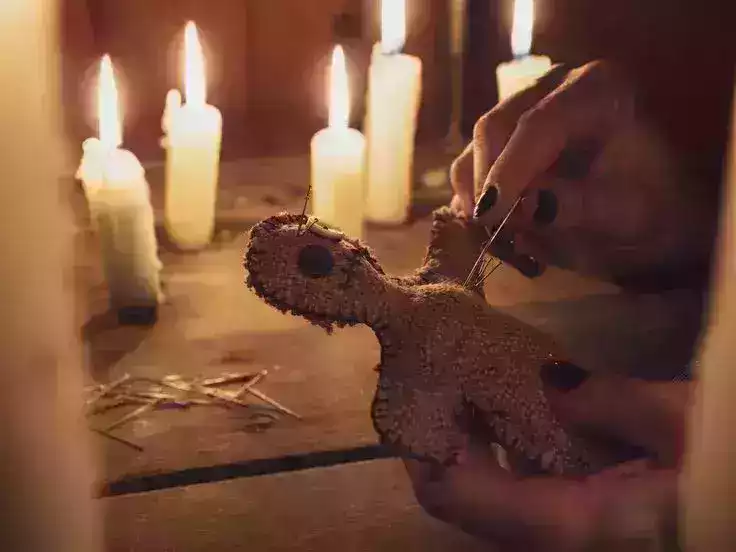
Western media, missionaries, and occupying forces—particularly during the U.S. military occupation of Haiti from 1915 to 1934—portrayed Vodou as devil worship, cannibalism, and black magic. Lurid tales of zombies, hexes, and voodoo dolls proliferated, fueled by racism and the colonial impulse to justify subjugation. Marines returning from Haiti brought back sensationalized stories, which Hollywood eagerly transformed into B-movie horror.
Films like White Zombie (1932) and countless exploitation pictures cemented the image of Vodou as sinister sorcery practiced by savage, superstitious Blacks. The "voodoo doll," so ubiquitous in popular imagination, has virtually no basis in authentic Vodou practice. Zombies—portrayed as mindless revenants—were distorted from Vodou beliefs about sorcerers who could spiritually enslave the dead, a fear rooted in the trauma of slavery itself.
This propaganda served material interests. By depicting Vodou as primitive and dangerous, colonial powers justified continued intervention, control, and extraction. The Haitian elite, often mulatto and Catholic, distanced themselves from Vodou to gain legitimacy in Western eyes. Vodou practitioners faced persecution, their temples burned, their rituals banned. Yet the religion endured, sheltered in the countryside, protected by the very people colonial powers sought to "civilize."
Contemporary Vodou: Reclamation and Resilience
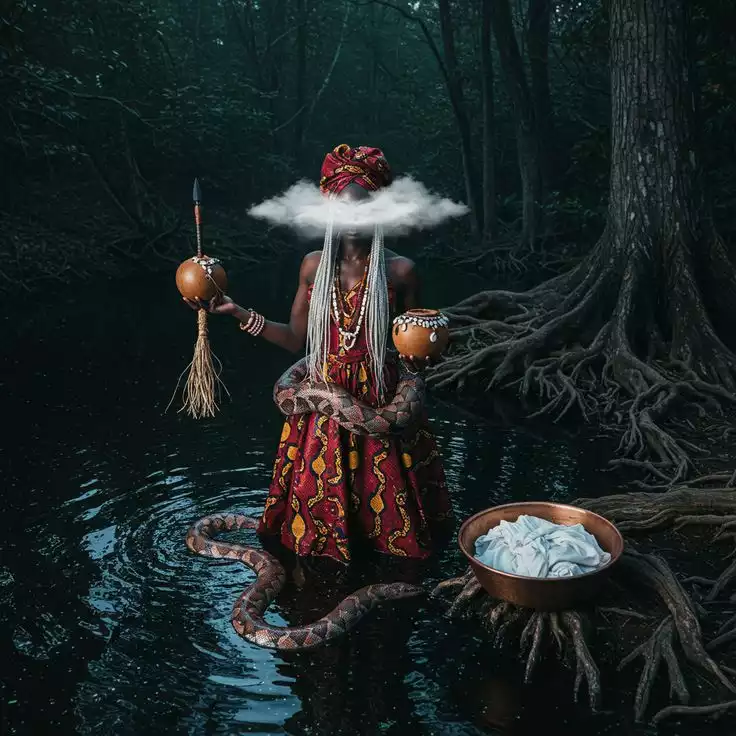
In 2003, the Haitian government officially recognized Vodou as a religion, granting it legal status alongside Catholicism and Protestantism. This belated acknowledgment came after centuries of marginalization, but it marked a significant shift. Today, Vodou is practiced openly by millions in Haiti and the diaspora, its rituals broadcast, its priests interviewed, its cosmology studied by anthropologists and respected by scholars of religion.
Modern Vodou is not frozen in time. It adapts, incorporating new lwa, responding to contemporary crises—earthquakes, political instability, migration. Devotees live in Port-au-Prince and Brooklyn, in Miami and Montreal. They navigate the tension between tradition and modernity, between secrecy and visibility, between local practice and global diaspora.
Academic interest has grown, led by Haitian and diaspora scholars who write from within the tradition rather than as colonial observers. Ethnographies like those by Maya Deren, Karen McCarthy Brown, and Elizabeth McAlister approach Vodou with respect and nuance, revealing its sophistication, beauty, and ethical depth. Vodou is increasingly understood not as superstition but as epistemology—a way of knowing the world that privileges relationship, reciprocity, and the agency of the unseen.
Vodou as Resistance, Vodou as Devotion
To study the origin of Vodou is to study the will to remain human in conditions designed to annihilate humanity. It is to witness the ingenuity of memory, the power of ritual to preserve identity, and the capacity of the sacred to adapt without surrender. Vodou is not a relic but a living tradition, as vital now as it was in the clearings of Saint-Domingue, as powerful now as it was at Bois Caïman.
What the West calls "Voodoo" is a caricature, a mask placed over a face it refuses to see. Authentic Vodou is a religion of healing, not hexing. It centers protection, not curses. It honors ancestors, nurtures community, and maintains the delicate balance between worlds. Its priests are healers, its ceremonies are acts of communion, and its spirits are neither demons nor fantasies but enduring presences, born in Africa, tempered in slavery, and triumphant in revolution.
Vodou teaches that the dead are not gone, that the spirits are listening, that power is not wielded alone but shared. It insists that survival is sacred, that resistance can be ritualized, and that liberation—spiritual and political—are inseparable. To understand Vodou is to understand the African diaspora itself: creative, unbroken, and profoundly, defiantly alive.
This is the origin of Vodou. Not in darkness, but in devotion. Not in fear, but in fierce, unrelenting memory.
Comments
No comments yet. Be the first to share your thoughts!
Leave a Comment
Your email address won't be published. Comments are reviewed before being posted.