 English
 Español
 Français
 中文
中文The desire to find love has threaded itself through human civilization like a golden filament binding disparate cultures, epochs, and spiritual traditions. From the dusty papyri of ancient Egypt to the whispered incantations in medieval European towers, practitioners have sought methods to draw love toward themselves—not through coercion or manipulation, but through alignment with forces both internal and cosmic. These rituals, often called spells, represent far more than simple wishful thinking. They constitute sophisticated psychological technologies, symbolic languages through which the practitioner negotiates with fate, fortune, and the hidden architectures of attraction.
What distinguishes genuine love spells from mere superstition is their foundation in the transformative capacity of ritual itself. When we speak of spells to find love, we address a ceremonial process that actualizes intention, crystallizes desire into tangible form, and positions the practitioner as an active participant in their romantic destiny rather than a passive recipient of chance encounters. The spell becomes a threshold—a liminal space where the mundane and the numinous intersect, where psychological preparation meets spiritual readiness.
The Historical Cartography of Romantic Enchantment
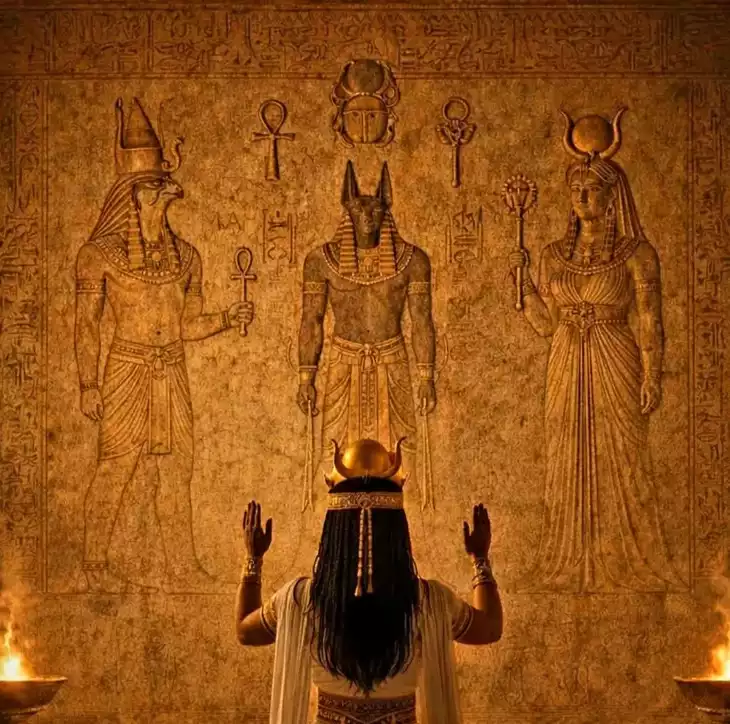
Ancient civilizations understood love not as random emotion but as a force requiring cultivation, invitation, and proper ritual context. In the mystery schools of Hellenistic Egypt, priests and priestesses inscribed love petitions onto lead tablets, which were then deposited in sacred wells or buried at crossroads—places where the boundaries between worlds grew thin. These weren't desperate pleas but carefully constructed invocations addressing specific deities: Aphrodite, Eros, or the syncretic Isis-Aphrodite who governed both celestial and terrestrial love.
The Greek Magical Papyri, compiled between the second century BCE and the fifth century CE, contain elaborate procedures for attracting romantic partners. One particularly sophisticated spell required the practitioner to inscribe specific vowel sequences—believed to be the hidden names of creation itself—onto a copper plate during particular lunar phases. The material component mattered less than the psycho-spiritual state it induced: a focused intentionality that reorganized the practitioner's energetic presence in the world.
Medieval European traditions diverged somewhat, incorporating Christian symbolism into older pagan frameworks. The grimoires of the Renaissance period often featured love spells attributed to King Solomon, blending Kabbalistic angelology with folk herbalism. A practitioner might invoke the angel Anael, planetary spirit of Venus, while burning specific resins and reciting verses designed to "open the heart's gate." These weren't seen as supernatural interventions but as methods of aligning oneself with natural cosmic rhythms already governing attraction and compatibility.
The Architecture of Attraction: Symbolic Components
Effective love spells operate through symbolic resonance rather than literal causation. The components traditionally employed—herbs, crystals, colors, timing—function as mnemonic devices and psychological anchors, training the mind to recognize and embody the qualities that naturally attract partnership.
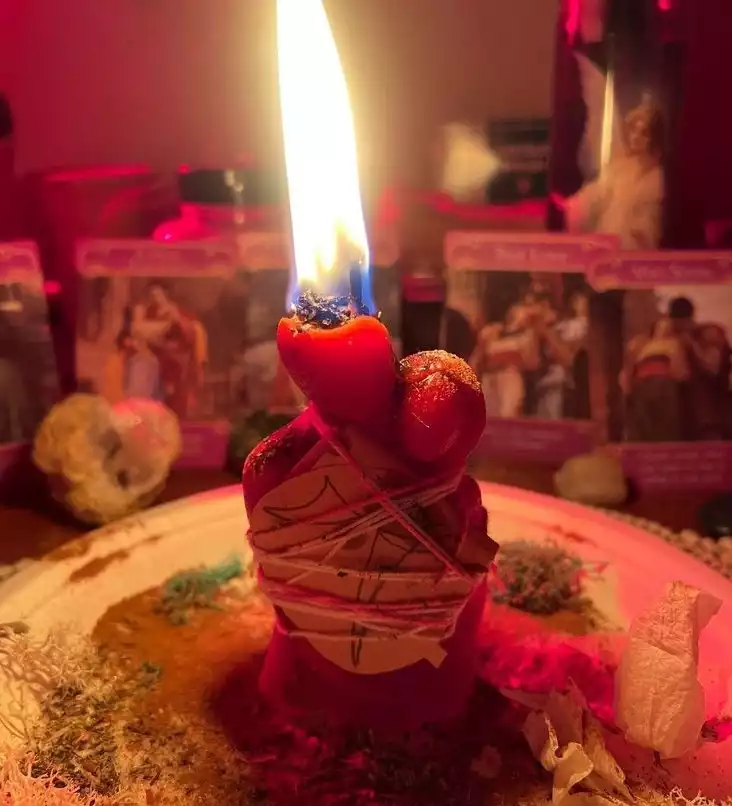
Rose petals, perhaps the most universal component in love workings, carry layered significance. Their fragrance triggers olfactory memories associated with beauty and pleasure; their ephemeral nature reminds the practitioner that love requires presence and attention; their traditional association with Venus connects the work to centuries of accumulated symbolic weight. When a practitioner places rose petals around a pink candle, they're not simply following instructions—they're participating in a visual-olfactory meditation on love's qualities: softness, vulnerability, opening.
Honey appears frequently in historical love spells, from ancient Greek philtres to Hoodoo sweetening jars. The symbolism operates on multiple registers: honey's preservation properties suggest lasting affection; its sweetness evokes pleasure and satisfaction; its golden color links it to solar vitality and generative force. More significantly, the slow, deliberate quality of honey mirrors the patient cultivation required for genuine romantic connection. A spell incorporating honey becomes a meditation on attraction's gradual unfolding rather than instantaneous possession.
Crystals like rose quartz or rhodonite function as focal points for contemplative practice. Their molecular structure—ordered, geometric, refractive—provides a physical analogue for the internal ordering of desire. When a practitioner meditates while holding rose quartz, they're engaging in a subtle form of neuroplastic training, associating the stone's weight and temperature with emotional availability and self-love—prerequisites for attracting healthy partnership.
Lunar Timing and the Rhythms of Receptivity
Traditional spell-craft pays meticulous attention to lunar phases, understanding the moon not as mystical abstraction but as a gravitational force affecting water, electromagnetic fields, and biological rhythms. Spells to find love typically align with the waxing moon—the period between new and full when light increases nightly. This timing operates symbolically (inviting growth and increase) and psychologically (capitalizing on cultural associations with expansion).
The new moon, in particular, represents the ideal moment for initiating love-drawing work. In this dark phase, when the moon rises and sets with the sun, the practitioner works with pure potentiality—the blank slate upon which new patterns can be inscribed. A new moon love spell might involve writing intentions in present tense ("I am open to receiving love," "I attract partners aligned with my highest good") and placing the written words in a special location, to be retrieved and read daily as the moon waxes.
Some traditions recommend Friday evenings for love spells, Friday being dies Veneris—the day of Venus. This timing layers planetary hour systems onto weekly rhythms, creating nested cycles that reinforce the work's focus. The practitioner who performs a love spell on a Friday during the waxing moon coordinates multiple temporal rhythms, each reinforcing the central intention through accumulated symbolic weight.
The Psychology of Transformation Through Ritual
Modern depth psychology offers frameworks for understanding how love spells function independent of supernatural mechanisms. When a practitioner commits time, attention, and creative energy to a ritual, they engage in what behavioral scientists call "implementation intention"—a mental process proven to increase goal achievement. The spell externalizes abstract desire into concrete action, transforming "I want love" into a structured practice with specific steps and materials.
Carl Jung's concept of active imagination provides another interpretive lens. In performing a love spell, the practitioner enters a liminal psychological state where symbolic action affects unconscious complexes. The rose petals, candles, and spoken words become a language through which the conscious ego communicates with deeper psychic layers—particularly the anima or animus, those internal figures governing relationship to the romantic other. The spell doesn't magically summon a partner so much as it reorganizes internal dynamics, dissolving barriers to connection and cultivating receptivity.
Furthermore, ritual participation generates what anthropologists call "collective effervescence"—even when performed alone. The practitioner taps into centuries of accumulated tradition, joining an invisible community of seekers across time and geography. This connection to lineage produces psychological effects: increased confidence, sense of agency, feeling supported by forces larger than individual will. These internal shifts naturally alter external presentation—body language, conversational openness, willingness to engage socially—creating conditions where romantic encounters become more likely.
Contemporary Practice: Adapting Ancient Wisdom
Modern practitioners often adapt traditional spells to contemporary contexts, maintaining symbolic coherence while adjusting superficial elements. A classic honey jar spell, for instance, might be reframed as a "self-love amplification practice" where the practitioner places their own name in a jar with honey, herbs, and affirmations. This shift recognizes that attracting healthy love requires first cultivating internal wholeness—the magnetic quality that draws compatible partnerships.
Digital adaptations have emerged as well, with practitioners creating vision boards, digital altars, or even carefully curated social media presences that function as extended love-drawing rituals. While purists might object, these methods operate on identical principles: focused intention, symbolic representation, repeated engagement, and gradual internal transformation. The medium matters less than the practitioner's commitment and the psychological processes activated.
Some contemporary approaches emphasize "shadow work" as preliminary to love spells—examining and integrating the psychological material that blocks healthy relationship. A practitioner might journal about past relationship patterns, identify recurring dynamics, and perform cleansing rituals before attempting attraction work. This preparatory phase recognizes that love spells fail not through metaphysical inadequacy but through internal incongruence: consciously seeking love while unconsciously maintaining protective barriers.
Ethical Considerations and the Question of Free Will
The ethics of love magic have provoked debate across centuries and traditions. Classical grimoires sometimes included spells targeting specific individuals, raising questions about consent and psychological autonomy. Most contemporary practitioners distinguish sharply between "general attraction" spells (which enhance one's own magnetism) and "specific person" spells (which attempt to influence another's will).
The former category operates within ethical bounds, functioning essentially as confidence-building and self-improvement rituals with symbolic flourish. The latter category ventures into more problematic territory, attempting to override another's autonomous choice. Even setting aside metaphysical efficacy questions, such spells betray an underlying orientation of lack and control—precisely the psychological states least conducive to healthy partnership.
Wise practitioners frame love spells as invitations rather than commands, as preparations rather than manipulations. The spell's purpose becomes creating optimal internal conditions—openness, self-worth, clarity about desires—while releasing attachment to specific outcomes. This paradoxical combination of focused intention and surrender mirrors the organic process of finding love itself: being clear about what one seeks while remaining open to unexpected forms and timings.
The Spell as Mirror: What Love Magic Reveals
Perhaps the deepest value of love spells lies not in their capacity to alter external circumstances but in what they reveal about the practitioner. The process of gathering materials, setting aside time, crafting words, and performing ritual requires that one articulate—often for the first time—what love actually means on a personal level. What qualities does one seek? What kind of partnership aligns with one's values? What wounds require healing before intimacy becomes possible?
The spell becomes diagnostic, exposing internal contradictions and unexamined assumptions. A practitioner who cannot complete a simple love-drawing ritual might discover deeper ambivalence about partnership. Someone who obsessively repeats spells without pause might recognize anxiety-driven grasping rather than genuine openness. In this sense, the spell functions as a mirror, reflecting back the practitioner's actual relationship to love—hidden beliefs, fears, and readiness.
This revelatory dimension connects love spells to broader traditions of spiritual practice: prayer, meditation, contemplation. All involve structured attention directed toward transformation, the cultivation of internal qualities through repeated, intentional practice. The spell's symbolic language and ritual framework simply provide a specific cultural expression of universal human impulses toward self-knowledge and connection.
Closing the Circle: Integration and Patience
Traditional practice emphasizes that spells require "closing"—a formal completion that releases the work into the world. This might involve extinguishing candles with gratitude, burying or burning spell components, or performing a cleansing bath. The closing ritual serves psychological purposes: it prevents obsessive attachment to outcomes and signals to the unconscious mind that the work is complete, allowing integration to proceed below conscious awareness.
Equally important is the period following spell-work—the space of patient receptivity. Folk traditions speak of allowing the spell to "work" without interference, advice that translates psychologically to avoiding desperate, grasping behavior that might undermine the internal shifts catalyzed by ritual. This waiting period cultivates trust: in oneself, in timing, in the processes that govern human connection.
The practitioner who performs a love spell and then continues with ordinary life—maintaining friendships, pursuing interests, staying open to unexpected encounters—demonstrates genuine magical maturity. They've understood that the spell's primary function was internal reorganization, a subtle shift in presence and availability that naturally attracts compatible resonance. The magic wasn't in the candles or words but in the willingness to become someone capable of receiving love—a transformation more profound than any supernatural intervention could provide.
Comments
No comments yet. Be the first to share your thoughts!
Leave a Comment
Your email address won't be published. Comments are reviewed before being posted.