 English
 Español
 Français
 中文
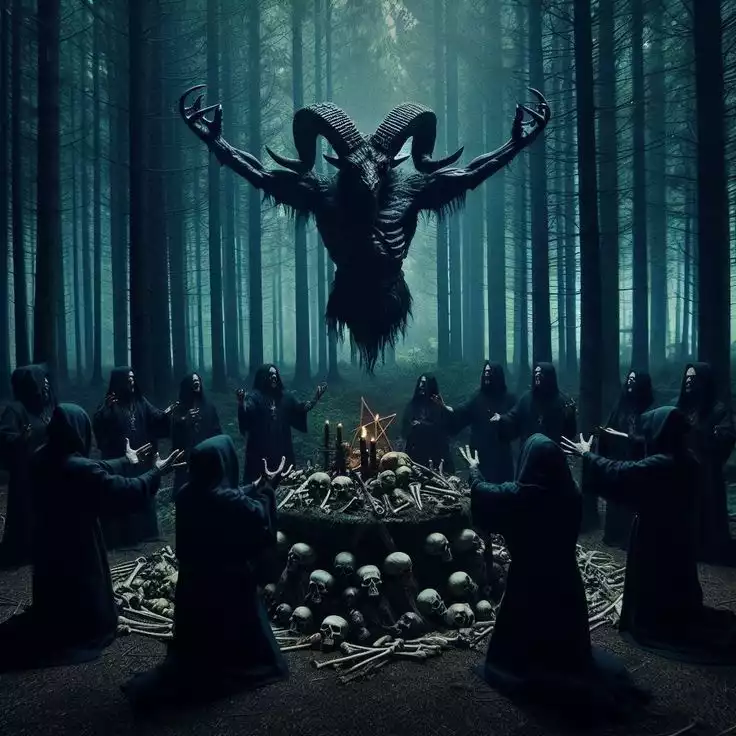
中文The invocation of infernal spirits occupies a contested threshold in the annals of Western esotericism—a practice simultaneously feared, condemned, and meticulously documented across centuries of occult tradition. Far from the sensationalized imagery of contemporary horror, the ritual engagement with demons and chthonic intelligences was, in its historical context, a disciplined art governed by elaborate symbolic protocols, linguistic formulae, and protective mechanisms designed to mitigate the inherent dangers of such congress.
The Architecture of Protection
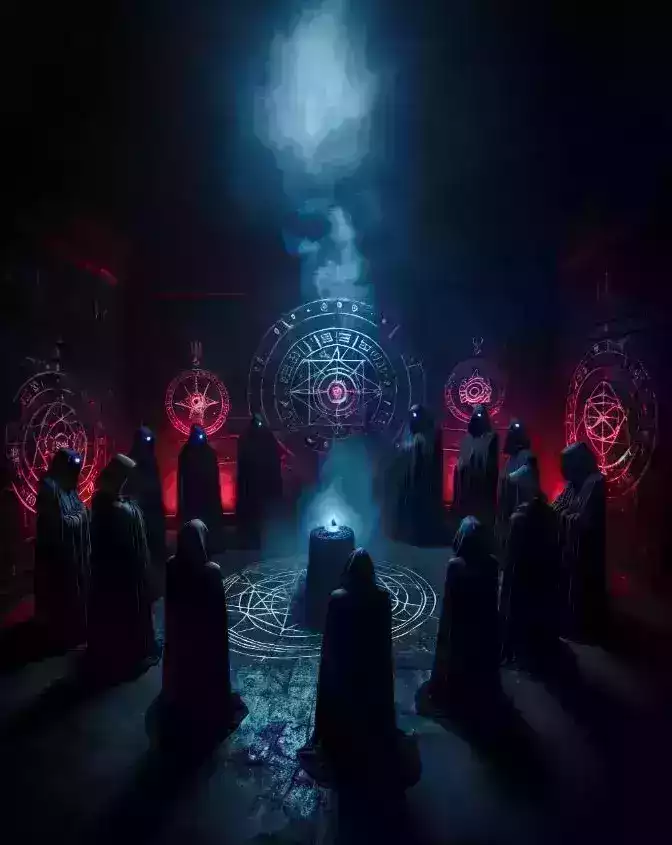
The practitioner who sought communion with infernal spirits did not proceed recklessly into the abyss. The grimoires—those enigmatic manuscripts that served as operational manuals for ceremonial magicians—repeatedly emphasized the primacy of protective enclosures. The magic circle, inscribed with divine names and geometric precision, functioned not merely as symbolic boundary but as a consecrated threshold between worlds, a membrane through which communication could occur without catastrophic contamination.
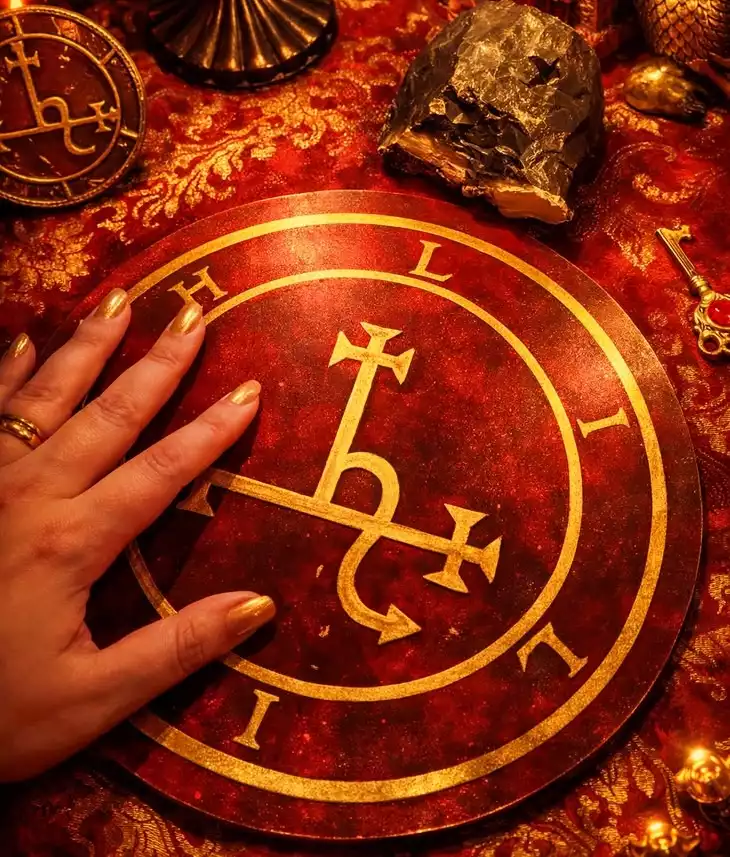
Within the Lemegeton and similar texts, the invocation ritual demanded purity of intent, ritual cleanliness, and the precise timing aligned with planetary hours. Demons, understood as intelligences bound to specific cosmological jurisdictions, could be approached only through the correct symbolic vocabulary—their sigils, their names of power, their assigned stations within infernal hierarchies. This was not superstition but a sophisticated taxonomy of consciousness, an attempt to map the invisible architecture of spiritual reality.
The Symbolic Vocabulary of Command
Central to safe invocation was the principle of authority. The magician did not beg or bargain from a position of weakness but rather assumed the mantle of divine agency, invoking higher powers—often Judeo-Christian sacred names—to compel obedience from lower spirits. This hierarchical cosmology, inherited from Neoplatonic and Kabbalistic thought, positioned the practitioner as intermediary, a conduit through which celestial authority could be channeled downward.
The ritual apparatus—rings inscribed with divine seals, robes of specific colors, censers burning precisely designated incenses—functioned as material extensions of symbolic intention. Each element reinforced the psycho-spiritual posture necessary to maintain equilibrium when confronting entities whose ontological status remained deliberately ambiguous: psychological projections, autonomous intelligences, or something uncomfortably between.
Ritual Closure and Banishment
Perhaps no aspect of infernal invocation was more critical than its conclusion. The spirits summoned required formal dismissal, a ritual severance that prevented lingering attachment or intrusion beyond the ceremonial space. The Lesser Banishing Ritual, license to depart, and sealing of the circle—these were not optional courtesies but essential hygiene, the spiritual equivalent of hermetic sealing.
Historical accounts document the consequences of incomplete banishment: obsession, psychic disturbance, the blurring of boundaries between invoked presences and the practitioner's own consciousness. The grimoires thus functioned as survival manuals, encoding centuries of experiential wisdom into formalized procedures designed to navigate dangerous territories of mind and spirit with minimal collateral damage.
In examining these rituals through contemporary lenses, we encounter not primitive superstition but a sophisticated engagement with the shadow dimensions of human consciousness—an archaeology of the soul that recognized the necessity of confronting darkness with discipline, respect, and rigorous symbolic framing.
Comments
No comments yet. Be the first to share your thoughts!
Leave a Comment
Your email address won't be published. Comments are reviewed before being posted.