 English
 Español
 Français
 中文
中文In the shadowed corridors of ceremonial magic, where intention crystallizes into presence and words become acts of creation, the power of names holds dominion over all other instruments. To speak a name—particularly a demon name—is not to reference something distant, but to invoke its very essence into the chamber of your working. The ancients understood this with a clarity that modern practitioners often lack: names are not conveniences of identification. They are ontological anchors, vibrational signatures, thresholds through which unseen intelligence responds.
The history of demon invocation is inseparable from the meticulous preservation of names. From the Babylonian incantation bowls inscribed with protective formulae to the grimoires of medieval Europe cataloging hierarchies of infernal spirits, each tradition recognized that to know the right name—the true name, the secret name—was to possess leverage over forces that would otherwise remain chaotic and unbound. This is not superstition. It is linguistic technology refined across millennia.
The Ontology of Demonic Nomenclature
What distinguishes a demon's name from any other word? The answer lies in its function as both seal and summons. Unlike human names, which serve primarily social purposes, demon names operate as condensed expressions of identity, function, and cosmic position. When the operator utters "Belial" or "Asmodeus," they are not simply calling out into the void—they are activating a pre-existing pattern, a resonance embedded in the collective unconscious and the astral architecture that underlies material reality.
The structure of these names often reflects their origins. Many derive from Semitic roots—Hebrew, Aramaic, Akkadian—languages in which meaning and sound were understood as inseparable. The name Astaroth, for instance, echoes the Phoenician goddess Astarte, transformed through centuries of theological reinterpretation into a masculine demon of corruption and forbidden knowledge. The phonetic continuity is not accidental. It preserves a thread of power that transcends cultural mutation.
Other demon names emerge from corruption itself—deliberate distortions designed to invert divine names or angelic titles. This practice, common in both Kabbalistic demonology and Christian grimoire tradition, operates on the principle that inversion retains power while redirecting its flow. The name Samael, often rendered as "Venom of God," stands as both adversary and shadow counterpart to sanctified nomenclature. To invoke such a name is to engage with the paradox at the heart of all occult work: that sacred and profane are not opposites but complementary poles of a single spectrum.
Historical Registers: From Sumeria to the Lemegeton
The earliest recorded demon names appear in Mesopotamian texts, where spirits were classified not by moral alignment but by domain and temperament. The utukku, edimmu, and gallu of Sumerian lore were not demons in the later Abrahamic sense—they were forces, often neutral, occasionally hostile, always particular. Their names functioned as technical designations within a cosmology that understood the universe as densely populated with non-human agencies.
As monotheistic frameworks supplanted polytheistic cosmologies, the demon evolved into a theologically necessary figure: the embodiment of opposition, the agent of temptation, the fallen intelligence. With this shift came a proliferation of names, systematically recorded in texts like the Testament of Solomon, the Book of Abramelin, and most famously, the Lesser Key of Solomon or Lemegeton. This latter work catalogs seventy-two demons, each with precise names, ranks, seals, and invocational protocols. The specificity is critical. To confuse Paimon with Beleth, or to mispronounce Buer, is not merely careless—it is operationally ineffective, even dangerous.
The grimoire tradition insists on exactitude because it understands names as vibrational keys. The medieval magician did not view language as arbitrary. He inherited a worldview in which sound, shape, and meaning formed a unified field of influence. To speak the demon right names correctly—with proper intonation, rhythm, and intent—was to establish resonance. To err was to invite confusion, resistance, or worse: the attention of an entity unbound by the constraints of correct invocation.
The Phenomenology of Naming: What Happens When You Speak
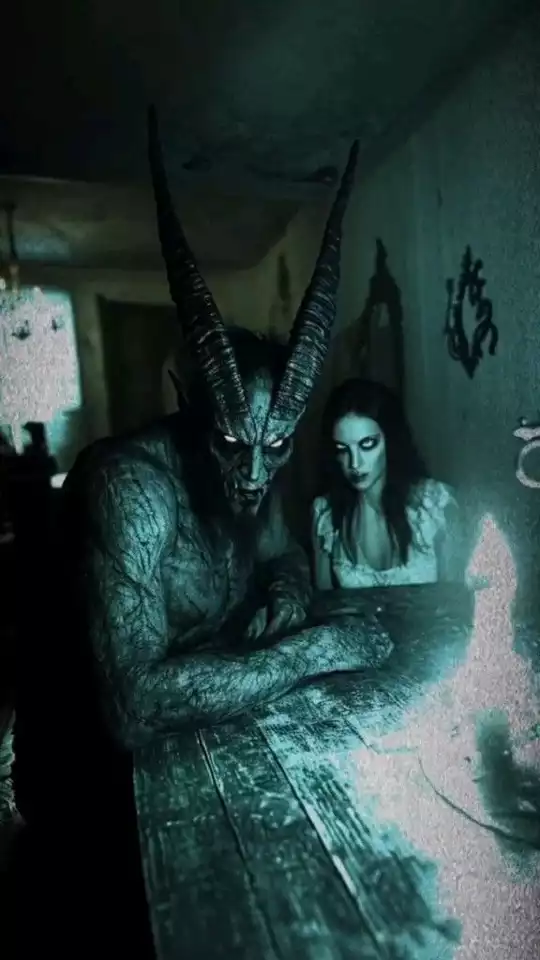
Modern practitioners often report a visceral shift when pronouncing demon names within ritual space. The atmosphere thickens. Temperature fluctuates. Subjective states alter—heightened awareness, sudden fear, expansive clarity. These are not hallucinations but phenomenological markers of contact. The name acts as a focal point, drawing both the operator's will and the entity's presence into alignment.
Psychologically, this can be understood through the lens of archetypal activation. Carl Jung's concept of autonomous complexes—semi-independent psychic structures with their own agendas—offers a framework for understanding how demon invocation might function even in a materialist paradigm. To invoke Lucifer, for instance, is to engage with the archetype of the light-bearer, the rebel intellect, the Promethean force within one's own psyche. Whether one believes in ontologically independent demons or views them as externalizations of internal forces becomes, in practice, less relevant than the consistency of the effect.
But to reduce demonology entirely to psychology is to ignore centuries of empirical occult data. The persistence of certain demon names across unconnected traditions—Lilith appearing in Sumerian, Hebrew, and medieval European sources—suggests something more than projection. It suggests patterns woven into the fabric of human encounter with the numinous, names that have accrued power through repeated use, cultural transmission, and the layered intentions of countless operators.
Right Names and the Problem of Authority
Not all sources agree on demon names. Variants proliferate across manuscripts, translations, and oral traditions. Is the demon of lust Asmodeus, Ashmedai, or Asmoday? The answer depends on which grimoire you consult, which linguistic tradition you prioritize, which magical current you align with. This variability presents both challenge and opportunity.
The challenge is obvious: without a single authoritative register, how does one ensure efficacy? The medieval solution was to defer to lineage—to trust the transmission of one's teacher, or the manuscript proven through generations of use. The contemporary solution is more experimental: test multiple variants, observe results, refine practice accordingly. This empirical approach, while less romantically rigid, honors the living nature of magical work. Names, like all language, evolve. A demon name that resonates in sixteenth-century Prague may require adaptation in twenty-first-century Brooklyn.
Yet the core principle remains: precision matters. The demon right names are those that produce consistent results—manifestation, communication, transformation. Whether that precision derives from historical fidelity, phonetic accuracy, or personal gnosis matters less than its operational verification. The magician's laboratory is not the library but the ritual chamber, where theory meets praxis and names either open doors or fall silent.
Invocational Protocols: Structure and Syntax
To invoke a demon is not merely to say its name. The name must be embedded within a larger structure—linguistic, gestural, symbolic. Traditional invocations follow recognizable patterns:
- Preliminary purification: Establishing sacred space through banishing rituals, ensuring the operator's will is clear and focused.
- Hierarchical address: Invoking higher authorities (God, archangels, planetary intelligences) to establish context and protection.
- The conjuration proper: Speaking the demon name within a formula of command, invitation, or entreaty, often repeated multiple times.
- Verification: Requesting signs of presence—visual, auditory, intuitive—to confirm successful contact.
- Binding or dismissal: Concluding the operation by either establishing an agreement or firmly releasing the entity.
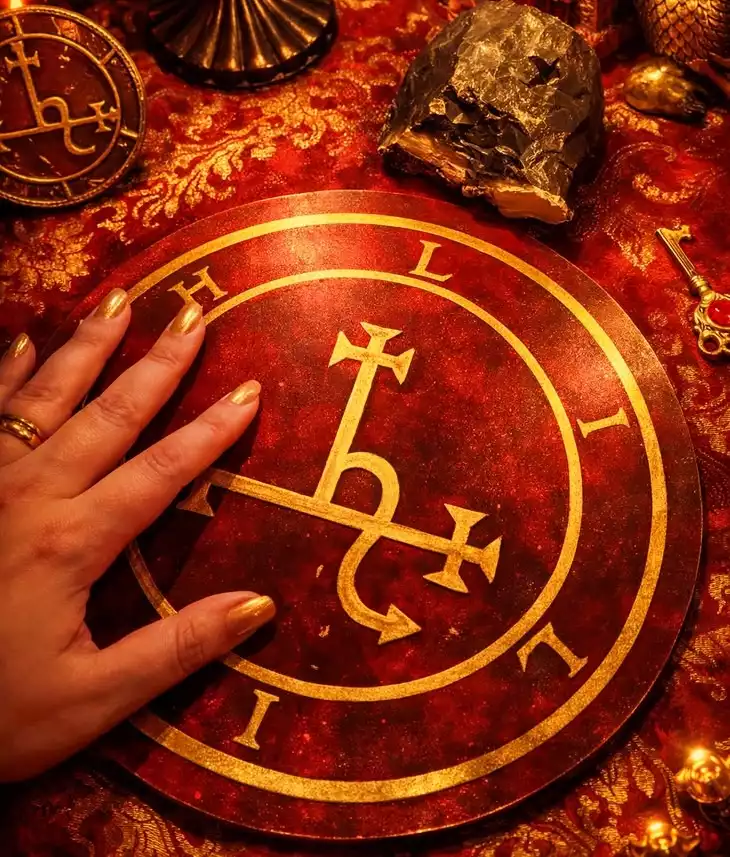
Within this framework, the demon name functions as the linchpin. It is the point of maximum concentration, the word around which all other elements orbit. In the Goetia, each demon's name is paired with a sigil—a visual counterpart to the auditory invocation. Together, they form a complete semiotic package, addressing both the verbal and symbolic faculties of consciousness.
Some operators enhance potency through repetition, chanting the name until it loses semantic content and becomes pure vibration. Others embed the name within barbarous words of power—strings of seemingly meaningless syllables preserved from ancient sources, believed to carry intrinsic force. Both approaches recognize that the efficacy of demon names transcends literal meaning. The name is a technology, a tool whose function is defined by use rather than definition.
Contemporary Practice and Ethical Considerations
The resurgence of interest in demonology within contemporary occultism has brought new vitality to the study of demon names. Modern practitioners draw from historical sources while incorporating insights from chaos magic, depth psychology, and comparative mythology. The result is a more fluid, personalized approach—one that honors tradition without being enslaved by it.
Yet this fluidity introduces ethical questions. If demon names are tools of power, what responsibilities accompany their use? The medieval magician operated within a cosmology that provided clear moral frameworks, however oppressive. The contemporary operator often works in a more relativistic landscape, where intention and consequence become the primary ethical metrics.
To invoke a demon by name is to enter into relationship. Whether that relationship is framed as psychological, spiritual, or purely symbolic, it carries weight. The operator who casually experiments with demon invocation without understanding the depth of engagement risks more than failure—they risk distortion of will, fragmentation of psyche, or the cultivation of patterns that resist integration. This is not moralizing. It is practical caution born of observation.
Linguistic Alchemy: Transforming Self Through Demonic Nomenclature
At its deepest level, working with demon names is a form of linguistic alchemy. Each name represents a cluster of qualities—rage, desire, knowledge, rebellion, sovereignty. To invoke these names repeatedly, to meditate on their resonance, to embody their attributes, is to integrate aspects of self often suppressed or denied. The demon becomes teacher precisely because it represents what lies beyond the threshold of acceptable identity.
This is why demon invocation has always been dangerous. Not because demons are inherently malevolent—though some may be—but because they demand honesty. To speak the name Belial is to confront one's own capacity for lawlessness and self-determination. To invoke Mammon is to examine one's relationship with material desire without the comforting veil of self-deception. The demon does not lie. It reflects.
The power of names in demon invocation, then, is ultimately the power of self-knowledge pursued without compromise. The magician who masters demon names masters not external spirits but the currents of will, fear, and longing that shape existence from within. The names are maps. The territory they describe is both psychological and ontological, both inner and outer, both symbolic and startlingly real.
Preservation and Transmission: The Future of Demonic Nomenclature
As magical practice evolves, so too does the lexicon of demon names. New entities emerge—or perhaps, old ones reveal themselves under new appellations. The digital age has accelerated transmission while complicating authentication. Online forums and grimoire PDFs circulate names with dubious provenance, stripped of context and lineage. This democratization of knowledge is both gift and peril.
The discerning practitioner must cultivate discrimination. Not all demon names encountered in contemporary sources carry equivalent power. Some are invented, some misattributed, some genuine but misunderstood. The only reliable guide is direct experience, supplemented by historical study and mentorship when available. The demon names that endure across centuries do so because they work—because they key into something consistent in human consciousness and cosmic structure.
Yet even invented names can accrue power through use. If enough practitioners invoke a newly coined demon name with sufficient intensity and consistency, it may crystallize into a functional egregore—a thought-form with autonomous characteristics. This suggests that demon names are not discovered so much as activated, brought into being through the interplay of linguistic structure, collective belief, and repeated invocation. The boundary between creation and discovery dissolves, revealing magic as participatory cosmology.
Conclusion: The Irreducible Mystery
To write about demon names is to circle an irreducible mystery. No amount of historical scholarship or theoretical analysis can fully capture what happens when a prepared operator speaks the right name in the right manner at the right time. Something shifts. Contact occurs. Whether we frame this as psychological, spiritual, or ontologically independent matters less than the consistency of the phenomenon itself.
The power of names in demon invocation is the power of language wielded with ceremonial precision, the power of attention focused until it cuts through layers of consensus reality, the power of relationship with forces older and stranger than the ego that seeks to command them. It is ancient technology, perpetually renewed by those willing to speak the words that others fear to utter. And in that speaking, the boundary between self and other, known and unknown, dissolves into the luminous darkness where all names originate.
Meta Description: Explore the ancient power of demon names in invocation—how demon right names function as keys to unseen forces, historical grimoire traditions, and the linguistic alchemy of summoning.
SEO Tags: demon names, demon right names, demon invocation, demonic nomenclature, goetia demons, summoning demons, grimoire tradition, lesser key of solomon, occult names, ceremonial magic
Comments
No comments yet. Be the first to share your thoughts!
Leave a Comment
Your email address won't be published. Comments are reviewed before being posted.