
 English
 Español
 Français
 中文
中文The figure who refused to lie beneath Adam, who abandoned paradise rather than submit, has become the luminous obsession of modern occultism. Lilith—first wife, night demon, goddess of thresholds—inhabits a peculiar intersection where feminist theology converges with ceremonial magic, where psychological archetype bleeds into genuine theurgic encounter. Her invocation is not a nostalgic retrieval of ancient practice but a deliberate act of reconstruction, weaving together Sumerian fragments, Kabbalistic whispers, and contemporary hunger for feminine divine authority that refuses domestication.
To invoke Lilith is to call upon something irreducible to single interpretation. She arrives bearing the accumulated sediment of four millennia: Sumerian wind demoness, Talmudic child-stealer, Kabbalistic consort of Samael, medieval succubus, Romantic literary figure, and now—perhaps most potently—goddess of sexual sovereignty and spiritual autonomy. Each layer of her mythology informs modern practice, creating invocations dense with historical memory and ideological intention.
The Archaeological Strata of Lilith
Her origins lie in the lilitu of ancient Mesopotamia—a category of nocturnal spirits associated with wind and desolation. The Sumerian "Huluppu Tree" text from the Epic of Gilgamesh places a ki-sikil-lil-la-ke in Inanna's sacred tree, a figure some scholars cautiously identify as proto-Lilith. The Hebrew Bible mentions her only once, in Isaiah 34:14, describing a creature haunting the ruins of Edom—a single appearance that belies her subsequent mythological proliferation.
The Alphabet of Ben Sira, a provocative medieval text of uncertain authorship, crystallizes the narrative that modern practitioners inherit: Lilith as Adam's first wife, created from earth as he was, who refuses sexual subordination and speaks the ineffable name of God to escape Eden. This tenth-century story, likely satirical in its original context, became theological dynamite when rediscovered by modern readers seeking alternatives to patriarchal creation narratives.
Kabbalistic texts complicate her further. In the Zohar, Lilith transforms into a cosmic principle—the feminine aspect of the demonic realm, consort to Samael, seducer of men through nocturnal emissions, strangler of infants. Yet even here, ambiguity persists. Some Kabbalistic schools present her as a necessary shadow, the dark mirror to the Shekhinah, whose existence maintains cosmic balance. This tension between condemnation and necessity creates space for contemporary reinterpretation.
Contemporary Invocation Methodologies
Modern Lilith invocation divides roughly into three methodological streams, though practitioners often blend these approaches in practice. The ceremonial-magical tradition treats Lilith as an autonomous entity whose presence can be summoned through established theurgic protocols. These rituals typically draw from Solomonic grimoire traditions, adapted and amended to accommodate a figure the medieval texts cast as adversarial. Practitioners construct circles, employ appropriate correspondences—black candles, cypress, myrrh, the waning moon—and issue formal invitations through carefully crafted conjurations.
Such Lilith spells often incorporate Hebrew divine names, not from Judaic piety but from the recognition that these linguistic formulas carry accumulated egregoric power. The conjuration might invoke her titles: Queen of Zmargad, Bride of Samael, Mother of Demons, She Who Howls in Desolate Places. The goal varies—some seek her patronage for workings of personal liberation, others her assistance in cursework, still others knowledge of sexual magic or dream manipulation.
The psychological-archetypal approach, heavily influenced by Jungian frameworks and feminist theology, treats Lilith invocation as internal work. Here, goddess Lilith functions as a representation of repressed feminine rage, autonomy, and sexual agency. Invocation becomes active imagination, guided meditation, or ritual theater designed to integrate shadow material and reclaim disowned aspects of self. This methodology appeals particularly to those uncomfortable with literal entity work but drawn to Lilith's symbolic potency.
These practitioners might create personal Lilith spells as affirmative declarations, ritualized boundary-setting, or creative acts that embody her refusal to diminish oneself for another's comfort. The invocation is performative—not summoning an external being but activating an internal capacity modeled on her mythic example. The distinction between psychological and ontological reality deliberately blurs; whether Lilith exists "out there" matters less than the transformative effect of engaging her archetype.
The third stream treats Lilith as genuine goddess within reconstructed or syncretic pagan frameworks. These practitioners, often associated with goddess spirituality or eclectic witchcraft, offer her devotion, construct shrines, develop ongoing relationships through regular offerings and prayers. Lilith invocation here resembles worship more than conjuration—an acknowledgment of divine status rather than instrumental summoning. She appears on altars alongside Hecate, Kali, the Morrigan—other dark goddesses of sovereignty and transformation.
The Grammar of Lilith Invocation
What actually occurs during a Lilith invocation? The ritual structure varies by tradition and practitioner preference, but certain elements recur with notable frequency. Most workings occur at night, ideally during the dark moon when her influence strengthens. The ritual space is cleansed and consecrated, though practitioners disagree whether protective barriers should be erected. Some argue that attempting to bind or constrain Lilith fundamentally contradicts her nature—she is precisely the force that refuses containment.
The invocation proper typically begins with statements of intent and addresses that acknowledge her various aspects and mythological roles. Unlike demons whose conjuration demands authoritative command, successful Lilith invocation often employs tones of invitation, respect, even alliance. Practitioners describe approaching her as autonomous peer rather than supplicant or master. This relational dynamic reflects the ideological subtext—invoking Lilith means engaging with principles of equality and mutual recognition.
Offerings vary but frequently include wine, blood (menstrual or otherwise), honey, pomegranate, rich foods. Some practitioners incorporate sexual energy, either through autoerotic gnosis or partnered sex magic, directing the generated force as offering and invitational beacon. Incense—typically dragon's blood, wormwood, or proprietary blends—creates both atmosphere and subtle-plane signature. Chanting, whether of historical names or contemporary compositions, builds rhythmic trance states conducive to perceptual shifts.
Phenomenology of Contact
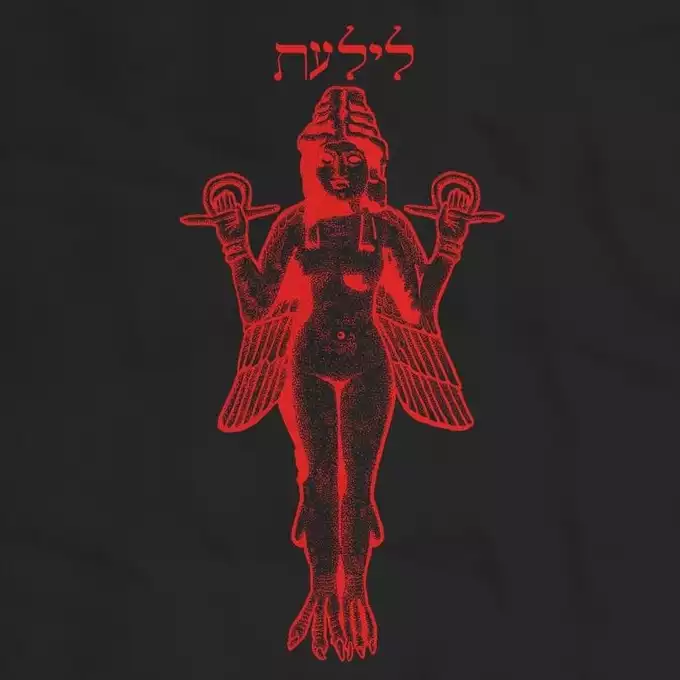
Those who practice genuine Lilith invocation report experiences ranging from subtle intuition shifts to overwhelming numinous encounters. Common descriptions include sensations of fierce presence, visions of a dark-haired woman or owl-winged figure, sudden clarity regarding personal boundaries or suppressed desires, intensification of dream activity with explicitly sexual or confrontational content. Some describe her arrival as seductive, others as challenging or even hostile—a testing of the practitioner's resolve and authenticity.
The goddess Lilith encountered in ritual often defies expectation. Practitioners seeking a straightforward feminist icon sometimes meet instead a complex, morally ambiguous force concerned less with modern political categories than with primal sovereignty and the destabilization of comfortable structures. She rewards authenticity and punishes pretense; several accounts describe disastrous workings when practitioners approached her without genuine intention or self-knowledge.
The aftermath of successful invocation typically involves upheaval—relationships that no longer serve end abruptly, previously tolerated injustices become intolerable, comfortable self-deceptions collapse. Lilith functions as catalyst for necessary destruction, clearing ground for more authentic reconstruction. Those unprepared for such disruption sometimes characterize their workings as having "gone wrong," though experienced practitioners argue this chaos represents precisely the transformative process they invoked.
Theological Complications and Ethical Considerations
The modern embrace of Lilith raises questions that deserve more attention than they typically receive. Can a figure constructed largely through patriarchal mythology—the dangerous woman as warning tale—be successfully reclaimed, or do practitioners inevitably smuggle misogynist assumptions into supposedly liberatory practice? The medieval texts that preserved her story did so as cautionary literature; does invoking her perpetuate those narratives even while attempting to subvert them?
Some critics argue that Western practitioners appropriate Lilith from Jewish textual tradition without adequate understanding or respect for the cultural context. While she appears primarily in heretical or folklore sources rather than mainstream Judaism, her mythology remains embedded in Jewish mystical discourse. The question of who may legitimately invoke her, and under what terms, remains contentious.
Additionally, the romanticization of Lilith risks sanitizing genuinely dangerous aspects of her mythology. The figure who strangles infants and seduces married men, however metaphorically interpreted, carries valences of harm that modern invocation often sidesteps. Is the goddess Lilith worshipped today an authentic encounter with her mythological complexity, or a selectively edited version designed for contemporary consumption?
Lilith and the Architecture of Modern Witchcraft
Despite these complications—or perhaps because of them—Lilith invocation occupies central importance in contemporary occultism. She represents possibilities foreclosed by other mythological figures: the feminine that refuses maternal containment, the sacred that embraces rather than transcends sexuality, the divine that chooses autonomy over relationship. For practitioners navigating post-Christian spiritual landscapes, she offers an alternative genealogy, a different cosmological possibility.
The proliferation of Lilith spells in modern grimoires and online repositories testifies to her accessibility and adaptability. Unlike entities requiring elaborate initiatory preparation or rare ritual implements, Lilith responds to direct, heartfelt invocation. This democratic availability makes her particularly appealing to solitary practitioners and those outside formal magical orders. Her mythology, widely available through internet resources and popular books, requires no secret transmission or lineage authentication.
Yet accessibility should not be mistaken for safety. Experienced practitioners consistently warn that Lilith invocation demands psychological preparedness, stable life circumstances, and genuine willingness to face shadow material. She is not a beginner's working, despite her popularity. Those who invoke her without adequate foundation risk destabilization they cannot integrate, unleashing forces of disruption without capacity for reconstruction.
The Undomesticated Divine
What Lilith ultimately represents—what her invocation fundamentally activates—is the principle of refusal. Her mythological power derives entirely from her "no" to Adam, to God, to the entire apparatus of subordination. This primal refusal, this willingness to choose exile over compliance, resonates across millennia with particular intensity in this historical moment.
Modern occultists invoke her not to summon demonic assistance or goddess blessing, but to activate within themselves that capacity for sacred refusal. To say no to diminishment, to reject false choices, to abandon paradises that demand too much surrender. Her invocation is always political, always personal, always dangerous—because genuine autonomy threatens every structure premised on inequality.
She waits in the liminal spaces, neither fully demon nor goddess, neither condemnation nor salvation. To invoke Lilith is to step deliberately into that uncomfortable ambiguity, to embrace complexity over comfortable categories. She offers no easy answers, no simple empowerment, no safe rebellion. What she offers instead is witness to the possibility of refusal, the example of choosing authentic exile over false belonging. In an age of compulsory performance and manufactured consent, that example carries the force of genuine magic—the transformation of consciousness that precedes the transformation of circumstance.
Those who approach her with genuine intent, prepared for upheaval and committed to authentic transformation, may find in her invocation something precious: permission to become fully themselves, even at terrible cost. This is the gift and the curse of Lilith: she offers nothing but freedom, and freedom is the most dangerous magic of all.


Comments
No comments yet. Be the first to share your thoughts!
Leave a Comment
Your email address won't be published. Comments are reviewed before being posted.