 English
 Español
 Français
 中文
中文How to Use Each Moon Phase for Manifesting
The Moon has captivated human consciousness since the earliest days of civilization. In nearly every culture, its phases have been interpreted as markers of time, symbols of transformation, and vessels of spiritual power. From the careful agricultural planning of ancient societies to the ritual calendars of modern witchcraft and Wicca, the lunar cycle has served as a blueprint for understanding change itself. To work with the Moon in manifestation is not to demand miracles from the cosmos, but to engage with a rhythm older than language—a rhythm that many practitioners find offers structure, meaning, and reflection to their spiritual lives.
Manifestation, properly understood, is not the art of wishing things into being. It is the deliberate alignment of intention with action, repeated consistently enough to shape reality. The Moon's cycle, with its predictable phases and symbolic associations, provides a framework that can help organize this process. Each phase carries its own archetypal energy, its own invitation to particular kinds of inner and outer work. Whether one approaches this through the lens of lunar magic, the law of attraction, or simple psychological discipline, the principle remains the same: by attuning one's efforts to the Moon's cycle, manifestation becomes not a sporadic exercise, but a sustained practice.
What follows is an examination of each phase, its traditional associations, and the ways practitioners across spiritual traditions have sought to use its energy for manifesting intentions, clarifying goals, and cultivating meaningful transformation.
New Moon: The Planting of Seeds
The New Moon arrives in darkness. Astronomically, it is the moment when the Moon stands between Earth and Sun, invisible to the eye. Symbolically, it is the beginning—the blank page, the fertile void, the moment before anything has taken shape. In the language of manifestation, this is the time to set intentions.
New moon manifestation involves more than idle daydreaming. It requires the practitioner to articulate desires with clarity, to write them down, to give them form. Many traditions recommend creating a new moon ritual that includes lighting a white candle, sitting in meditation, and journaling with focused intention. Some practitioners create vision boards during this phase, assembling images and words that represent their goals. Others write affirmations in present tense, as though the desired outcome has already arrived.
The key to effective new moon ritual work is specificity. Vague wishes dissolve into the ether; clear intentions take root. This is not merely symbolic. The act of naming what one wants—and writing it by hand—engages both cognitive and emotional centers, imprinting the intention more deeply into the psyche. In the stillness of the New Moon, when the night sky offers no reflected light, the inner world becomes the primary landscape. It is here that seeds are planted, not in soil, but in consciousness.
Waxing Crescent: The First Movement
The Waxing Crescent Moon appears as a sliver of light, growing each night. In the days following the New Moon, energy begins to shift from internal contemplation toward external action. Intentions that were set in the dark now require embodiment. This is the phase where waxing moon manifestation demands that the practitioner move from thought into the world.
This is not the time for grand gestures, but for first steps. If the intention was to find new work, this is when one updates the résumé, reaches out to contacts, submits applications. If the goal was better health, this is when the first walk is taken, the first meal planned. In spellwork traditions, the Waxing Crescent is often used for beginning long-term enchantments, for creating talismans, or for rituals designed to draw things toward oneself.
Momentum, however small, is the currency of this phase. Manifestation fails not because desires are unworthy, but because they remain untethered to action. The Waxing Crescent asks: what is the smallest thing you can do today that aligns with your intention? The Moon does not grow in leaps—it grows incrementally, night by night. So too must the practitioner.
First Quarter Moon: The Test of Resolve
By the time the Moon reaches its First Quarter, it appears half-illuminated—a perfect division between light and shadow. This visual balance reflects the inner tension that often arises at this stage of any manifestation process. Obstacles appear. Doubts whisper. The enthusiasm of the New Moon meets the resistance of reality.
The First Quarter Moon is not a comfortable phase. It is where many practitioners falter, mistaking difficulty for failure. But in the symbolic language of lunar manifestation, this phase is precisely where commitment is tested. Will the intention survive contact with challenge? Will the practitioner adjust, adapt, persist?
Rituals during this phase often focus on courage and clarity. Some light red or orange candles to invoke strength. Others perform meditations designed to dissolve self-doubt. Still others engage in divination—tarot, runes, pendulum work—seeking insight into what obstacles are real and which are merely projections of fear. The First Quarter Moon does not ask for retreat. It asks for discernment, for the ability to distinguish between a path that needs adjustment and a path that simply requires perseverance.
Waxing Gibbous: Refinement and Preparation
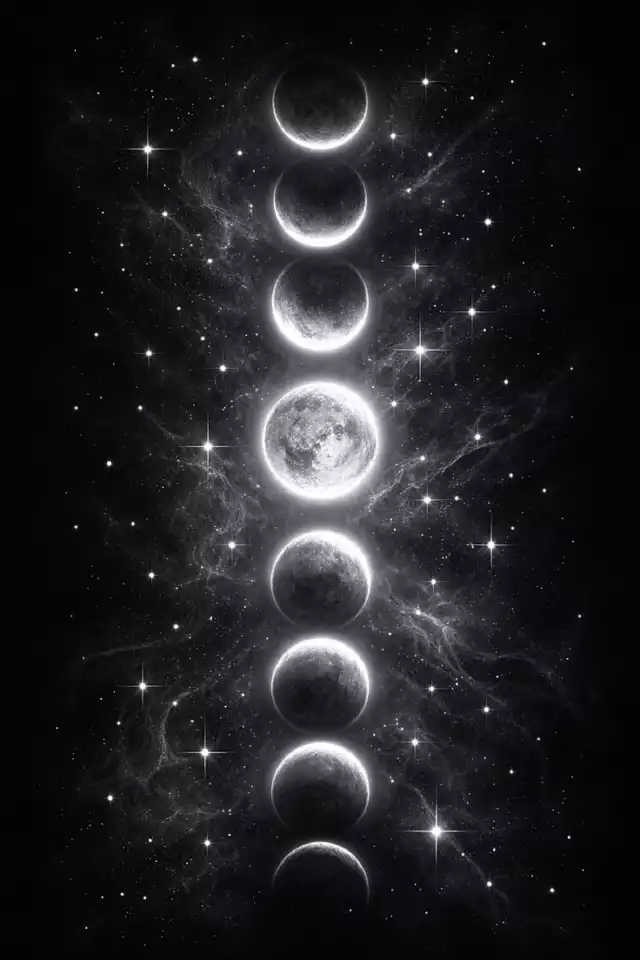
The Waxing Gibbous Moon is nearly full, but not yet complete. This is the phase of refinement, of polishing, of reviewing what has been built and making final adjustments before the culmination. In manifestation work, this is the time to assess progress honestly, to recognize what is working and what requires modification.
Many practitioners overlook this phase, eager to leap from action to result. But the Waxing Gibbous teaches that success is often found in details. A job application might need a second draft. A creative project might benefit from feedback. A relationship intention might require a difficult conversation. This is not failure—it is maturation.
Rituals during this phase often involve study, skill-building, or collaborative work. Some practitioners use this time to charge crystals, to strengthen protective wards, or to perform rituals designed to amplify energy already in motion. The Waxing Gibbous does not demand new beginnings; it demands patience and precision. The Moon is almost full. The work is almost done. What remains is discipline.
Full Moon: Culmination and Release
The Full Moon is the most celebrated phase in nearly every tradition that works with lunar energy. It is the moment of greatest illumination, when the Moon reflects the Sun's light completely. Symbolically, it represents culmination, abundance, clarity, and revelation. Full moon manifestation often takes two forms: celebration of what has arrived, and release of what no longer serves.
For those whose intentions have borne fruit, the Full Moon is a time of gratitude. Rituals might include lighting candles in thanksgiving, preparing a feast, or simply sitting in meditation acknowledging the journey traveled. Many practitioners charge crystals under the Full Moon, believing the light amplifies their energetic properties. Others perform spiritual cleansing—bathing in salt water, burning sage, or washing ritual tools to clear accumulated energies.
But the Full Moon is also a powerful time for letting go. Because the lunar cycle begins its descent after this peak, many traditions associate the Full Moon with release. This is when practitioners write down fears, limiting beliefs, or unhealthy attachments, then burn the paper as an act of symbolic severance. Full moon rituals for release are among the most common practices in contemporary lunar magic, bridging traditions from Wicca to psychological shadow work.
The Full Moon does not discriminate between celebration and sorrow, between abundance and loss. It illuminates everything. What the practitioner does with that light determines the ritual's purpose.
Waning Gibbous: Gratitude and Integration
After the Full Moon, the light begins to recede. The Waning Gibbous phase is often described as a time of gratitude and wisdom. The intensity of the Full Moon has passed; what remains is reflection. This is when the practitioner asks: what did I learn? What changed? What am I grateful for, even if the outcome was not what I expected?
Waning moon manifestation shifts from attraction to integration. The energy moves inward again, but this time with the weight of experience. Rituals during this phase often involve journaling, divination for deeper insight, or meditations focused on embodying lessons learned. Some practitioners create gratitude lists, not only for successes but for challenges that taught resilience.
This phase is less dramatic than the Full Moon, less urgent than the Waxing Crescent. But it is no less important. Wisdom without integration is merely information. The Waning Gibbous asks the practitioner to metabolize experience, to allow it to change them rather than simply passing through them.
Last Quarter Moon: The Act of Letting Go
The Last Quarter Moon mirrors the First Quarter in its half-illuminated appearance, but its symbolism is inverted. Where the First Quarter represented struggle and decision, the Last Quarter represents release and closure. This is the phase most associated with banishing, with cutting cords, with consciously choosing to let go of what no longer aligns with one's path.
Waning moon manifestation during this phase often involves ritual acts of severance. Some practitioners write lists of habits, relationships, beliefs, or fears they wish to release, then tear the paper and bury it or cast it into running water. Others perform cord-cutting visualizations, imagining energetic ties dissolving. Still others engage in cleansing baths, smoke ceremonies, or meditations designed to clear emotional debris.
The Last Quarter Moon is not about aggression or force. It is about acknowledgment. What has been carried can now be set down. What has been endured can now be transformed. This phase teaches that manifestation is as much about what we release as what we attract. Space must be created for the new to enter.
Waning Crescent: Rest and Renewal
The Waning Crescent is the quietest phase of the lunar cycle. The Moon appears as a thin arc, visible only in the hours before dawn. Symbolically, this is the end of the journey, the pause before the next beginning. In many traditions, this phase is associated with rest, introspection, and surrender.
Manifestation work during the Waning Crescent is subtle. This is not the time for bold rituals or intense intention-setting. Instead, it is a time for sleep, for gentle meditation, for allowing the body and spirit to recuperate. Some practitioners use this phase for dreamwork, keeping journals by the bedside to record nocturnal visions. Others simply light a candle in silence, honoring the completion of the cycle.
In a culture obsessed with productivity, the Waning Crescent offers a necessary correction. Growth is not linear. The Moon does not shine at full brightness every night. There are phases meant for stillness, for the unseen work that happens beneath the surface. The Waning Crescent asks nothing of the practitioner except presence.
Frequently Asked Questions
Which Moon phase is best for manifestation?
The New Moon is traditionally considered the most powerful phase for setting new intentions, but every phase offers its own form of manifestation work. The Full Moon is ideal for gratitude and release, while the waxing phases support action and growth.
Can I manifest during any Moon phase?
Yes. While specific phases are associated with particular types of work, the lunar cycle is continuous. Practitioners can adapt their intentions to align with whichever phase is current rather than waiting for a specific moment.
Is the Full Moon better than the New Moon?
Neither is inherently superior. The Full Moon amplifies energy and is suited to culmination and release. The New Moon offers fertile ground for beginnings. Both are powerful in different ways.
What should I avoid during a waning Moon?
Waning phases are generally not ideal for initiating new projects or attracting new opportunities. Instead, they are better suited to release, reflection, rest, and completing unfinished work.
Do I need crystals or candles to manifest with the Moon?
No. Tools like crystals, candles, herbs, and ritual objects can enhance focus and symbolism, but they are not required. Intention, clarity, and consistency are the foundations of any effective manifestation practice.
Conclusion
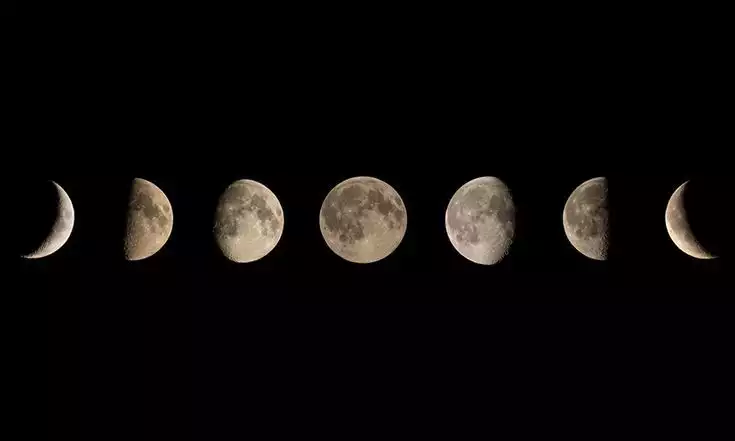
The Moon does not grant wishes. It does not bend reality to human will. But it does offer something perhaps more valuable: a map. The lunar cycle is a structure through which practitioners can organize their spiritual work, align their intentions with action, and cultivate the patience necessary for meaningful transformation. Each phase invites a different kind of engagement—planting, building, refining, celebrating, releasing, resting. Together, they form a complete process that mirrors the rhythms of nature and the deeper patterns of human experience.
To work with moon phases manifestation is to acknowledge that manifestation is not a single event but a cycle, repeated over and over, each time deepening in clarity and power. It is to recognize that rest is as important as effort, that release is as necessary as attraction, and that the quiet phases are where the unseen work occurs.
You need not wait for the New Moon to begin. Whatever phase the Moon occupies tonight offers its own invitation. The cycle continues, whether or not we choose to work with it. The question is only whether we will listen.
Comments
No comments yet. Be the first to share your thoughts!
Leave a Comment
Your email address won't be published. Comments are reviewed before being posted.