
 English
 Español
 Français
 中文
中文Venusian Beauty Rituals for Magnetism and Elegance
Beauty, in its truest form, has never been merely cosmetic. It is power distilled into presence, confidence translated into magnetism, intention made visible. Throughout history, those who understood this—priestesses of Aphrodite, Renaissance courtesans, queens adorned in silk and jewels—did not simply apply perfumes and oils. They performed acts of spiritual refinement.... They summoned Venus.
The goddess Venus, known to the Greeks as Aphrodite, governs far more than surface aesthetics. She is the force of attraction itself, the principle of harmony, desire, fertility, and the ineffable quality we now call charisma. Her domain extends into art, luxury, sensuality, and the cultivation of elegance as an energetic signature. To engage in Venusian beauty rituals is not to chase vanity, but to align oneself with an ancient current of magnetism that has shaped empires, inspired devotion, and granted social influence to those who mastered its subtle arts.
This is glamour magick in its original sense: not illusion, but illumination. The word "glamour" itself derives from "grammar," once synonymous with occult knowledge. To cast glamour was to manipulate perception through presence, to command attention through deliberate refinement. It is witchcraft of the highest order, and it begins with the understanding that beauty rituals function as thresholds between the mundane and the magnetic.
Venus Through the Centuries: A Goddess of Strategic Beauty
The ancient Romans recognized Venus as a divine ancestor of their people, associating her with both erotic love and political power. Julius Caesar claimed descent from her, and temples erected in her honor were sites of perfumed offerings, rose petals, and ritual bathing. Roman women of status would anoint themselves with oils of myrrh and rose, not merely for scent, but as acts of devotion—invocations of the goddess into their very skin.
In Greece, Aphrodite's priestesses were custodians of beauty as sacred art. They understood that attraction was both psychological and energetic, that desire could be cultivated through posture, gaze, and the deliberate application of adornment. Courtesans, far from being dismissed as shallow, were often educated in philosophy, music, and rhetoric. Their beauty was intentional, layered, ritualized. It was not accidental; it was constructed through discipline and awareness.
The Renaissance occultists, drawing from Neoplatonic philosophy, believed that Venus governed a specific celestial sphere—a realm of harmony and aesthetic perfection. To invoke Venus was to draw down her influence, to become a conduit for her attributes: grace, charm, allure, and the ability to inspire devotion. Beauty preparations during this period were often accompanied by prayers, astrological timing, and invocations. A woman preparing for an evening at court might bathe by moonlight, anoint herself with jasmine oil, and whisper incantations over her mirror. This was not superstition. It was technology.
The Energetics of Ritualized Beauty
There is a profound difference between mechanically applying cosmetics and performing a beauty ritual. The former is routine; the latter is ceremony. Ritual transforms the mundane into the sacred, and in doing so, it alters consciousness—both one's own and that of observers. When beauty practices are performed with intention, they function as acts of self-creation. You are not merely enhancing appearance; you are sculpting presence.
Psychology confirms what occultists have long known: confidence is perceived as attractiveness. Posture, eye contact, the way one moves through space—these communicate far more than physical features ever could. Glamour spells and attraction rituals work not by altering the face, but by amplifying the aura, by cultivating an energetic signature that others instinctively respond to. This is why queens and courtesans could command rooms. Their magnetism was deliberate.
The act of ritualized beauty engages multiple senses and layers of meaning. Scent triggers memory and emotion. Candlelight softens and sanctifies. Silk against skin becomes a reminder of luxury and self-worth. Mirrors, long associated with divination and self-reflection, become portals for affirming one's own power. These are not superficial acts. They are methods of aligning the inner self with the outer presentation, of ensuring that what is projected matches what is intended.
Beauty as Power: Historical and Social Dimensions
Throughout history, beauty has functioned as currency. Cleopatra, whose magnetism was legendary, understood that attraction was strategic. Her famous milk baths, perfumed oils, and elaborate adornments were not frivolous—they were instruments of influence. She wielded beauty as diplomacy, as seduction, as statecraft. The Roman historian Plutarch noted that her charm lay not in her features, but in her presence, her voice, her manner. She had mastered the art of glamour.
In many cultures, beauty was considered a sign of divine favor. To be beautiful was to be blessed, and rituals of adornment were acts of piety. In ancient Egypt, both men and women lined their eyes with kohl in elaborate designs, not only for protection against the sun but as invocations of the gods. In Japan, the geisha's elaborate beauty preparations were spiritual disciplines, requiring years of training. Every gesture, every fold of fabric, every application of color was intentional, designed to create an experience of refinement and presence.
The difference between vanity and cultivated magnetism lies in intention. Vanity is hollow, concerned only with external validation. Magnetism, however, is rooted in self-awareness and deliberate self-presentation. It is the understanding that how one appears in the world affects how one moves through it, how one is received, and what opportunities arise. This is not shallow; it is pragmatic. It is an acknowledgment that we live in a world of symbols, and those who master their own symbolism command greater influence.
The Venusian Correspondences: Tools of the Trade
To work with Venus is to align oneself with her symbolic language. These correspondences are not arbitrary; they are rooted in centuries of observation, astrology, and occult practice. Each element carries a resonance, a vibration that harmonizes with the energy of attraction, beauty, and elegance.
Friday is Venus's day, the most potent time for beauty rituals and glamour magick. Any work intended to enhance magnetism, inspire desire, or cultivate elegance is best begun or performed on a Friday, ideally during the planetary hour of Venus.
Copper is her metal, associated with receptivity, warmth, and conductivity. Wearing copper jewelry or placing copper objects on a beauty altar can amplify Venusian energy.
Roses are her flower, symbolizing both love and secrecy (sub rosa). Rose water, rose petals in baths, and rose oil anointing are among the most traditional Venusian beauty practices.
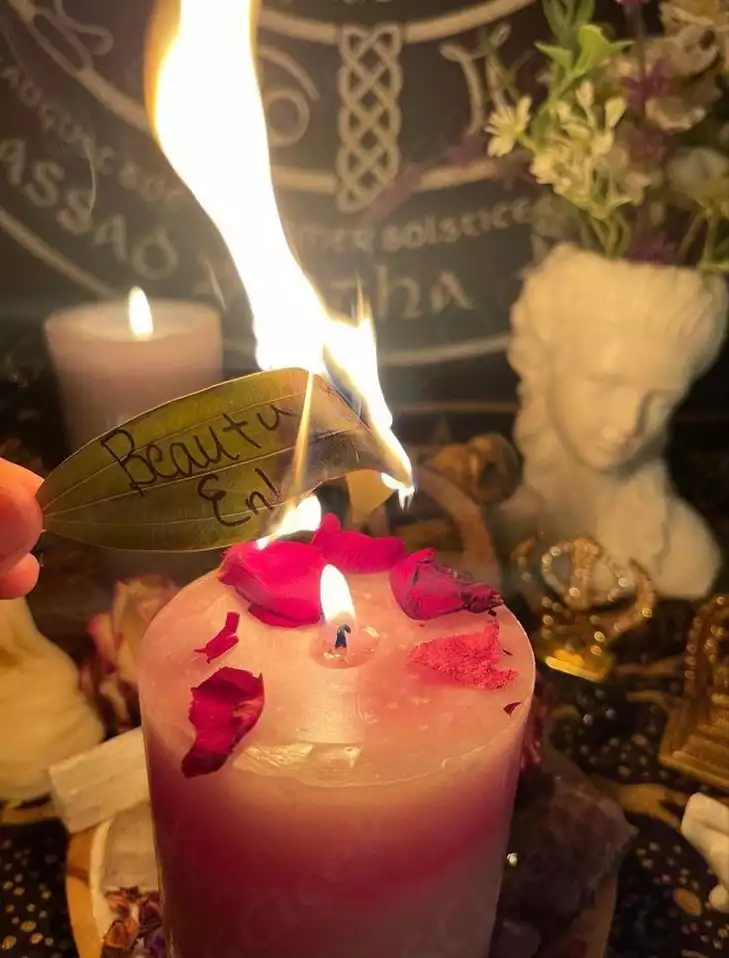
Pink and red candles correspond to her colors—pink for gentle attraction and grace, red for passion and seductive energy. Candles anointed with oils and burned during beauty rituals serve as focal points for intention.
Perfumes and oils—particularly jasmine, ylang-ylang, sandalwood, and amber—are Venusian tools. Scent is perhaps the most primal form of attraction, bypassing rational thought and triggering emotional response.
Mirrors, long associated with both vanity and self-knowledge, are central to glamour witchcraft. A mirror is not merely reflective glass; it is a tool for affirmation, visualization, and the projection of desired self-image.
Pearls, honey, silk, and gold jewelry all carry Venusian qualities—luxury, smoothness, sweetness, radiance. Incorporating these into daily life or ritual practice reinforces the alignment with Venus.
Practical Venusian Beauty Rituals
The rituals that follow are not spells in the theatrical sense. They are acts of intentional self-creation, designed to amplify magnetism, cultivate elegance, and invoke the presence of Venus into one's daily existence. Approach them with reverence and attention.
The Ritual Bath of Attraction
Bathing has long been a sacred act. To the Romans, to the Egyptians, to the priestesses of Aphrodite, water was purifying, transformative, a medium for invoking divine presence. Prepare a bath on a Friday evening, ideally by candlelight. Add rose petals, a few drops of jasmine or rose oil, honey, and milk if desired. As you immerse yourself, visualize the water washing away doubt, hesitation, and self-consciousness. Imagine yourself emerging radiant, magnetic, confident. Speak aloud or silently: "I am beauty. I am grace. I draw eyes and inspire devotion." Linger in the water, allowing the ritual to settle into your consciousness.
The Mirror Affirmation of Presence
Stand before a mirror in soft lighting—candlelight is ideal. Gaze into your own eyes without judgment or criticism. Speak affirmations of magnetism and elegance: "I am captivating. My presence commands attention. I move through the world with grace and confidence." This is not empty flattery; it is reprogramming. The subconscious responds to repetition and conviction. Over time, the mirror becomes a portal through which you step into a more magnetic version of yourself.
The Anointing Ritual for Seductive Energy
Select a perfume or oil that resonates with you—jasmine, amber, rose, ylang-ylang. On a Friday, anoint your pulse points with intention: wrists, throat, behind the ears, the heart. As you do so, visualize yourself radiating warmth, charm, allure. Imagine others drawn to your presence, captivated by your energy. This is glamour magick in its purest form: the deliberate projection of desired qualities.
The Beauty Altar
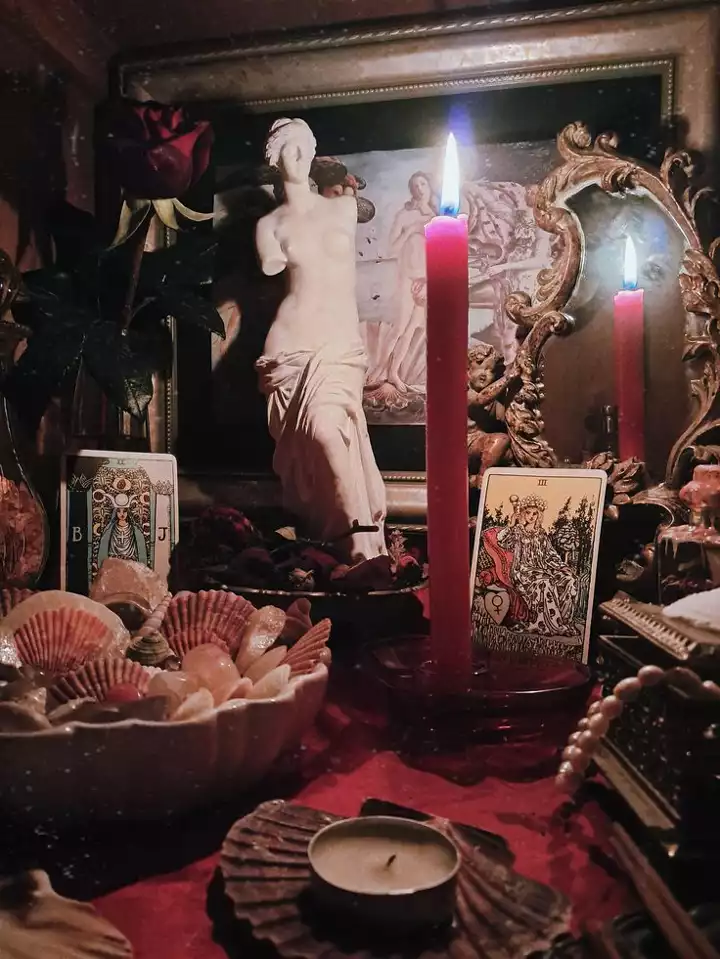
Create a dedicated space for Venusian work. This need not be elaborate—a small table or shelf will suffice. Arrange objects that symbolize beauty, luxury, and elegance: a mirror, fresh roses or rose water, a pink or red candle, copper jewelry, silk fabric, honey, perfume bottles. Light a candle here on Fridays, speaking your intentions aloud or silently. This altar becomes a focal point, a reminder of your commitment to cultivating magnetism and presence.
The Rose Water Cleansing
Rose water, used for centuries in beauty and ritual, is both practical and symbolic. After cleansing your face, mist or apply rose water while speaking an intention: "I am radiant. I am alluring. I am elegant." The scent alone is Venusian; the act becomes a daily invocation.
The Candle Ritual for Magnetism
On a Friday, light a pink or red candle anointed with rose or jasmine oil. Sit before it in stillness, gazing into the flame. Visualize yourself as you wish to be perceived: confident, graceful, captivating. Imagine scenarios in which your magnetism opens doors, inspires admiration, grants influence. Allow the candle to burn for at least an hour, or until it is fully consumed if safe to do so. This ritual can be repeated weekly, building energetic momentum over time.
Elegance as Intentionality
Elegance is not accidental. It is the result of deliberate choices—how one dresses, moves, speaks, adorns oneself. It is an awareness of aesthetics, a commitment to refinement. The most magnetic individuals are those who understand that every detail matters, that presentation is communication, that beauty is a language spoken fluently or not at all.
This is not about perfection. It is about coherence. It is about ensuring that the image one projects aligns with the self one wishes to embody. Venusian beauty rituals facilitate this alignment. They are daily practices of self-awareness, reminders that one's appearance and presence are not fixed, but fluid—capable of being shaped, refined, and elevated.
The Spiritual Dimension of Beauty
In many traditions, beauty was understood as a reflection of the divine. The Neoplatonists believed that physical beauty was a manifestation of a higher, spiritual beauty, and that to cultivate one was to approach the other. To adorn oneself, to refine one's presence, was an act of honoring the divine spark within.
This is why beauty rituals, when performed with intention, transcend the superficial. They become acts of devotion—not to vanity, but to the principle of beauty itself. They are acknowledgments that we are more than flesh, that we carry within us the capacity for radiance, for magnetism, for influence. To cultivate beauty is to honor that capacity, to make it visible.
Glamour witchcraft, then, is not about deception. It is about truth—the truth that we are multifaceted, that we contain within us the power to captivate, to inspire, to move others. Beauty spells and attraction rituals are methods of unlocking that power, of bringing it to the surface where it can be seen and felt.
Conclusion: Beauty as Ancient Influence
To engage in Venusian beauty rituals is to step into a lineage that stretches back millennia. It is to join the ranks of priestesses and queens, courtesans and enchantresses, all of whom understood that beauty is not frivolous, but formidable. It is a form of influence that operates beneath the level of conscious thought, shaping perception, inspiring desire, opening doors that logic alone cannot unlock.
Glamour magick is not about becoming someone else. It is about becoming more fully oneself—more magnetic, more present, more intentional. It is about recognizing that we move through a world of symbols and images, and that those who master their own symbolism wield a quiet, pervasive power.
The rituals outlined here are not exhaustive. They are invitations, starting points for a practice that can become as elaborate or as simple as you choose. What matters is not the complexity, but the consistency. Beauty, like all magic, is amplified through repetition, through the layering of intention over time.
In a world that often dismisses beauty as shallow, reclaim it as sacred. Understand that to cultivate elegance, to refine one's presence, to perform rituals of adornment and magnetism is to engage in an ancient form of spiritual practice. It is to honor Venus, to invoke her influence, and to walk through the world as a living embodiment of grace, attraction, and power.
You are not merely enhancing your appearance. You are constructing a reality in which you are seen, admired, and influential. This is not vanity. This is sovereignty.
Comments
No comments yet. Be the first to share your thoughts!
Leave a Comment
Your email address won't be published. Comments are reviewed before being posted.