Discover the Ancient Arts
Voodoo Spells

Voodoo Death Spells: The Reality Behind Lethal Rituals

The phrase voodoo death spell carries a particular weight. It evokes secrecy, graveyard rituals, whispered names, and the idea that someone, somewhere, possesses the power to end a life without ever touching the victim. Across forums and search engines, people repeatedly ask: Do voodoo death spells work? Can black magic kill someone? Is there a real voodoo curse to cause death?

Behind these questions lies something ancient: the human desire to weaponize the invisible.

This article explores how the concept of voodoo death magic developed, how it has been misunderstood, and why it continues to fascinate — and frighten — people today

What People Mean When They Search “Voodoo Death Spell”

Modern search queries often include:

  • voodoo death spell that works

  • black magic death ritual

  • real voodoo curse

  • hex to kill someone

  • spell to make someone die

  • Haitian death magic

  • powerful voodoo curse

Most of these searches are emotionally driven. They arise from betrayal, rage, jealousy, or perceived injustice. Others come from fear — people worried that someone has cast a death spell on them.

But the popular image of “voodoo killing magic” is largely shaped by cinema, colonial fear narratives, and internet folklore rather than authentic religious practice

The Origins of Death Magic in Vodou

Haitian Vodou is a complex, initiatory religion born from West African spiritual systems blended with Catholic elements during enslavement in Saint-Domingue. It is not simply “black magic.” It is a living religion with ethics, hierarchy, priesthood, cosmology, and ritual discipline.

Within Vodou cosmology, the lwa (spirits) govern aspects of life, death, love, justice, and transformation. Death itself is not chaotic but structured, presided over by spirits associated with the cemetery, the crossroads, and ancestral transition.

In traditional contexts, what outsiders label “voodoo death spells” would fall under serious ritual categories involving justice, retaliation, or spiritual warfare. These were never casual acts. They required:

  • Spiritual authority

  • Initiation

  • Community recognition

  • Ethical justification within the cosmology

Importantly, Vodou distinguishes between religion and malefic work. Not every practitioner performs harmful rituals, and many actively condemn misuse.
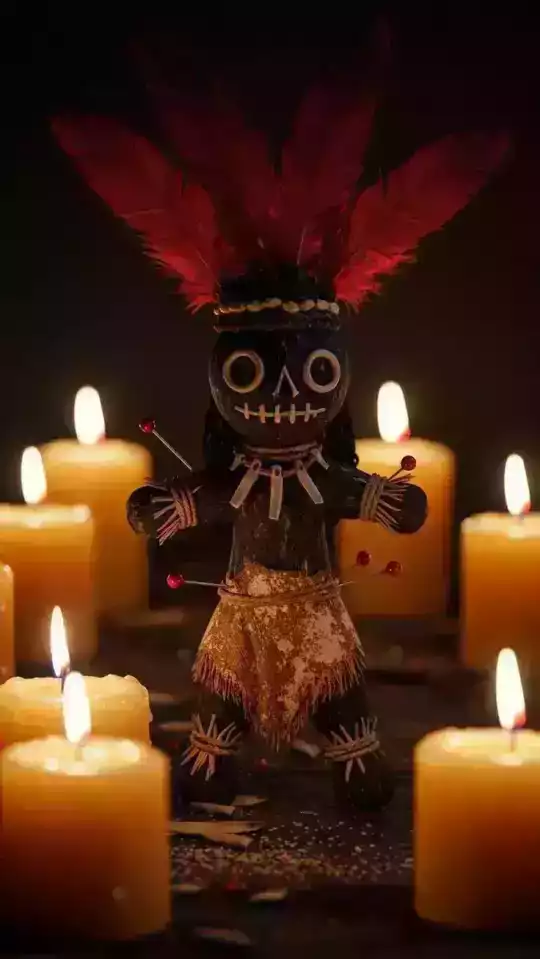
 

The Concept of “Voodoo Death” in Anthropology

The idea of death caused by curse gained global attention in the early 20th century when anthropologists documented cases where individuals died after believing themselves cursed.

The phenomenon became known as “voodoo death” — a term used in medical anthropology to describe psychosomatic collapse triggered by extreme fear. In certain cultures, if a respected spiritual authority declared someone cursed to die, the psychological shock alone could trigger fatal stress responses.

Modern medicine now recognizes that:

  • Intense fear can cause cardiac arrest

  • Severe psychological shock can suppress immune function

  • Belief itself can trigger physiological collapse

This does not prove supernatural causation — but it demonstrates that belief systems can produce very real biological outcomes.

Traditional Frameworks of Lethal Magic

Across African diasporic traditions — including Haitian Vodou, New Orleans Voodoo, Obeah, and Palo — lethal magic historically followed structured principles.

Rather than “instant death spells,” traditional beliefs describe gradual processes:

  • Induced illness

  • Energetic depletion

  • Accidents

  • Mental breakdown

  • Escalating misfortune

The magic was understood not as lightning from the sky, but as spiritual erosion.

In these systems, death magic was rarely impulsive. It required ritual preparation, offerings, spirit negotiation, and acceptance of potential spiritual consequences. The practitioner assumed risk — because calling upon spirits of death was believed to carry spiritual debt.

The Myth of the Instant Death Spell

Search engines are filled with variations of:

  • instant voodoo death spell

  • spell to kill someone overnight

  • fastest black magic killing ritual

This expectation reflects internet fantasy more than traditional belief.

Authentic magical worldviews describe death magic as operating within natural law. Effects, if believed effective, would unfold through:

  • Sudden illness

  • Progressive deterioration

  • Self-destructive behavior

  • Unexplained vulnerability

The “instant corpse” narrative belongs more to horror fiction than to spiritual systems.
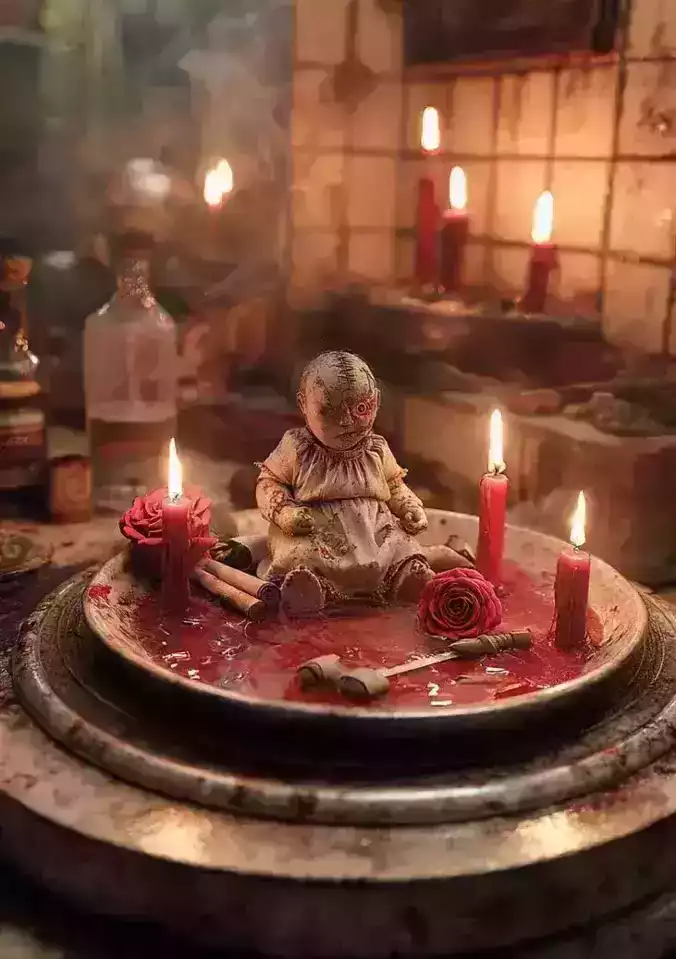
Ethical Boundaries in Vodou and Related Traditions

One of the most misunderstood aspects of Vodou is its ethical complexity.

In traditional frameworks, lethal magic was often framed as:

  • Justice against abusers

  • Protection against existential threat

  • Spiritual retaliation

However, practitioners were also warned of spiritual consequence. Invoking destructive forces meant engaging entities associated with decay, transition, and endings. The boundary between targeting an enemy and inviting chaos into one's own life was considered thin.

Even in traditions where death work exists, elders frequently advise restraint. Power without discipline invites instability.


Why People Seek Death Spells

From a psychological perspective, searches for voodoo death spells often reflect:

  • Powerlessness

  • Humiliation

  • Betrayal trauma

  • Desire for control

  • Revenge fantasies

Magic offers something violence cannot: invisibility. It promises consequence without confrontation.

But this psychological appeal can also deepen obsession. Sustained focus on harming another person reshapes the practitioner’s mental state. Even belief in having cast a curse can alter perception, heighten paranoia, and create emotional instability.

The internal transformation may be more significant than any external outcome.


Signs of a Voodoo Death Spell: Fear and Reality

A significant portion of search traffic revolves around fear:

  • signs someone cast a voodoo death spell on you

  • how to know if you are cursed

  • protection against voodoo death magic

  • how to break a death curse

Traditional belief systems describe possible signs such as:

  • Repeated nightmares involving decay or graves

  • Sudden run of accidents

  • Persistent unexplained illness

  • Emotional heaviness or paranoia

However, these symptoms also overlap with stress, anxiety disorders, and medical conditions.

Fear itself can become pathogenic. The belief that one is under attack may trigger psychosomatic symptoms that reinforce the fear.

Because of this, many traditions emphasize strengthening protection rather than obsessively diagnosing curses.

Protection Against Voodoo Death Magic

Historically, cultures that believed in lethal magic also developed strong protective systems.

Common protective principles include:

  • Maintaining spiritual cleanliness

  • Regular prayer or devotion

  • Ancestor veneration

  • Protective talismans

  • Ritual cleansing baths

  • Community support

Protection was seen not as panic response, but as spiritual hygiene. Individuals concerned about spiritual vulnerability often research what are considered the most effective protection spells, particularly those rooted in established occult frameworks rather than improvised internet rituals.

Do Voodoo Death Spells Really Work?

The question remains.

There is no scientific proof that a ritual alone can cause death at a distance. There is, however:

  • Historical belief in lethal magic

  • Documented psychosomatic death phenomena

  • Cross-cultural consistency in death-magic narratives

Whether one interprets this through spiritual causation, psychological mechanism, or symbolic anthropology depends on worldview.

What is clear is that the belief in death magic has shaped societies, laws, and religious systems for centuries. Entire communities have feared it, outlawed it, protected against it, and structured ethical codes around it.

That persistence alone demands serious examination.


The Deeper Question

The enduring fascination with voodoo death spells reveals something deeper than curiosity about ritual harm. It reveals humanity’s relationship with power.

When conventional systems fail — legal systems, social systems, moral systems — people turn to invisible systems. Death magic represents the most extreme expression of that impulse.

But traditions that preserved such knowledge consistently warned that invoking forces of destruction transforms the invoker as much as the target.

The real danger may not be whether a voodoo death spell works.

The real danger lies in what sustained focus on destruction does to the human psyche.

Final Thoughts

Voodoo death spells occupy a space between myth and anthropology, fear and fascination, rage and moral reckoning. They are part of spiritual history — but also part of modern internet mythology.

Understanding them requires nuance, not sensationalism.

Across cultures, knowledge of lethal magic was treated as dangerous knowledge — not because it guaranteed success, but because it confronted practitioners with profound ethical choice.

The most powerful traditions teach that possessing the knowledge to harm is less important than possessing the discipline to refrain.

And that lesson, perhaps, is the true spiritual threshold.

Comments

No comments yet. Be the first to share your thoughts!

Leave a Comment

Your email address won't be published. Comments are reviewed before being posted.