 English
 Español
 Français
 中文
中文An uncrossing spell represents one of the oldest and most widely practiced forms of spiritual cleansing found in Western folk magic traditions. Its purpose is neither to attract wealth nor to manifest love, but rather to remove—to clear away persistent negative influences, crossed conditions, spiritual blockages, lingering harmful energy, or the consequences of magical mistakes that continue to haunt a person's life long after the initial event has passed. While many magical practices focus on drawing something toward the practitioner, uncrossing work is fundamentally concerned with removal, dissolution, and restoration.
The uncrossing spell occupies a unique position in the landscape of spiritual protection and cleansing. It is not merely a purification ritual performed routinely, nor is it an emergency intervention designed to combat active supernatural assault. Instead, it addresses the more insidious category of problems: those that linger, accumulate, and subtly distort one's life without announcing themselves through dramatic crisis. Uncrossing work addresses what practitioners describe as being "stuck," "blocked," or under a shadow that refuses to lift despite all reasonable effort.
The Meaning of "Uncrossing" in Folk Magic
To understand what an uncrossing spell accomplishes, one must first grasp what it means to be "crossed." In the vocabulary of traditional folk magic, particularly within African American hoodoo and Southern conjure traditions, being crossed refers to a condition in which a person's natural flow of luck, health, prosperity, or spiritual well-being has been obstructed, tangled, or deliberately disrupted. The term itself evokes the image of a path blocked by a crossroads barrier, or threads knotted together in such a way that they can no longer move freely.
A crossed condition may result from a curse or hex intentionally placed by another person, but it can also arise from accidental magical contamination, prolonged exposure to negative environments, the residue of failed spellwork, or even from one's own misguided magical experimentation. The key characteristic of a crossed condition is its persistence: it does not resolve on its own, and ordinary efforts to improve one's situation seem to meet with inexplicable resistance. Plans fall apart at the last moment. Relationships sour without clear cause. Finances deteriorate despite sound decisions. Health declines without medical explanation. The sensation is one of being perpetually out of alignment with the world.
To "uncross" is therefore to untangle, to remove the obstruction, to restore the natural flow that has been disrupted. It is an act of restoration rather than creation, a return to baseline rather than an elevation beyond it. This distinction is important: uncrossing work does not promise fortune or transformation, but rather the removal of whatever prevents one from accessing one's own natural capacities and opportunities.
Historical Roots of Uncrossing Rituals
Uncrossing rituals have deep historical roots in multiple magical traditions. In European folk magic, practices involving the use of hyssop, salt, and running water to remove curses and evil influences can be traced back to medieval grimoires and even earlier to classical Mediterranean religious customs. Biblical references to purification with hyssop appear throughout the Old Testament, and salt has been employed as a protective and cleansing agent across virtually every culture that had access to it.
In African American hoodoo, uncrossing work became a formalized category of spiritual service, with practitioners developing specific formulas, baths, oils, and candle rituals designed explicitly for this purpose. The syncretism of African spiritual technologies with European ceremonial magic, indigenous American herbalism, and Christian prayer created a rich and adaptive system in which uncrossing occupied a central role. Rootworkers and conjure doctors were consulted not only to "fix" enemies or attract lovers, but also—perhaps primarily—to diagnose and remove crossed conditions that prevented clients from thriving.
In ceremonial magic traditions, similar concepts appear under different names. The practice of banishing before invoking, of purifying the ritual space before commencing operations, reflects the same underlying principle: obstacles and contaminants must be cleared away before constructive work can proceed. The Lesser Banishing Ritual of the Pentagram, for instance, serves in part as an uncrossing mechanism, clearing the magician's sphere of lingering influences before more complex workings begin.
Uncrossing vs. Cleansing, Banishing, and Exorcism
Though the terms are sometimes used interchangeably, uncrossing is distinct from cleansing, banishing, and exorcism, each of which addresses a different type of spiritual problem.
Cleansing is a broad category of ritual action intended to remove everyday spiritual dirt: the minor negativity accumulated through ordinary life, exposure to crowds, arguments, or stressful environments. Cleansing is routine maintenance, comparable to bathing or housecleaning. It is preventive and restorative, but not corrective. A cleansing ritual assumes no specific curse or blockage, only the gradual accumulation of energetic dust.
Banishing is the active expulsion of a specific unwanted presence or influence. Banishing rituals are employed when something identifiable—an intrusive spirit, a malevolent thought-form, a psychic attack in progress—must be forcibly removed. Banishing is confrontational. It involves drawing a line and asserting authority over one's space. It is immediate, defensive, and often performed in response to a known threat.
Exorcism is the most extreme form of spiritual intervention, reserved for cases of genuine possession or severe spiritual attachment. Exorcism involves the expulsion of a conscious entity that has gained significant control over a person, place, or object. It is invasive, dangerous, and typically requires specialized religious authority or training. Most people will never need an exorcism.
Uncrossing, by contrast, addresses neither routine grime nor active possession, but rather the chronic, entrenched condition of being spiritually obstructed. It is both deeper and more subtle than cleansing, less confrontational than banishing, and far less dramatic than exorcism. Uncrossing is the work of disentanglement, of carefully unraveling knots that have tightened over time.
When an Uncrossing Spell Is Needed
There are several situations in which a person may benefit from an uncrossing spell. The most obvious is when one suspects that they have been deliberately cursed or hexed. If a pattern of misfortune began after a conflict with another person, especially someone known to practice magic, an uncrossing may be warranted. However, deliberate curses are far rarer than many beginners assume, and attributing every difficulty to supernatural malice can become a form of magical paranoia that distracts from practical problem-solving.
More commonly, uncrossing work is needed after failed spellwork or magical experimentation gone wrong. Beginners often perform spells incorrectly, combine incompatible magical systems, or experiment without sufficient knowledge, leaving behind energetic confusion instead of the intended result. A love spell performed without proper grounding may leave the caster feeling emotionally unstable. A prosperity ritual conducted during an inauspicious time may seem to worsen financial circumstances. A protection spell cast in anger may rebound onto the practitioner. In such cases, the problem is not an external curse but rather the residue of one's own magical mistakes.
Uncrossing rituals are also employed after prolonged exposure to highly negative environments: toxic workplaces, abusive relationships, homes saturated with conflict and despair. Even without any deliberate magical intent, such environments can leave a person feeling spiritually "sticky," as though they are carrying an invisible weight that cannot be shaken off through ordinary means.
Additionally, many experienced practitioners perform uncrossing work before important magical operations in order to remove obstacles and create a clean energetic foundation. Just as a painter primes a canvas or a surgeon sterilizes an operating room, a magician may uncross themselves before attempting a significant working. This is not because they believe themselves cursed, but because they recognize the value of beginning from a state of clarity and neutrality.
The Symbolism of Traditional Uncrossing Tools
Traditional uncrossing rituals employ a range of symbolic tools, each carrying layers of historical, cultural, and metaphysical significance. Hyssop, mentioned repeatedly in the Bible as a purifying herb, is perhaps the most iconic plant associated with spiritual cleansing. Its use in uncrossing baths and floor washes draws on centuries of folk belief in its ability to dissolve spiritual contamination.
Salt, another ancient purifying agent, appears in uncrossing rituals across nearly every tradition. Salt absorbs, neutralizes, and grounds. It is scattered across thresholds, dissolved in baths, and used to scrub away negativity. Its mundane ubiquity belies its profound symbolic power: salt is both preservative and destroyer, capable of protecting life and rendering land barren.
Cleansing baths are central to many uncrossing practices. Water itself is a universal symbol of purification, and the act of immersing oneself in water infused with herbs, minerals, and prayers enacts a symbolic death and rebirth. The old self, tangled and burdened, is washed away, and the practitioner emerges renewed.
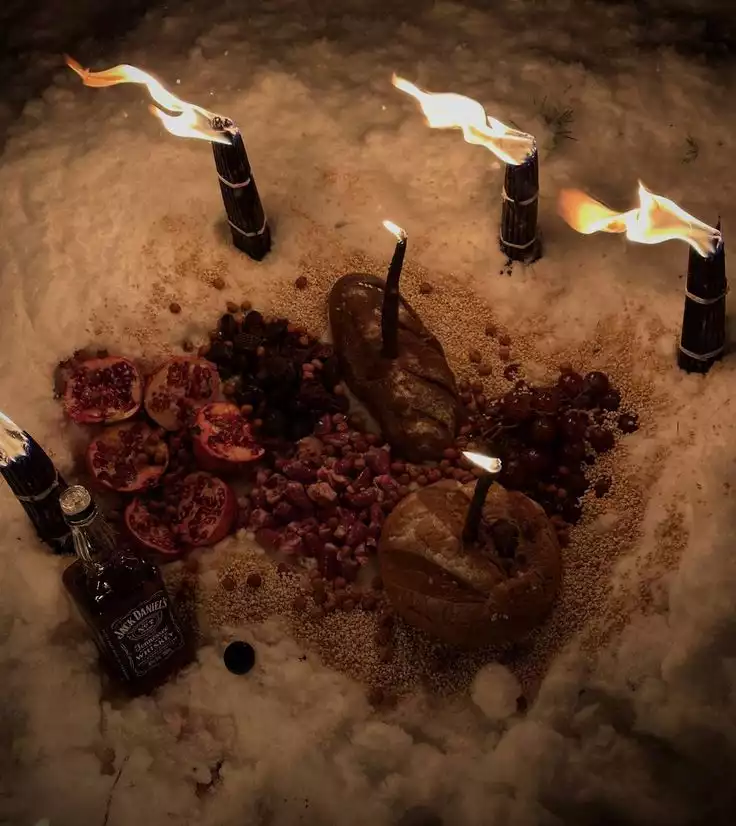
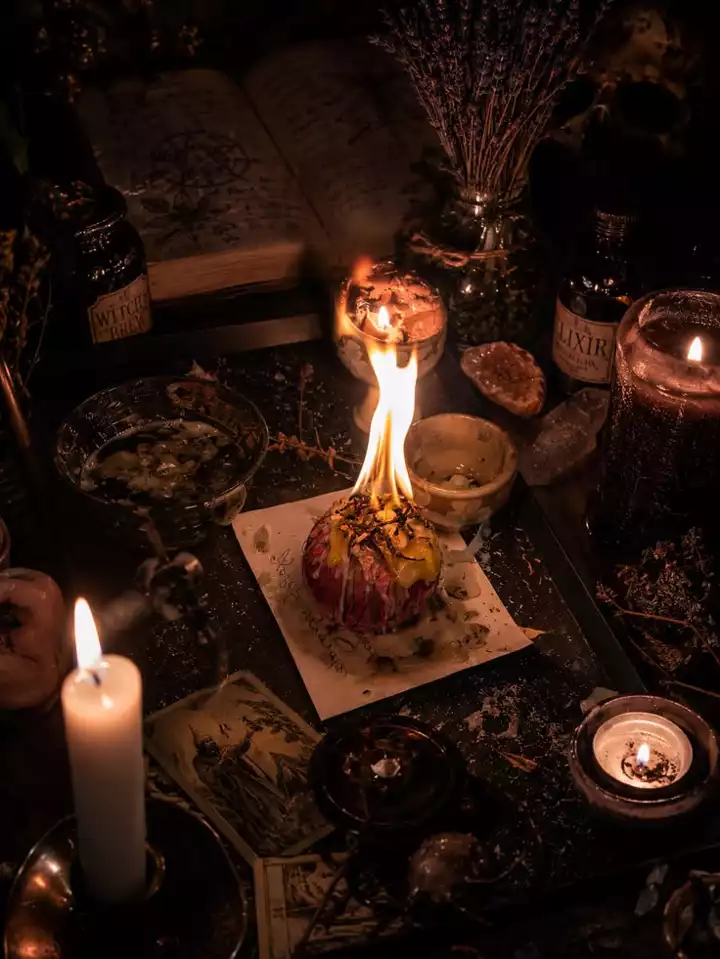
Candles serve as focal points for intention and as offerings. An uncrossing candle—often black, white, or a combination of both—burns away obstacles as the wax melts. The flame represents transformation: the transmutation of blockage into light and heat, the conversion of stagnant energy into movement.
Smoke, whether from incense, burning herbs, or smudge bundles, carries prayers upward and drives away stagnant energies. The ephemeral nature of smoke makes it an ideal medium for dissolving invisible blockages. Smoke penetrates where water cannot reach, filling corners and crevices with purifying intention.
Oils and herbs are selected for their traditional associations with cleansing, protection, and the breaking of curses. Rue, angelica, frankincense, myrrh, and rosemary all appear frequently in uncrossing formulas. Each plant carries its own history of use, its own constellation of symbolic meanings that reinforce the ritual's intent.
Prayers, whether drawn from religious texts or composed spontaneously, add the dimension of invocation. They call upon divine assistance, petition saints or spirits, and affirm the practitioner's intention. In many traditions, the spoken word is considered essential: it is not enough to perform the physical actions; one must also articulate the desire for release and restoration.
Not Every Problem Is a Curse
It is essential to emphasize that not every difficult period in life is caused by a curse, and that practical, psychological, or personal circumstances should always be considered before assuming a supernatural explanation. Financial hardship may result from poor budgeting or economic recession. Relationship difficulties may stem from unresolved trauma or incompatible personalities. Health problems often have straightforward medical causes. Attributing every misfortune to magical interference can become a way of avoiding responsibility or neglecting practical solutions.
Experienced practitioners understand that magic and mundane reality are not separate realms but interwoven dimensions of experience. A person may be genuinely crossed and also need to update their resume, seek therapy, or visit a doctor. Spiritual work does not replace practical action; it complements it. The best approach to any persistent problem is holistic: address the spiritual, the psychological, and the material simultaneously, and allow each dimension to inform the others.
The Psychological Benefits of Uncrossing Rituals
Even when viewed through a purely psychological lens, uncrossing rituals offer significant benefits. They provide a structured method for confronting feelings of helplessness, stagnation, and despair. The act of performing a ritual—of gathering materials, setting aside time, and enacting a symbolic transformation—can restore a sense of agency and control. It is a way of saying, "I refuse to remain passive. I will take action to change my circumstances."
Ritual also creates psychological distance from the problem. By externalizing the blockage as something that can be named, addressed, and removed, the practitioner gains perspective. Instead of feeling crushed by an amorphous weight, they can conceptualize the problem as something specific and therefore solvable. This shift in perception can be profoundly liberating.
Furthermore, uncrossing rituals often involve physical actions—bathing, lighting candles, reciting prayers—that engage the body and senses. This embodied dimension helps to bypass the overthinking mind and access deeper layers of emotion and intuition. The ritual becomes a conversation between the conscious self and the unconscious, a negotiation that can lead to unexpected insights and emotional release.
Many people report feeling lighter, calmer, and more clear-headed after an uncrossing ritual. They describe a lifting of fog, a renewed sense of possibility, or the sudden resolution of problems that had seemed intractable. Whether these effects result from actual spiritual cleansing or from the psychological impact of intentional ritual action is, in some sense, beside the point. The experience of relief is real, and the restoration of hope and confidence has tangible effects on one's ability to navigate the world.
What to Expect After an Uncrossing Spell
Experiences following an uncrossing spell vary widely from person to person. Some individuals report immediate dramatic shifts: sudden opportunities appear, relationships improve, health rebounds. Others notice more subtle changes over days or weeks: a gradual easing of tension, a return of energy, a sense of obstacles dissolving almost imperceptibly.
It is not uncommon to experience a temporary intensification of discomfort immediately after an uncrossing ritual. As blocked energy begins to move, it may stir up unresolved emotions, old memories, or physical sensations. This is sometimes described as a "healing crisis," and it typically passes within a few days. The important thing is to continue with supportive self-care: rest, hydration, grounding practices, and patience.
Some people feel nothing at all immediately after the ritual, only to realize weeks later that circumstances have quietly shifted. The chronic bad luck has ended. The persistent argument finally resolves. The opportunity that was always just out of reach suddenly materializes. Uncrossing work does not always announce itself with fanfare; sometimes it simply restores the conditions under which normal life can resume.
There is no single "correct" response to an uncrossing spell. Each person's situation is unique, and the effects will reflect the specific nature of the blockage, the method used, the practitioner's skill, and the individual's own psychological and spiritual state. What matters is not the immediacy or drama of the results, but the overall trajectory: does life begin to feel less obstructed? Do opportunities become accessible again? Does the sense of being perpetually "off" begin to lift?
Uncrossing After Magical Experimentation
Uncrossing rituals can also be useful after experimenting with conjure oils, spirit work, or magical practices without fully understanding their effects. The contemporary revival of interest in witchcraft and folk magic has brought many newcomers into practices that were once transmitted through careful apprenticeship and community oversight. Without that guidance, it is easy to make mistakes: invoking spirits one is not prepared to work with, mixing oils without understanding their traditional uses, performing rituals during inauspicious times, or combining elements from incompatible systems in ways that create confusion rather than coherence.
The result is often not a dramatic crisis but a lingering sense of disorientation. Dreams become disturbing. Moods become unpredictable. Small things go wrong repeatedly. The practitioner may feel as though they have opened a door they cannot quite close. In such cases, an uncrossing ritual serves to reset the energetic field, to close whatever was inadvertently opened, and to restore clarity and balance.
This is not a failing or a sign of weakness; it is simply part of the learning process. Even experienced practitioners sometimes find themselves in need of uncrossing work after a ritual that did not go as planned or after working with energies that proved more complex than anticipated. The willingness to recognize when one needs to step back, clear the field, and start again is itself a mark of maturity and wisdom.
Uncrossing as Preparation
Beyond its use as a corrective measure, uncrossing work also functions as preparation. Many practitioners incorporate regular uncrossing rituals into their magical hygiene, performing them seasonally or before beginning a new phase of work. This is not because they believe themselves perpetually cursed, but because they recognize the value of maintaining a clean energetic baseline.
Just as athletes warm up before competition and musicians tune their instruments before performance, magicians benefit from clearing away accumulated interference before attempting significant operations. Uncrossing work ensures that the energy invested in a spell goes toward the intended goal rather than being dissipated by lingering blockages or contamination from previous work.
This preventive approach to uncrossing reflects a broader understanding of magic as a practice requiring discipline, self-awareness, and ongoing maintenance. It acknowledges that simply living in the world—interacting with people, moving through spaces, experiencing stress and conflict—leaves traces that can accumulate over time. Regular uncrossing prevents those traces from hardening into obstacles.
Conclusion: Removal as a Path Forward
Whether the source of the problem is spiritual, psychological, or a combination of both, uncrossing rituals have remained part of magical traditions for centuries because they represent the deliberate removal of obstacles before moving forward. They offer a methodology for addressing the chronic, the entangled, the persistently wrong conditions that resist ordinary solutions. They provide both practical intervention and psychological relief, restoring agency to individuals who feel trapped by circumstances beyond their control.
An uncrossing spell is not a panacea, nor is it a substitute for practical action, medical care, or psychological support. But when performed with knowledge, intention, and respect for the tradition from which it emerges, it can be a powerful tool for clearing away whatever stands between a person and their natural capacity for health, clarity, and forward movement. In a world that offers countless methods for acquiring more—more wealth, more love, more power—the uncrossing spell reminds us that sometimes the most important work is not addition but subtraction: the patient, deliberate removal of everything that does not belong.

Comments
No comments yet. Be the first to share your thoughts!
Leave a Comment
Your email address won't be published. Comments are reviewed before being posted.