 English
 Español
 Français
 中文
中文The practice of angelic magic occupies a peculiar threshold in the history of Western esotericism. Neither purely devotional nor entirely secular, it represents an attempt to engage with intelligences believed to exist beyond the material plane through structured ritual, linguistic precision, and moral discipline. What distinguishes angelic magic from other ceremonial traditions is its insistence on the hierarchical nature of the cosmos—a belief that celestial beings can be approached, petitioned, and perhaps even directed, provided one possesses the correct keys of invocation.
This is not a tradition born from superstition or folk ritual. It emerges instead from a confluence of late antiquity mysticism, Neoplatonic cosmology, and Abrahamic theology. The magician working within this framework does not summon demons from beneath, but rather seeks to ascend—symbolically and spiritually—toward the luminous intelligences that govern the celestial spheres. The work is as much about purification as it is about power.
The Cosmological Framework
To understand angelic magic, one must first grasp the worldview that sustains it. Medieval and Renaissance magicians inherited a vision of the universe as a tiered emanation of divine light. At the apex sat the ineffable source—God, the One, or the Absolute, depending on the text. From this origin cascaded layers of increasingly dense reality: archangels, angels, planetary intelligences, elemental spirits, and finally, the material world.
Each layer possessed its own language, its own governing laws. Angels were not capricious; they were lawful. They operated according to divine mandate, and their actions reflected the perfect order of creation. To work with them was to align oneself with that order. This was the philosophical bedrock upon which figures like John Dee, Heinrich Cornelius Agrippa, and the anonymous authors of grimoires like the Sworn Book of Honorius built their systems.
The magician, in this schema, was an intermediary. Through study, discipline, and ritual action, the practitioner could attune their consciousness to higher frequencies of being. The goal was not dominion, but dialogue—though that dialogue often took the form of commands, petitions, or binding oaths inscribed in wax, parchment, or metal.
Ritual Architecture and Sacred Names
Angelic magic is deeply linguistic. It hinges on the belief that words—particularly divine names—carry ontological weight. To speak a name correctly is to invoke the essence of the being named. This is why grimoires are obsessed with spelling, pronunciation, and the calligraphic rendering of sigils. A single letter misplaced could render a ceremony inert, or worse, invite confusion and disorder.
The most potent names are those derived from scripture. The Tetragrammaton, the seventy-two-fold Name of God, the names of the archangels—Michael, Gabriel, Raphael, Uriel—these are not mere labels. They are thought to be vibrational keys that unlock specific dimensions of divine presence. When inscribed on talismans or spoken within a consecrated circle, they act as conduits for angelic attention.
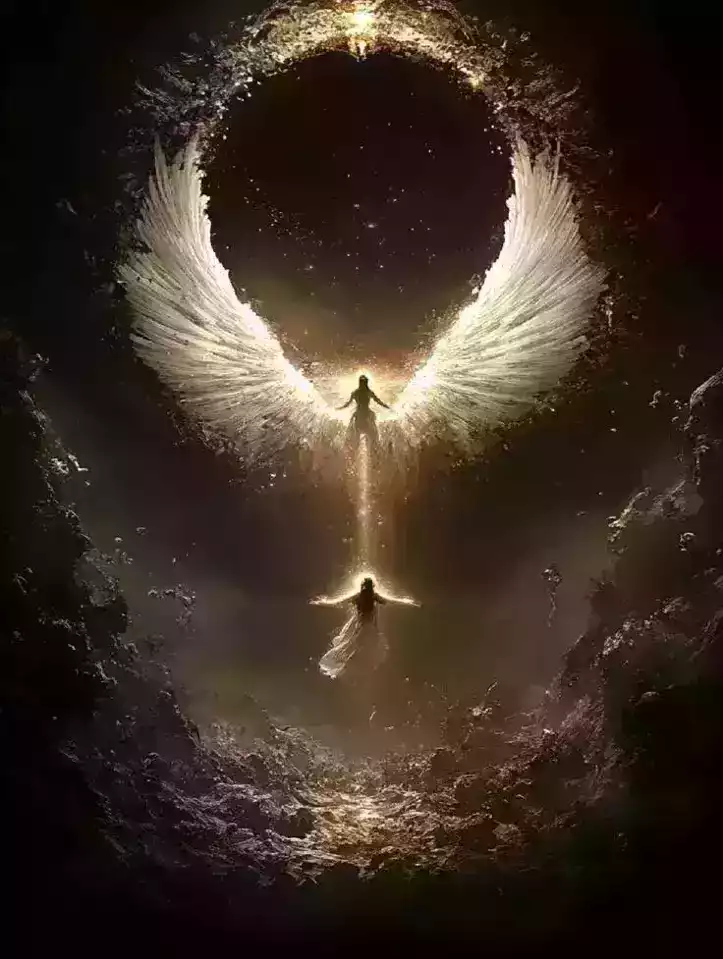
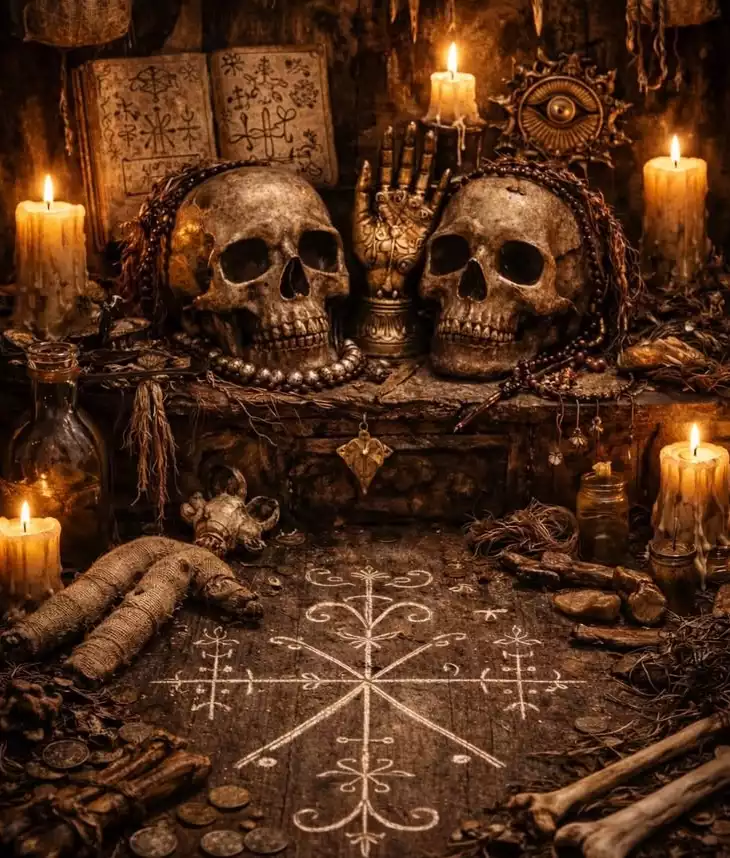
Rituals themselves follow strict templates. The magician must fast, purify through ablution, don clean garments—often white or ritually prepared. The space is demarcated, usually with a circle drawn in chalk or salt, inscribed with names and geometric figures. Candles are lit, incense burned. Prayers are recited, often in Latin or Hebrew. The entire performance is designed to create a liminal zone where the material and immaterial can briefly intersect.
Historical Lineages and Textual Transmission
The roots of angelic magic stretch back to late antiquity. Jewish mystical texts, particularly the Merkabah and Hekhalot literature, describe visionary ascents through celestial palaces guarded by angelic gatekeepers. These texts, written between the second and seventh centuries, established a template: the prepared soul, armed with secret names and seals, could traverse the heavenly realms and stand before the throne of God.
By the medieval period, this framework had been absorbed into Christian and Islamic esoteric traditions. The Latin grimoires of the twelfth and thirteenth centuries—such as the Ars Notoria and the Liber Juratus—blended angelic invocation with liturgical prayer and scholastic theology. These were not texts of rebellion but of aspiration. The magician sought knowledge, protection, or divine favor, framing their practice as an extension of religious devotion.
The Renaissance brought a revival and systematization of these ideas. Marsilio Ficino translated Neoplatonic texts that described the soul's kinship with the divine. Giovanni Pico della Mirandola argued that magic, rightly understood, was the practical application of natural and divine philosophy. Agrippa synthesized centuries of occult knowledge into his Three Books of Occult Philosophy, providing detailed instructions for contacting planetary angels, elemental spirits, and higher intelligences.
John Dee's Enochian system, developed in the late sixteenth century with the seer Edward Kelley, represents perhaps the most elaborate angelic magic on record. Over several years, Dee claimed to receive a complete angelic language, along with complex tables, calls, and hierarchies. Whether one views this as genuine revelation or inspired invention, it remains a monumental achievement in the history of Western esotericism.
Psychological and Symbolic Dimensions
Modern interpreters of angelic magic often reframe its mechanisms in psychological terms. Carl Jung's concept of archetypes provides a useful lens: angels may be understood as personifications of universal psychic forces. To invoke Michael is to activate the archetype of the warrior, the defender of boundaries. To call upon Gabriel is to engage the principle of revelation and communication. In this reading, the ritual becomes a method of self-transformation rather than external transaction.
This does not diminish the power of the practice. If anything, it deepens it. The symbols, gestures, and invocations function as a kind of psychodrama, engaging the unconscious mind in a process of integration and alignment. The magician who performs these rites undergoes a shift in consciousness—one that can produce genuine insight, creative breakthroughs, or emotional healing.
Yet to reduce angelic magic entirely to psychology is to miss its historical and phenomenological richness. Practitioners across centuries have reported experiences that resist easy categorization: visions, voices, synchronicities, and encounters that feel objectively real. Whether these are products of an expanded consciousness or actual contact with non-human intelligences remains an open question—one that each practitioner must answer for themselves.
The Moral Dimension
Unlike goetic magic, which deals with chthonic or infernal spirits, angelic magic imposes strict ethical requirements. The practitioner must approach the work with purity of intention. Greed, lust, or malice are thought to repel angelic beings or, at best, result in silence. This is not arbitrary moralizing; it reflects the internal logic of the tradition. Angels serve divine order. To align with them is to align with that order's values: justice, compassion, truth, and harmony.
Many texts describe preparatory periods lasting weeks or even months. The magician must confess sins, make amends, and cultivate virtue. Fasting, prayer, and meditation are prescribed. The assumption is that the human soul must be refined before it can bear the presence of higher beings. This ascetic preparation mirrors practices found in mystical Christianity, Sufism, and certain schools of Kabbalah.
The ethical stakes are not merely personal. To misuse angelic magic—to attempt coercion or manipulation—is to invite disorder into one's life. The grimoires are filled with warnings about the consequences of hubris. The magician who transgresses the boundaries of legitimate practice may find themselves abandoned by the very forces they sought to command, or worse, subject to spiritual rebound.
Contemporary Practice and Adaptation
Angelic magic has not remained static. In the twentieth and twenty-first centuries, it has been adapted by occultists, ceremonial magicians, and spiritual seekers outside traditional religious contexts. Organizations like the Hermetic Order of the Golden Dawn incorporated angelic hierarchies into their initiatory curriculum, blending Qabalah, tarot, and elemental theory into a comprehensive system.
Modern practitioners often approach angelic magic eclectically, drawing from multiple sources and personal gnosis. Some work exclusively with archangels, viewing them as accessible and benevolent guides. Others delve into Enochian calls or planetary magic, seeking to refine their will and expand their consciousness. The internet has democratized access to once-obscure texts, allowing a new generation to experiment with techniques that were previously the domain of scholarly adepts.
At the same time, there is a growing awareness of the need for discernment. Not every spirit claiming angelic status is what it purports to be. Practitioners are encouraged to test the spirits, to verify through experience and intuition whether the contact is genuine. This discernment is itself a skill, cultivated through practice and self-knowledge.
The Question of Efficacy
Does angelic magic work? The answer depends on what one means by "work." If the question is whether rituals produce measurable, repeatable physical effects, the evidence is ambiguous. If the question is whether they produce subjective transformations—shifts in perception, emotional states, or life circumstances—the testimony is more robust. Practitioners report clarity, protection, inspiration, and a sense of connection to something greater than themselves.
What seems indisputable is that the practice has endured for centuries, adapting to new contexts while retaining its core structure. This longevity suggests that angelic magic fulfills a persistent human need: the desire to reach beyond the limits of ordinary experience, to touch the numinous, and to situate oneself within a meaningful cosmological order. Whether the angels are literal beings or potent symbols, they continue to serve as bridges between the visible and invisible worlds.
Concluding Reflections
Angelic magic is a tradition of aspiration. It asks the practitioner to cultivate discipline, learn archaic languages, study complex correspondences, and submit to rigorous moral scrutiny. It promises, in return, not power over others but alignment with a greater order—one that operates according to principles of beauty, justice, and divine intelligence.
For the skeptic, it may appear as elaborate theater, a symbolic system with no referent beyond the human psyche. For the believer, it is a living practice, a method of communion with beings who guide, protect, and illuminate. For the practitioner, it is both: a way of engaging the self and the cosmos simultaneously, using ritual as a language that speaks to both.
In a world increasingly disenchanted, angelic magic offers a counter-narrative. It suggests that the universe is not inert matter governed by blind forces, but a living hierarchy of consciousness, accessible to those willing to prepare themselves for contact. Whether one accepts this worldview or not, the tradition remains a testament to the enduring human impulse to reach toward the infinite.
Meta Description: Explore the historical, symbolic, and ceremonial foundations of angelic magic—an esoteric tradition of communion with celestial intelligences through ritual precision and moral discipline.
SEO Tags: angelic magic, ceremonial magic, angelic invocation, John Dee Enochian, angelic hierarchies, Western esotericism, theurgy, grimoire tradition, angelic ritual, spiritual practice
Comments
No comments yet. Be the first to share your thoughts!
Leave a Comment
Your email address won't be published. Comments are reviewed before being posted.