 English
 Español
 Français
 中文
中文In the shadow of the pyramids, beneath the brilliant façade of temples adorned with gold and lapis lazuli, there existed another Egypt—one that whispered through darkened corridors and spoke in syllables designed to unmake creation itself. Ancient Egypt magic was not a singular phenomenon divided neatly into benevolent and malevolent categories. Rather, it existed as a continuum of power, a force that could heal or harm, protect or destroy, depending entirely upon the intention of the practitioner and the words spoken into the liminal spaces between worlds. The Egypt spells that have survived in fragmentary papyri and tomb inscriptions reveal a civilization profoundly aware of the potency residing in language, ritual, and symbolic action.
To speak of black magic in this context is to confront a concept that defies modern categorization. The ancient Egyptians possessed no single term equivalent to our notion of "black magic," yet they certainly recognized heka—the fundamental force of magic—as something that could be turned toward destructive ends. Heka was neither good nor evil; it simply was, much like fire or water. The moral dimension emerged only in application. When directed toward protecting the living, ensuring passage through the Duat, or maintaining cosmic order, it was celebrated. When wielded to curse, bind, or destroy, it entered the territory that neighboring cultures and later interpreters would designate as forbidden knowledge.
The Architecture of Curse and Counter-Curse
The Egypt gods themselves were not immune to the complexities of magical warfare. In mythological cycles, deities employed curses and protective enchantments against one another, establishing divine precedent for human practice. When Seth dismembered Osiris, scattering his body across the land, this was understood as an act of cosmic violence that required equally potent magical intervention to reverse. Isis, through her mastery of heka, reassembled her husband and conceived Horus—a narrative that positioned magic as the fundamental tool for restoring order from chaos, even when that chaos originated from divine malice.
Human practitioners drew upon this mythological framework when crafting their own Egypt spells. Curse tablets—thin sheets of lead or pottery inscribed with malevolent intentions—have been recovered from burial sites and temple precincts throughout the Nile Valley. These objects represent a sophisticated understanding of sympathetic magic: the belief that actions performed upon a representation could affect the intended target. Names were critical. To know someone's true name was to possess power over their ba, their spiritual essence. Consequently, many curse texts meticulously listed not only the target's given name but also their mother's name, their occupation, and sometimes even physical descriptions, creating a verbal portrait that left no ambiguity about the curse's intended recipient.
The language employed in these curse spells varied from terse commands to elaborate invocations spanning multiple columns of hieratic script. Some called upon specific Egypt gods to act as enforcers—Sekhmet the destroyer, Sobek the predator, or the serpent-demon Apep who perpetually threatened to swallow the sun. Others invoked nameless entities dwelling in the outer darkness beyond the created world, beings who existed in opposition to Ma'at, the cosmic principle of truth and order. To petition such forces was to risk contamination, yet the ancient Egyptian worldview allowed space for such transactions when circumstances demanded them.
The Execration Rituals and State-Sanctioned Darkness
Not all curse magic operated in clandestine shadows. The Egyptian state itself employed formalized execration rituals designed to neutralize threats to pharaonic authority and national security. Archaeologists have uncovered caches of deliberately broken pottery and figurines inscribed with the names of foreign rulers, rebellious provinces, and abstract concepts like "evil speech" or "evil thoughts." These objects were ritually destroyed—smashed, burned, or buried—in ceremonies that transformed material culture into weapons of defensive magic.
The logic underlying these practices reveals the Egyptian understanding of reality as fundamentally responsive to symbolic manipulation. By inscribing a name or image and then destroying it, the priest-magicians believed they could inflict corresponding damage upon the original. These weren't merely symbolic gestures meant to bolster morale; they were considered genuine military operations conducted on a metaphysical battlefield. Ancient Egypt magic thus served as an extension of statecraft, a technology of power deployment that complemented more conventional military and diplomatic strategies.
The Pyramid Texts and later Coffin Texts contain passages that scholars have identified as protective curses—spells designed to punish anyone who might violate the tomb or disturb the deceased's journey through the afterlife. These inscriptions threatened trespassers with divine retribution, promising that the Egypt gods would pursue violators into both this world and the next. The famous "mummy's curse" of popular imagination has genuine roots in these ancient protective formulas, though the reality was far more nuanced than sensationalist accounts suggest. The curses were not autonomous forces but invocations requesting divine intervention, petitions that assumed the gods would recognize the justice of the appeal and act accordingly.
The Papyrus Texts of Transformation and Binding
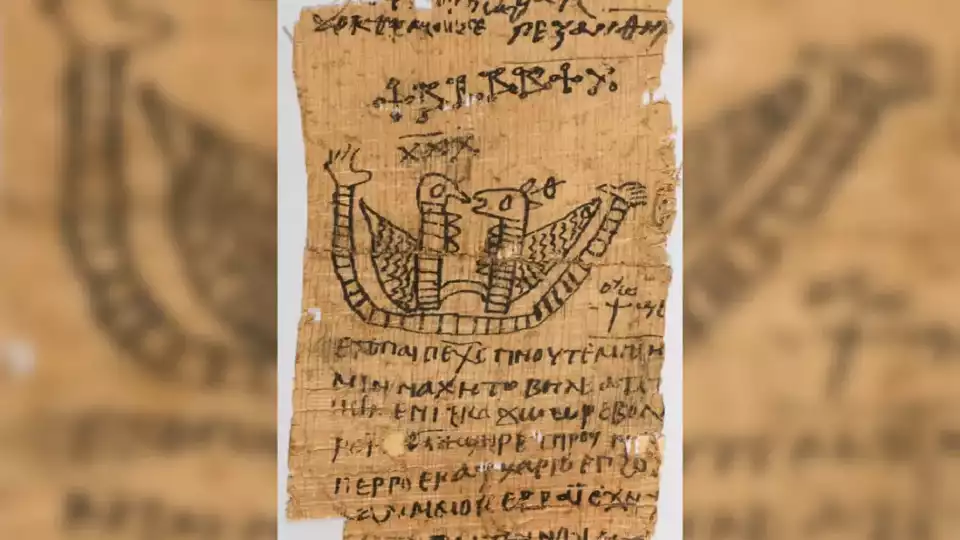
Among the most revealing documents concerning ancient Egypt spells are the so-called "magical papyri," collections of ritual instructions and incantations preserved through the dry climate and archaeological fortune. These texts blur the boundaries between religion, medicine, and what we might term operational magic. A single papyrus might contain instructions for curing scorpion stings, recipes for love potions, protective amulets, and curse formulas designed to incapacitate enemies or competitors.
The technical vocabulary of these texts demonstrates remarkable specificity. Different verbs denoted different types of magical action: to bind, to repel, to attract, to transform, to conceal, to reveal. Each category of spell required particular materials, optimal timing according to lunar or stellar cycles, and precise pronunciation of the accompanying words of power. Mispronunciation could render a spell ineffective or, in the case of particularly dangerous formulas, redirect its force back upon the practitioner. This inherent danger meant that access to the most potent Egypt spells was carefully controlled, passed down through priestly lineages or sold at considerable cost by specialists in heka.
Binding spells represented a particularly insidious category of curse magic. Rather than seeking to harm directly, these rituals aimed to constrain the target's agency—to render them unable to speak against the practitioner, to prevent them from succeeding in legal proceedings, or to inhibit their sexual or reproductive capacity. Figurines with arms bound behind their backs, mouths sewn shut with thread, or genitals deliberately damaged have been recovered from archaeological contexts, each modification corresponding to a specific intended effect. The materiality of the curse was essential; the physical binding of the effigy translated, through sympathetic resonance, into metaphysical binding of the target.
Love magic occupied an ambiguous space within this system, sometimes classified alongside protective spells, sometimes grouped with more aggressive curse work. The distinction hinged upon whether the spell sought to inspire genuine affection or to compel obedience against the target's will. The latter category employed coercive language and threatening imagery, invoking Egypt gods associated with passion and violence—Hathor in her fierce aspect, or Bes the protective demon. These spells frequently included instructions for administering the enchanted material to the target without their knowledge, mixed into food or drink, suggesting a practice that understood consent as irrelevant to magical efficacy.
The Demonic Intermediaries and the Outer Darkness
The cosmology of ancient Egypt recognized multiple classes of non-divine entities that could be enlisted in magical operations. Some were the restless dead—spirits who had not successfully navigated the trials of the afterlife and remained trapped between worlds. Others were beings that had never been human, creatures born from chaos waters or dwelling in the desert margins where civilization ended and the realm of Seth began. These entities lacked the moral constraints that governed the Egypt gods; they could be bargained with, threatened, or commanded through the correct application of ritual protocol.
Summoning such beings required careful preparation. The practitioner needed to establish protected space, often through the drawing of magical circles inscribed with protective names and symbols. Offerings were required—not the standard bread and beer presented to the gods, but substances associated with death and decay: blood, excrement, bodily fluids. The reversal of normal religious practice signaled entry into liminal territory where conventional rules no longer applied. The incantations themselves frequently employed "voces magicae"—strings of syllables that may have been corrupted divine names, foreign loan-words, or pure sound intended to resonate with frequencies beyond human speech.
The risks of such operations were well understood. Texts warn of practitioners who lost control of the forces they summoned, or who suffered divine retribution for transgressing the boundaries of acceptable magical practice. The concept of heka as a neutral force notwithstanding, there existed an implicit understanding that certain types of magic extraction came at a cost. To regularly traffic with entities opposed to Ma'at risked spiritual corruption, a gradual alignment with chaos that could persist beyond death. Some tombs contain spells specifically designed to protect the deceased from being recognized as a practitioner of such arts, suggesting anxiety about posthumous judgment for magical activities undertaken during life.
The Social Context of Curse Practice
Understanding who employed curse magic and under what circumstances reveals much about ancient Egyptian society's fault lines and tensions. While elite practitioners certainly existed—priests with institutional access to temple libraries and ritual spaces—evidence suggests that curse magic was democratized to a significant degree. Modest curse tablets recovered from worker villages and urban contexts indicate that ordinary people sought magical redress for grievances when legal or social remedies proved inadequate or inaccessible.
Economic competition generated a substantial proportion of curse activity. Merchants cursed business rivals, craftsmen sought to sabotage competitors' workshops, and farmers invoked Egypt spells to blight their neighbors' fields. The transactional nature of these curses is noteworthy; many were purchased from professional magicians rather than self-administered, creating an economy of occult services that paralleled the visible economy of goods and labor. Papyrus fragments preserve what amount to advertising claims—assertions of particular effectiveness, promises of guaranteed results, testimonials from satisfied clients who saw their enemies brought low.
Romantic and sexual jealousy motivated another significant category of curse work. Spells aimed at separating couples, causing impotence, or inducing abortion appear with disturbing frequency in the archaeological record. These intimate violations speak to the deployment of ancient Egypt magic within the domestic sphere, where formal law had limited reach and social hierarchies created vulnerabilities that could be exploited through occult means. Women appear both as practitioners and targets of such spells, their participation in magical practice belying modern assumptions about gender restrictions in ancient religious and ritual life.
The Philosophical Implications of Egyptian Curse Magic
At its deepest level, the prevalence and sophistication of curse magic in ancient Egypt raises fundamental questions about the civilization's worldview. The Egypt gods were not conceived as omnipotent moral arbiters but as powerful beings embedded within a cosmic system that operated according to discernible principles. Heka existed prior to the gods themselves, a primordial force that even deities employed to achieve their purposes. This meant that humans, through sufficient knowledge and proper technique, could access the same operational principles that structured reality.
The ethical framework governing this access was situational rather than absolute. What mattered was the preservation of Ma'at—cosmic order, truth, justice, balance. If a curse served to protect the righteous, restore balance disrupted by wrongdoing, or defend against genuine threat, it could be justified within this ethical system. The ambiguity lay in determining when such conditions obtained, a judgment call that each practitioner made for themselves. The absence of a centralized religious authority capable of definitively pronouncing on the legitimacy of specific magical acts meant that practice remained heterogeneous and responsive to local needs and interpretations.
This philosophical flexibility had practical consequences. It allowed for the coexistence of official state magic and private curse work, temple ritual and freelance sorcery, without the cognitive dissonance that might arise in a more doctrinally rigid system. Ancient Egypt spells operated across this spectrum, from the grandest temple ceremony invoking all the gods of the Ennead to the whispered curse scratched onto a pottery sherd and buried at a crossroads at midnight. All were expressions of heka, differentiated by scale and context but not by fundamental principle.
The legacy of this magical tradition extended far beyond Egypt's borders and historical period. Greek and Roman magical papyri demonstrate clear Egyptian influences, borrowing gods' names, ritual structures, and conceptual frameworks. Through these channels, elements of ancient Egypt magic entered the broader Mediterranean occult tradition, eventually feeding into medieval grimoire literature and modern esoteric practice. The specific techniques may have been adapted and reinterpreted through multiple cultural filters, but the underlying logic—that reality is responsive to symbolic manipulation, that words possess creative and destructive power, that invisible forces can be enlisted through correct procedure—these core concepts represent Egypt's enduring contribution to the Western magical tradition.
Conclusion: The Persistence of the Shadow
Black magic in ancient Egypt was never truly separate from the civilization's religious mainstream. It represented one end of a spectrum of practice that encompassed all interactions between human beings and the divine-cosmic order. The same priesthood that performed temple rituals to sustain Ma'at might also craft execration texts to destroy Egypt's enemies. The same gods invoked for healing could be petitioned to inflict disease. The same ritual expertise that ensured successful transition to the afterlife could curse a tomb robber to eternal torment.
This integration reflects a worldview that understood power as inherently amoral, a force that acquired ethical valence only through application. The Egypt spells that have survived, preserved in dry sand and institutional libraries, offer glimpses into this complex magical landscape where protection and curse, blessing and bane, emerged from the same source. To study these texts is to encounter a civilization that lived simultaneously in multiple dimensions—the physical world of the Nile's regular flooding and harvest cycles, and the invisible realm where Egypt gods and demons contested for influence, where words rearranged reality, and where the boundary between life and death remained perpetually negotiable for those who possessed the knowledge to speak the right syllables in the right order at the right time.
The temples have long since fallen to ruin, their priesthoods dispersed by historical forces beyond any magic's power to resist. Yet the papyri remain, their curse formulas still legible, their invocations still resonant with the terrible certainty that animated their original inscription. They stand as testament to a civilization that confronted the darkness not by denying its existence but by developing techniques to navigate it, to harness it when necessary, and to understand it as an essential component of the cosmic whole. In this, ancient Egypt offers a perspective on magic—and on power itself—that remains profoundly challenging to modern sensibilities, refusing the neat categorical boundaries we prefer and insisting instead on a more ambiguous, more dangerous, and ultimately more honest engagement with forces that transcend simple moral judgment.

Comments
No comments yet. Be the first to share your thoughts!
Leave a Comment
Your email address won't be published. Comments are reviewed before being posted.