
 English
 Español
 Français
 中文
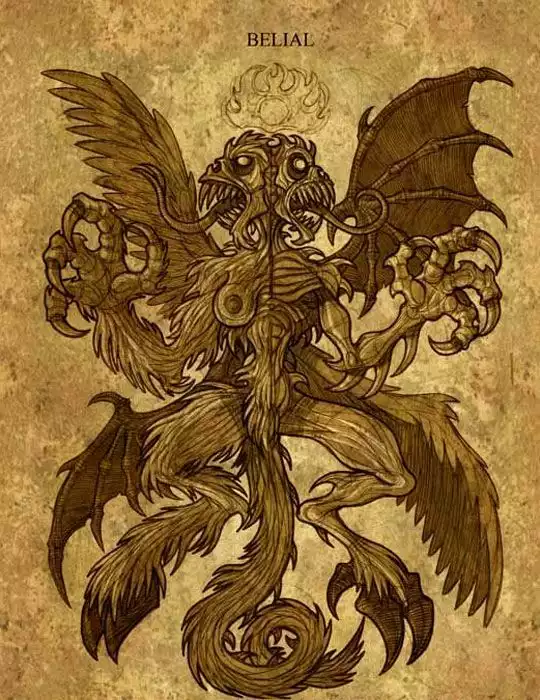
中文The figure of Belial occupies a particular corner of demonological literature—neither an angel fallen through pride nor a beast of pure chaos, but rather something more terrestrial, more intrinsically bound to the material realm and the structures of human sovereignty. To understand Belial is to confront questions of autonomy, earthly authority, and the conscious rejection of imposed order. Those who seek to work with this entity must first comprehend the historical weight and symbolic architecture that surrounds him, for Belial does not respond to casual invocation or superficial intent.
The name itself has provoked centuries of philological debate. Derived from the Hebrew "beli ya'al," the term translates roughly as "without worth" or "worthlessness," though some scholars interpret it as "without a yoke"—a designation that speaks not to weakness but to a deliberate rejection of subjugation. In the oldest Hebrew texts, Belial appears not as a proper name but as a descriptor for wickedness itself, a quality rather than an entity. Only through centuries of theological evolution did Belial coalesce into a discrete demonic personality, a prince of darkness with dominion over earthly matters and the dissolution of lawful bonds.
The Historical Emergence of Demon Belial
Within the Dead Sea Scrolls, particularly the War Scroll, Belial assumes a cosmic role as the leader of the sons of darkness, standing in opposition to the forces of light in an eschatological conflict. This dualistic framework positioned Belial as more than a tempter or corruptor—he became an architect of opposition, a sovereign power governing those who resist divine ordinance. The Qumran community viewed history itself as a battleground between the lot of Belial and the lot of God, with human souls as the contested territory.
By the time Christian demonology absorbed and reinterpreted these Hebraic concepts, Belial had transformed further. The Apostle Paul's second letter to the Corinthians poses the rhetorical question: "What concord hath Christ with Belial?" This framing established Belial as the antithesis of the sacred covenant, the personification of everything that exists outside or against the redemptive framework. Medieval grimoires would later assign him specific characteristics—a beautiful appearance, a persuasive voice, dominion over politics and earthly kingship, and a particular affinity for those who sought worldly advancement through unconventional means.
The "Pseudomonarchia Daemonum" and the "Lemegeton" both catalog Belial among the four principal kings of hell, alongside Lucifer, Satan, and Leviathan. According to these texts, Belial commands eighty legions of spirits and manifests in a chariot of fire, speaking with a pleasant voice. His gifts are said to include political favor, reconciliation of enemies, and the granting of excellent familiars. Yet these same sources warn that Belial will not fulfill his promises unless compelled by divine names and proper offerings—a detail that speaks to his nature as fundamentally transactional rather than devotional.
Who Is Belial Beyond the Grimoire Tradition
To ask who is Belial requires moving beyond catalogued attributes toward symbolic understanding. Belial represents the principle of earthly autonomy severed from cosmic hierarchy. Where other demons might embody specific vices or cosmic functions, Belial inhabits the space of deliberate independence—the conscious choice to define one's own values rather than inherit them from tradition or divine decree. This makes him simultaneously dangerous and appealing to those who chafe against external authority.
Psychologically, working with Belial involves confronting one's relationship with power structures, legitimacy, and self-governance. He does not offer transcendence or spiritual elevation in the conventional sense. Instead, Belial provides tools for navigating material reality with strategic clarity, for recognizing and manipulating the mechanisms of influence, and for claiming authority in domains where one has been denied it. This is not the path of the mystic seeking union with the divine, but rather the path of the sovereign individual asserting dominion over personal circumstance.
In contemporary occult practice, Belial has been adopted by various Left Hand Path traditions as a patron of self-deification and radical individualism. These interpretations emphasize his role as liberator from imposed morality, though such readings risk oversimplifying the complex relationship Belial maintains with concepts of worth and value. His very name—"worthless" or "without yoke"—suggests a paradox: is he valueless because he rejects external validation, or does his rejection of submission constitute a higher form of worth? This tension animates much of the serious work undertaken with this entity.
Foundational Principles for Safe Engagement
The question of safety in demonic invocation always depends on one's framework of understanding. If demons are understood as psychological complexes, then safety involves maintaining ego integrity while engaging shadow material. If they are considered autonomous entities, safety becomes a matter of proper protocol and boundary establishment. If they represent archetypal forces within a living cosmos, safety requires alignment with one's true will and the courage to face transformative encounters. Regardless of one's metaphysical position, certain principles consistently apply when seeking to work with Belial.
First, approach with clarity of intent. Belial does not respond favorably to ambivalence or dilettantism. Those who invoke him out of curiosity or aesthetic interest frequently report unsettling experiences—not because Belial actively punishes such approaches, but because his energy naturally destabilizes unclear foundations. One must know precisely what is sought: political influence, personal sovereignty, the dissolution of restricting circumstances, strategic insight into power dynamics. The request should be specific, grounded in material reality, and aligned with genuine will rather than fleeting desire.
Second, establish proper containment and framework. Traditional grimoire practice employed elaborate circles, divine names, and hierarchical invocations designed to compel demonic obedience while protecting the operator. Modern practitioners may find such approaches either essential or unnecessary depending on their paradigm, but the underlying principle remains valid: create a defined ritual space with clear boundaries between the invoked presence and one's core self. This might involve circle casting, banishing rituals, the establishment of sacred space through preferred methods, or psychological techniques of compartmentalization and intentional dissociation.
Third, understand the nature of exchange. Belial's transactional character means that offerings and reciprocity matter substantially. Historical sources mention offerings of bread, wine, and incense, though the symbolic significance of these substances deserves consideration. Bread represents earthly sustenance and material prosperity—appropriate for a demon of worldly concerns. Wine suggests transformation, intoxication, and the loosening of rigid structures. Incense carries intention across boundaries between realms. Contemporary practitioners might also consider offerings that reflect Belial's dominion: symbols of authority, items connected to personal power, creative works that embody autonomous expression.
Methodologies of Invocation and Evocation
The distinction between invocation and evocation proves particularly relevant when working with Belial. Evocation seeks to call the entity forth into external manifestation, maintaining separation between operator and demon. This approach prioritizes safety through distance, viewing Belial as an external intelligence to be consulted, negotiated with, or commanded according to proper formula. Invocation, conversely, involves drawing the energy or consciousness of Belial into oneself, temporarily embodying aspects of his nature and perspective. Each method carries distinct risks and benefits.
For evocation, the traditional grimoire method provides a tested structure. Prepare the ritual space during appropriate astrological timing—Tuesday is often favored for demons of martial or earthly dominion, though some sources associate Belial specifically with Thursday, given his connection to kingship and Jupiter's qualities of expansion and authority. Consecrate the space according to your tradition, establishing a triangle of manifestation if working within ceremonial frameworks. The conjurations recorded in medieval grimoires may be employed, though practitioners should understand their function: these lengthy invocations work through accumulated pressure, building energetic intensity through repetition and increasingly forceful language until manifestation occurs.
The manifestation itself rarely resembles popular depictions. Rather than dramatic materialization, practitioners more commonly report a distinct shift in atmospheric quality—a heaviness in the air, a sense of watchful presence, sometimes visual phenomena at the periphery of perception or within scrying instruments like black mirrors or smoke. Communication may arrive through intuitive knowing, through divination tools prepared for the working, or through the internal voice that differs qualitatively from ordinary thought. Record everything meticulously, as Belial's messages often carry layered meanings that reveal themselves only upon reflection.
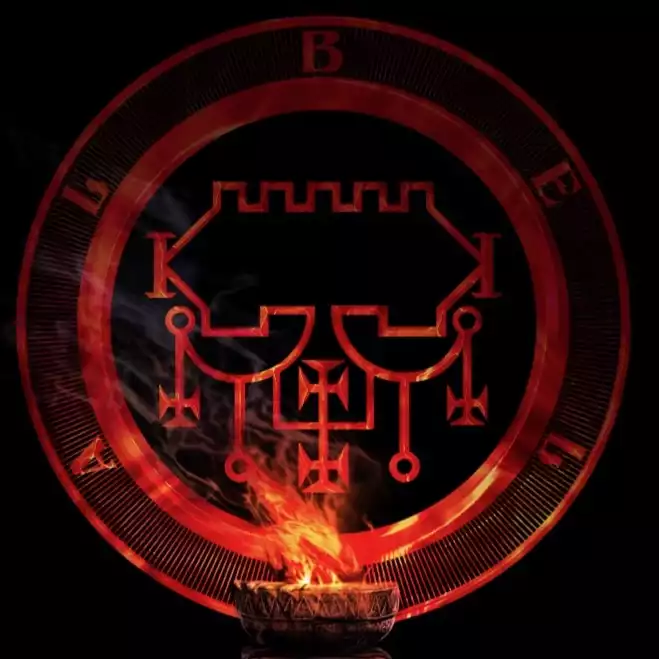
Invocational work with Belial requires greater psychological stability and clearer sense of self, as the boundaries between practitioner and entity become deliberately permeable. This approach might begin with extended meditation on Belial's sigil or seal, allowing the symbol to become a doorway through which his consciousness can partially merge with your own. Alternatively, ritual assumption of Belial's attributes through symbolic gesture, visualization, and declarative statement can facilitate temporary embodiment. During this state, observe how perception shifts—particularly regarding matters of authority, legitimacy, and personal power. The insights gained through seeing temporarily through Belial's perspective can prove transformative, though integration afterward becomes crucial.
Navigation of Potential Difficulties
Working with Belial inevitably surfaces challenges related to his particular nature. His energy tends to expose and exacerbate existing tensions around authority, often precipitating conflicts with external power structures or internal resistance to one's own sovereignty. Practitioners frequently report that circumstances become more chaotic before resolution emerges—contracts may be challenged, relationships with authority figures may deteriorate, hidden opposition may reveal itself. This is not malicious interference but rather the natural consequence of invoking a force that dissolves established hierarchies and exposes the mechanisms of control.
The practitioner must maintain discernment between productive destabilization and genuine danger. Belial's influence can encourage necessary rebellion against limiting circumstances, but it can also foster destructive antagonism toward all structure, including beneficial discipline and meaningful commitments. Regular grounding practices, continued connection with stabilizing influences, and honest self-assessment help maintain this balance. If one finds oneself rejecting all authority indiscriminately or pursuing conflict for its own sake rather than strategic purpose, recalibration becomes necessary.
Another common difficulty involves Belial's tendency toward delayed or unexpected fulfillment of agreements. Unlike demons associated with swift results, Belial operates on timeframes aligned with political and material reality rather than immediate gratification. He may orchestrate circumstances that unfold over months, positioning the practitioner advantageously within complex systems rather than delivering sudden windfalls. Patience combined with continued strategic action proves essential—Belial provides tools and opportunities, but rarely bypasses the necessity of personal effort and intelligent navigation.
Integration and Ongoing Relationship
A single working with Belial may yield specific results, but developing an ongoing relationship with this entity transforms the practice from isolated operation to sustained spiritual current. This requires consistent engagement through regular offerings, meditation on his nature and teachings, and embodiment of the principles he represents—autonomy, strategic thinking, material mastery, and conscious self-governance. Over time, practitioners report developing an intuitive sense of Belial's presence and perspective, able to access his strategic clarity in mundane situations without formal ritual.
This ongoing relationship demands authenticity. Belial responds poorly to performative devotion or superficial engagement. He values genuine pursuit of personal sovereignty and material effectiveness over elaborate ritual displays divorced from real intention. Simple, consistent offerings accompanied by honest reflection and demonstrated follow-through on commitments made during ritual work establish far stronger connection than elaborate ceremonies performed without authentic engagement. Keep detailed records of workings, results, and insights, reviewing them periodically to identify patterns and deepening understanding.
The transformation catalyzed through sustained work with Belial tends toward increased comfort with personal authority, greater strategic capability in navigating power structures, and reduced need for external validation. These shifts may create distance from previous social circles or belief systems, particularly those structured around deference to traditional authority or collective values that contradict individual sovereignty. This can be disorienting, necessitating conscious choice about which relationships and commitments genuinely serve one's development versus which were maintained through habit or unexamined obligation.
Philosophical Considerations and Ethical Framework
Working with Belial inevitably raises questions about morality, particularly given his association with wickedness and lawlessness in religious texts. The practitioner must develop a coherent ethical framework that acknowledges Belial's nature without either demonizing genuine autonomy or romanticizing destructive behavior. Understand that rejecting imposed moral systems does not equate to embracing harm or chaos—rather, it demands taking full responsibility for one's choices and their consequences without recourse to external authority for justification or absolution.
Belial teaches sovereignty, which includes sovereignty over one's ethical decisions. This is fundamentally different from either conventional morality or deliberate transgression. Conventional morality accepts rules from external sources—religious texts, cultural norms, legal codes. Deliberate transgression defines itself in opposition to those rules, remaining paradoxically dependent on them for meaning. Sovereignty requires developing an internal moral compass based on genuine values, intelligent assessment of consequences, and commitment to outcomes one is willing to claim fully. Belial provides no moral guidelines because he represents the principle of self-determined value—each practitioner must construct their own ethical architecture.
The path of working with demon Belial is ultimately one of radical responsibility. Every invocation, every request, every result must be owned completely. There is no cosmic parent to blame, no external force compelling action, no escape into victimhood or predestination. This can be terrifyingly liberating or simply terrifying, depending on one's readiness to inhabit full agency. Those who understand Belial most deeply recognize him not as a rebellious servant to be commanded or a dark patron to be worshipped, but as a mirror reflecting the practitioner's own capacity for autonomous power and the courage required to wield it without external validation or permission.
In the final analysis, to work with Belial is to work with oneself—specifically, with those aspects of self that refuse subordination, that demand recognition on their own terms, that insist on sovereignty even when such insistence carries substantial cost. The demon offers no salvation, no transcendence, no escape from material existence. Instead, he provides tools for mastering that existence, for claiming authority within it, and for building power structures aligned with genuine will rather than inherited obligation. Whether this constitutes spiritual development or spiritual danger depends entirely on what one seeks from existence and how one defines worth in a cosmos that may recognize no inherent meaning beyond what conscious beings create and claim.


Comments
No comments yet. Be the first to share your thoughts!
Leave a Comment
Your email address won't be published. Comments are reviewed before being posted.